- August 2, 2026
- in Blog
- by
- 123
- 0
Last Updated: August 2, 2026
When pet accidents, wine spills, and years of dust accumulate on your upholstery, an Oxi Fresh alternative for upholstery might deliver better results for your specific situation. At Stay Fresh Steam Cleaning, we’ve worked with hundreds of San Antonio homeowners who discovered that professional cleaning methods and alternative DIY solutions often outperform oxygen-based cleaners for deep stains, odor neutralization, and long-term fabric health. Below, we’ll show you how to evaluate upholstery cleaning alternatives, compare encapsulation, steam, and dry methods, and choose the right approach for your furniture, pets, and budget.
Finding an Oxi Fresh alternative for upholstery typically happens for three reasons: cost, effectiveness, or safety concerns. Oxygen-based cleaners work through oxidation but often leave residue behind, requiring multiple applications and days to dry. They rarely address embedded pet odors or set-in stains that demand deeper extraction.
Professional-grade methods like encapsulation and hot water extraction remove more soil per application. Encapsulation uses polymer-based solutions that crystallize around dirt particles for easy vacuuming without residue. Steam cleaning forces heated water deep into fabric fibers, extracting allergens, dander, and odor-causing bacteria that surface cleaners cannot reach.
Safety also drives the search for alternatives. Oxygen-based products can bleach certain fabrics, damage leather, and leave chemical residue that bothers people with sensitivities. Non-toxic alternatives like baking soda, hydrogen peroxide, and enzyme-based cleaners appeal to families with young children and pets.
Hot water extraction remains the gold standard for deep upholstery cleaning. This method uses heated water (typically 200-220°F) combined with cleaning solution, injected under pressure into fabric fibers. A powerful vacuum then extracts the dirty water, lifting embedded soil, allergens, and odor-causing bacteria.
Stanley Steemer uses hot water extraction with EPA-certified solutions safe for households with children and pets. A standard sofa cleaning starts around $100, with sectionals ranging from $200-$500 depending on size and condition. The method is highly effective for removing dirt, allergens, and stains, though drying times extend 12-24 hours.
The real advantage emerges with pet stains and odors. When urine soaks into cushion foam, surface treatments cannot neutralize the smell. Hot water extraction forces fresh solution deep enough to break down uric acid crystals and bacterial colonies responsible for odor.
Zerorez offers a patented alternative called "Zr Water", an alkaline cleaning agent that cleans without harsh soaps or surfactants. The technology appeals to environmentally conscious families and those with chemical sensitivities. Zerorez’s formula breaks down dirt and oils without leaving residue that attracts new soil, extending time between cleanings.
Pricing varies by furniture size, with an environmental service fee of $12-$13.99 added to every appointment. Drying times range from 4-8 hours, faster than traditional steam cleaning. While Zerorez eliminates harsh chemicals, it may not penetrate as deeply into pet-stained foam as hot water extraction.
| Method | Drying Time | Best For | Key Advantage | Limitation |
|---|---|---|---|---|
| Encapsulation | 2-4 hours | Maintenance cleaning, frequent use | Fast drying, no residue | Lighter cleaning power |
| Steam (Hot Water Extraction) | 12-24 hours | Pet stains, deep soil, odors | Deep extraction, allergen removal | Longer drying, water risk |
| Dry Cleaning | 0 hours | Delicate fabrics, immediate use | Immediate availability | Surface-level cleaning only |
| Hybrid (Spot + Encapsulation) | 4-8 hours | Mixed conditions | Targets stains + maintains fabric | Requires two products |
Encapsulation applies a polymer-based solution that surrounds soil particles, converting them into crystalline capsules. Once dry, these capsules are vacuumed away, leaving fabric cleaner without the moisture or drying time of steam cleaning.
The advantage is speed: encapsulation dries in 2-4 hours, allowing same-day furniture use. It leaves no cleaning solution residue, so upholstery stays cleaner longer. However, encapsulation cannot penetrate deep into foam cushions to neutralize embedded pet odors or uric acid. Many professional cleaners use encapsulation as a follow-up after steam cleaning to protect freshly cleaned fabric.
Steam cleaning’s power comes from heat, pressure, and extraction force working together. The heated solution breaks down soil bonds, pressure forces liquid deep into fibers, and the vacuum removes both solution and extracted dirt. This combination reaches areas that surface applications cannot touch.
For pet owners, this matters enormously. Dog and cat urine soaks through upholstery into cushion foam and sometimes into the frame. Only extraction methods that force water into these depths and pull it back out can truly remove the source of odor. Professional steam cleaning typically requires 2-3 extraction cycles to fully address severe pet damage.
The trade-off is drying time and moisture risk. Wet upholstery takes 12-24 hours to dry completely, during which mold and mildew can develop if humidity is high or airflow is poor. Professional cleaners use air movers and dehumidifiers to ensure proper drying protocols.
Dry cleaning methods use minimal moisture, allowing furniture to be used immediately. These approaches include powder-based cleaners, foam cleansers applied and wiped away, and specialized dry-cleaning compounds that are vacuumed out.
The advantage is zero drying time and no water damage risk to delicate frames or antique fabrics. For silk, velvet, or leather upholstery, dry methods are often the only safe option. The limitation is cleaning power: dry methods work on surface soil and light stains but cannot extract deeply embedded dirt, allergens, or odor-causing bacteria.
Baking soda is a mild abrasive and natural deodorizer that neutralizes odors rather than masking them. Hydrogen peroxide is a mild oxidizer and disinfectant, similar to Oxi Fresh products but gentler and less likely to bleach fabrics.
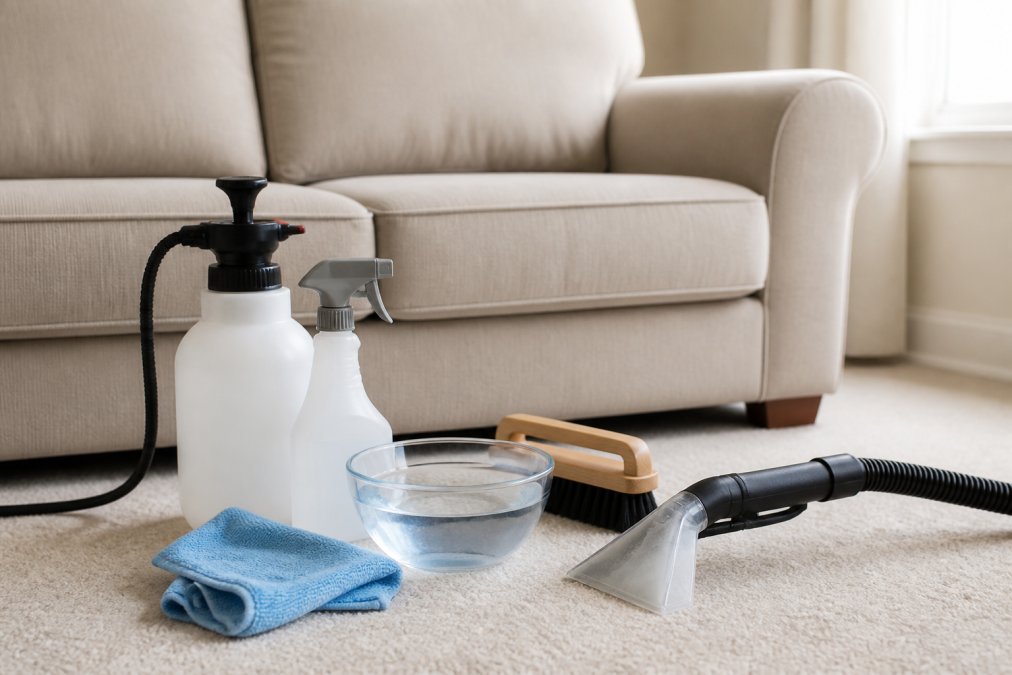
A simple DIY recipe combines 1 part hydrogen peroxide (3% solution) with 1 part water and a few drops of dish soap. Spray lightly onto stained upholstery, let sit for 10-15 minutes, then blot with a clean cloth. For odors, sprinkle baking soda directly on furniture, let sit for 30 minutes to several hours, then vacuum thoroughly.
This approach works well for fresh spills and light odors. However, hydrogen peroxide can bleach darker fabrics, and neither ingredient penetrates deeply enough to address urine-soaked cushion foam or years of accumulated dust.
The BISSELL SpotClean Pro Portable Carpet Cleaner, priced around $175.99, is one of the most popular consumer machines for upholstery spot cleaning. It features powerful suction, a heated water tank, and specialized attachments for stairs and tight stains. For pet owners, this machine excels at immediate cleanup of fresh accidents.
Portable machines work by spraying cleaning solution and immediately suctioning it back out. They are effective for quick interventions but lack the sustained heat and extraction power of professional equipment. The real value is speed and convenience: having one on hand means you can address accidents within minutes, before urine dries and sets into foam.
A DIY approach using baking soda and hydrogen peroxide costs under $10 per application. A professional steam cleaning of a sofa runs $100-$300. Over a year, DIY spot treatments might cost $50-$100, while professional cleaning once or twice annually costs $200-$600.
However, professional cleaning extends furniture lifespan significantly. Accumulated soil breaks down fabric fibers over time; regular professional extraction removes this abrasive buildup before it causes permanent damage. For a sofa costing $1,500-$3,000 new, professional cleaning every 12-18 months is excellent insurance.
For rental properties or commercial spaces, professional cleaning is essential. Property managers need consistent, documented results that satisfy tenants and protect security deposits. Stay Fresh Steam Cleaning serves San Antonio property managers with move-out cleaning packages designed for quick property turnover while ensuring deep cleanliness that protects long-term asset value.
Renting a full-size upholstery cleaning machine from a home improvement store typically costs $30-$60 per day, plus cleaning solution ($15-$25). A weekend rental might total $60-$100 in equipment and supplies. The hidden cost of DIY rental is time and physical effort. Operating a commercial-grade machine requires technique; too much pressure damages fabric, too little leaves solution residue. Many homeowners find that professional service would have been less stressful and often more effective.
Set-in stains, those that have dried and oxidized over days or weeks, require different treatment than fresh spills. Oxygen-based products work by oxidizing surface stain molecules, which is why they’re effective on fresh discoloration. However, once stains dry, oxidation becomes less effective.
For set-in stains, enzymatic cleaners often outperform oxygen-based products. Enzymes break down specific compounds in common stains: protease enzymes break down protein stains (blood, urine, food), lipase enzymes break down oils and grease, and amylase enzymes break down starches.
Odor neutralization is distinct from stain removal. Baking soda and activated charcoal neutralize odors by absorbing odor molecules; enzymatic products break down the bacterial colonies producing the smell; and steam cleaning removes the source. For pet odors, a combination approach works best: enzymatic treatment for bacterial breakdown, followed by steam extraction to remove the treated residue.
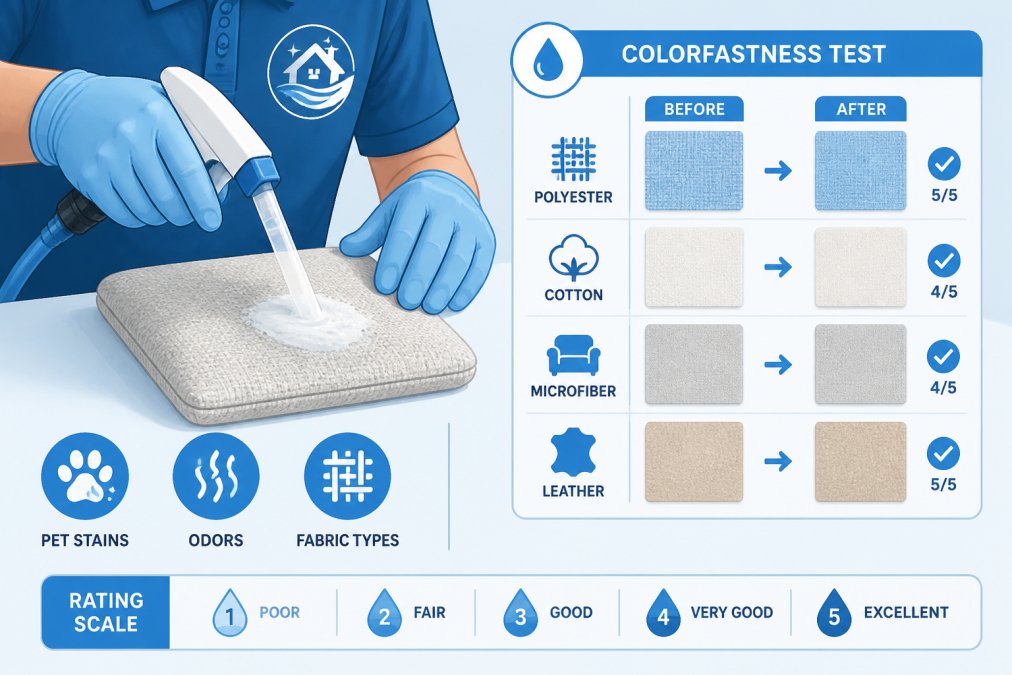
Different fabrics require different cleaning approaches. Natural fibers like cotton, wool, and linen are generally durable and tolerate water-based cleaning well. Synthetic fabrics like polyester and nylon are also resilient. However, delicate fabrics like silk, velvet, and linen blends can be damaged by excess moisture or harsh chemicals.
Colorfastness, the fabric’s ability to retain its color when wet, varies widely. Some fabrics bleed dye when exposed to water; others are completely colorfast. Oxygen-based cleaners can bleach certain dyes. Before applying any cleaning solution to visible upholstery, test it on a hidden area: underneath a cushion, on the back of a chair, or inside a seam.
Professional cleaners test colorfastness by applying solution to a white cloth and pressing it against a hidden fabric area. If dye transfers to the cloth, the fabric is not colorfast to that solution. For fabrics with unknown dye stability, dry cleaning methods or professional services with experience on delicate materials are safer choices.
Pet dander, dust mites, and their allergens accumulate in upholstery over time. Surface vacuuming removes loose particles, but allergens embed deep in fabric fibers and cushion foam where vacuums cannot reach. For families with allergies or asthma, deep cleaning becomes a health concern.
Steam cleaning and hot water extraction are most effective for allergen removal because they force water through the entire depth of fabric and cushion, suspending allergens for extraction. Drying speed matters for indoor air quality: wet upholstery that dries slowly can develop mold and mildew, releasing spores that worsen indoor air quality. Professional cleaners use air movers and dehumidifiers for fast drying that prevents mold growth.
Many homeowners expect one product to solve every problem. Oxygen-based cleaners work well on fresh spills; enzymatic cleaners work on protein stains; steam extraction works on deep odors. Using the right tool for the right situation beats using the same product for everything.
A second mistake is over-wetting fabric. Excess moisture takes longer to dry, risks mold growth, and can damage cushion foam and furniture frames. A third common error is skipping colorfastness testing. Always test on hidden areas first to prevent discoloration or dye bleeding.
Finally, many people underestimate the value of professional equipment and expertise. For serious staining or odor, professional service typically delivers better outcomes per dollar spent.
Upholstery that smells of pet accidents, shows visible staining, or feels grimy despite surface cleaning demands more than oxygen-based spot treatments. The right upholstery cleaning alternative depends on your fabric type, the severity of soiling, and how quickly you need results. For deep cleaning and odor elimination, professional steam cleaning removes embedded allergens and bacteria that DIY methods cannot reach. For maintenance between professional cleanings, encapsulation and enzymatic spot treatments extend the time between deep cleans while keeping fabric fresh. At Stay Fresh Steam Cleaning, our certified, background-checked technicians use advanced hot water extraction methods to revitalize upholstery while protecting your furniture’s longevity. We offer a satisfaction guarantee with a re-cleaning policy, ensuring results you can trust. Contact Stay Fresh Steam Cleaning today for a consultation and discover how professional cleaning transforms pet-stained, odor-plagued furniture back to like-new condition.
Popular alternatives include steam cleaning services that use hot water extraction for deep soil removal, and chemical-free options using proprietary alkaline water technology. Steam cleaning is highly effective for allergen and dander removal, while chemical-free methods leave no residue that attracts new dirt. Professional services typically cost $100-$500 per furniture piece and include fabric protection add-ons. The best choice depends on your fabric type, stain severity, and whether you prefer traditional or non-toxic cleaning solutions.
Yes, DIY cleaning works for spot treatment and light maintenance using portable carpet cleaner machines (starting around $175) or natural recipes with baking soda and hydrogen peroxide. For small spills and pet accidents, DIY spot cleaning is cost-effective and convenient. However, professional deep cleaning removes more soil extraction and allergens that DIY methods miss. DIY works best for regular maintenance between professional cleanings, especially for homes with pets where odor neutralization and dander removal are priorities.
Steam cleaning (hot water extraction) typically requires 4-8 hours drying time but delivers excellent stain removal and allergen extraction. Chemical-free alkaline water methods dry similarly but leave no cleaning solution residue. Encapsulation and dry cleaning methods dry faster (1-2 hours) but may not penetrate as deeply for set-in stains. Choose based on your timeline: if you need furniture usable quickly, faster-drying methods work; for stubborn pet stains and odors, longer drying times often mean better results.
Always test colorfastness by applying your chosen cleaning agent (whether DIY baking soda mixture or professional pH-balanced solution) to a hidden area first. Check for dye bleeding, discoloration, or fabric damage after 10-15 minutes. For synthetic fibers, test surfactant-based solutions carefully; natural fabrics may react differently. Verify the solution is safe for your specific upholstery type before full application. Professional cleaners perform this test automatically, but DIY users must do it manually to avoid damaging expensive furniture.
For pet stains and odors, professional steam cleaning excels at soil extraction and allergen removal, addressing both visible stains and embedded dander. Chemical-free methods work well for families avoiding harsh surfactants around pets. For ongoing maintenance, portable machines handle fresh accidents quickly. Odor neutralization requires either enzymatic solutions or professional-grade treatments that break down odor-causing compounds. Most pet owners benefit from quarterly professional deep cleaning combined with DIY spot treatment for accidents between visits.
[EXTERNAL_LINK: EPA-Certified Cleaning Solutions and Safety Standards | epa.gov]
[EXTERNAL_LINK: Stanley Steemer Professional Carpet and Upholstery Cleaning Services | stanleysteemer.com]
[EXTERNAL_LINK: Zerorez Chemical-Free Cleaning Technology for Carpets and Upholstery | zerorez.com]
This article was written using GrandRanker


