
- July 28, 2026
- in Blog
- by
- 72
- 0
Last Updated: July 25, 2026
When property managers neglect grout maintenance, tenant satisfaction plummets and property values decline. Deep cleaning grout isn’t just about aesthetics, it’s a strategic investment that protects assets and keeps residents happy. At Stay Fresh Steam Cleaning, we’ve worked with dozens of property managers across San Antonio and Bexar County who discovered that professional grout cleaning transforms rental units between tenants and extends tile surface life significantly.
Dirty, discolored grout signals neglect to potential tenants and current residents alike. Grout deteriorates when porous surfaces absorb moisture, bacteria, and mold, problems that compound over time and become expensive to fix. A rental unit with visibly stained grout creates immediate doubt about overall cleanliness and directly affects lease renewals and rent collection. Sealing and maintaining grout costs far less than replacing tile or dealing with water damage from compromised grout lines.
Tenant satisfaction correlates directly with property maintenance standards. Clean grout lines enhance the move-in impression and influence lease renewal rates. Clean grout also enhances property value for resale or refinancing, appraisers assess overall condition, and visible tile degradation raises red flags about water intrusion and structural integrity. For short-term rentals, guest reviews frequently mention cleanliness, and grout condition is one of the first things guests notice in bathrooms and kitchens.
Grout is porous cement-based material that traps moisture, bacteria, and mold growth. In high-moisture areas like bathrooms and kitchens, grout becomes a breeding ground for harmful microorganisms. Black or green discoloration typically indicates mold or mildew colonization, which produces spores that trigger asthma attacks, allergic reactions, and respiratory infections. Property managers have a duty to maintain safe, healthy living conditions, including addressing grout contamination.
Attempting deep grout cleaning without proper equipment wastes time and delivers mediocre results.
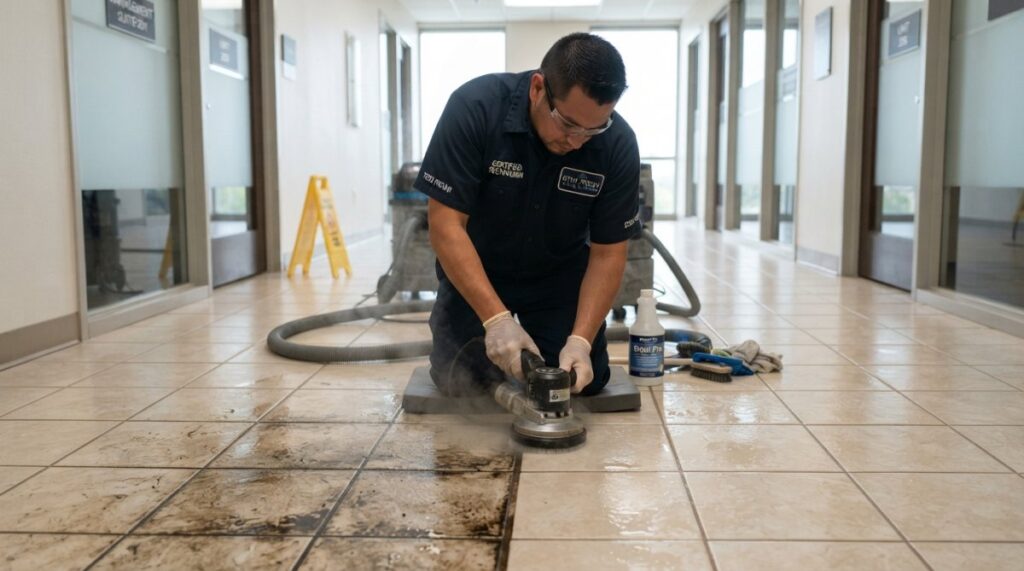
A stiff-bristled grout brush is foundational for any deep cleaning effort. For larger properties or frequent cleaning, a rotary grout cleaning machine accelerates the process dramatically, reducing labor time by 60-70% compared to hand scrubbing. Steam cleaning equipment delivers hot water and pressure to dissolve stains and kill mold without harsh chemicals, reaching temperatures above 200°F to sanitize surfaces while loosening stubborn deposits.
Safety gear includes rubber gloves, eye protection, and respiratory masks when using chemical cleaners.
The grout type determines which cleaning solution works best. Cement-based grout tolerates acidic cleaners better than epoxy grout, which requires gentler pH-neutral approaches. Test in an inconspicuous area first.
Acidic cleaners dissolve mineral deposits and rust stains effectively. Alkaline cleaners tackle organic stains like dirt and soap scum. Oxygen bleach (sodium percarbonate) offers a middle ground between chemical intensity and safety, killing mold and mildew effectively while remaining safe for most grout types. Hydrogen peroxide works similarly for mold and mildew removal, particularly effective in bathrooms. Baking soda serves as a mild abrasive paste for light staining.
Deep cleaning grout follows a systematic process that prevents damage while maximizing effectiveness.
Inspect grout condition carefully for cracks, chips, or deterioration that need professional repair rather than cleaning. Identify the grout type by examining consistency and appearance, epoxy grout appears shinier than cement-based varieties. Test your chosen cleaner on a small, hidden grout line first. Vacuum or sweep tile and grout lines thoroughly to remove loose dirt and debris, then dampen lightly with water to prevent the cleaning solution from drying too quickly.
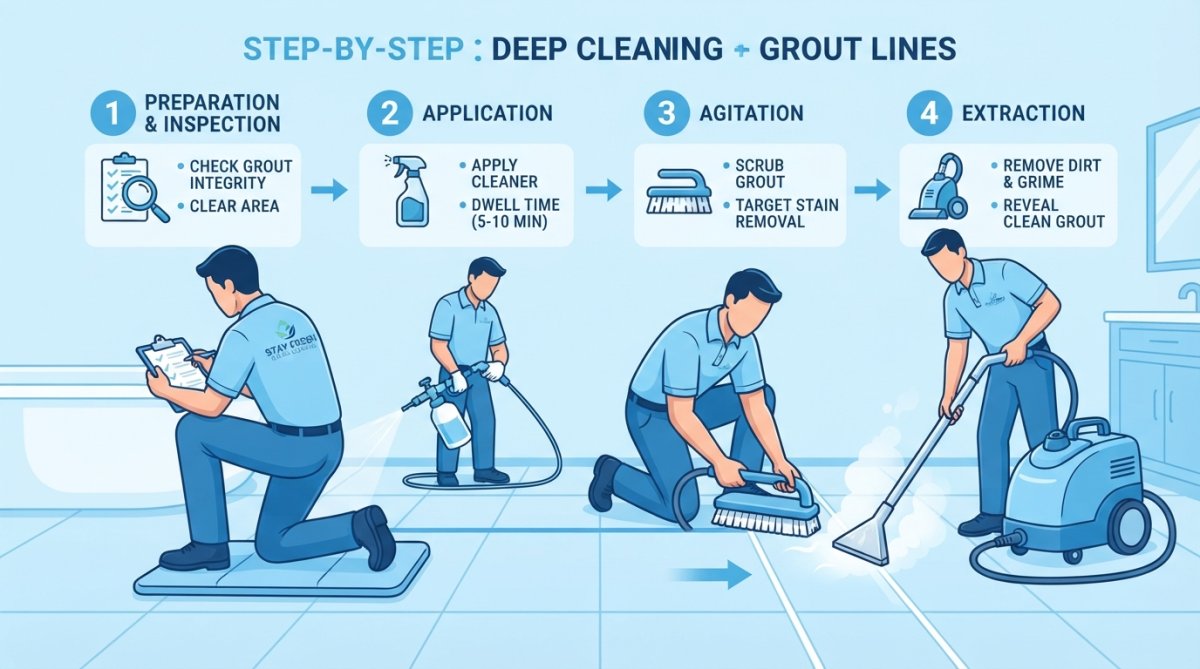
Apply your chosen cleaner directly to grout lines using a spray bottle or applicator brush. Allow the chemical to penetrate for 5-15 minutes depending on stain severity. Use your grout brush with firm, directional strokes along the grout line, pushing rather than scrubbing side-to-side to avoid damaging grout edges. Work in small sections of 10-15 square feet at a time to maintain control and ensure consistent results. For steam cleaning, the heat does much of the work while you apply light brush agitation.
After agitation, extract the dirty cleaning solution and loosened particles using a wet vacuum. Rinse thoroughly with clean water until the rinse water runs clear. Use towels, air movers, or dehumidifiers to dry grout lines completely. In humid climates, this can take 24-48 hours with adequate ventilation from open windows or exhaust fans.
The decision between DIY and professional grout cleaning hinges on property size, grout condition, and your available time and resources.
DIY grout cleaning works well for small properties (1-3 units) with light to moderate staining and no significant mold issues. Light staining responds well to oxygen bleach or baking soda approaches that require minimal equipment. DIY makes less sense when you manage multiple properties, deal with heavy mold contamination, or need turnaround between tenants within days.
Professional grout cleaning services bring equipment, expertise, and efficiency that DIY approaches can’t match. Professionals understand how different grout types, tile materials, and stain categories require different approaches. Professional equipment achieves cleaning results that hand scrubbing cannot replicate, a professional can clean a full bathroom in 2-3 hours what might take an amateur 8-10 hours. Professional services also include proper sealing after cleaning, which extends results significantly and reduces future maintenance needs.
Understanding cost factors helps you budget effectively and evaluate whether professional services make financial sense for your portfolio.
Professional grout cleaning pricing depends on square footage, grout condition, and grout type. Light staining costs less than heavy mold remediation. Sealing after cleaning adds cost but provides substantial ROI by extending the interval between deep cleanings for 1-3 years depending on sealer quality and foot traffic. For property managers managing portfolios, professional cleaning costs should be evaluated against tenant satisfaction impact and property value protection.
For managers overseeing 10+ properties, divide properties into cleaning cycles. High-traffic units get professional cleaning annually or semi-annually. Standard units might need professional attention every 18-24 months with basic grout care between deep cleanings. Establishing a relationship with a professional cleaning service often yields volume discounts.
| Scenario | Annual Cost Per Unit | Frequency | Best For |
|---|---|---|---|
| Single property, light use | $150-300 | Every 2 years | Owner-occupied or low-turnover |
| 5-unit complex, standard use | $250-400 | Annually | Mixed residential portfolios |
| 15+ unit portfolio, high turnover | $200-350 | Semi-annually | Short-term rentals or student housing |
| Commercial space, heavy traffic | $400-600 | Quarterly | Retail or office with public areas |
Maintaining grout between deep cleanings prevents staining from becoming severe and extends the interval between professional services.
Establish a routine cleaning schedule that prevents buildup without requiring constant attention. Monthly light cleaning with a pH-neutral cleaner and soft brush removes surface dirt before it becomes embedded. Weekly cleaning in bathrooms with a bathroom spray prevents mold from establishing in grout lines. High-traffic areas like kitchen grout near sinks need attention 2-3 times weekly. For properties with tenants, include grout maintenance in move-in instructions and encourage residents to address spills promptly.
Grout sealing is the single most effective maintenance investment you can make. A quality grout sealer creates a protective barrier that prevents moisture and stains from penetrating the porous grout surface. Apply sealer within 72 hours of professional deep cleaning, when grout is completely dry. Most sealers cure within 24-48 hours and last 1-3 years depending on foot traffic and moisture exposure.
Tenant education prevents many grout problems before they develop. Include grout care instructions in move-in packets specifying which cleaners are safe for your grout type and which are prohibited. Establish clear expectations about moisture management and adequate ventilation after showers. Some property managers include a small bottle of appropriate grout cleaner in move-in packages with instructions for monthly use.
Understanding what not to do prevents costly errors that damage grout or create worse problems.
Applying acidic cleaners to epoxy grout damages the grout surface and creates permanent discoloration. Always identify your grout type before selecting a cleaner. Mixing different cleaners creates dangerous chemical reactions and toxic fumes. Using bleach on grout with colored pigments fades the pigment permanently. Oxygen bleach is a safer alternative that achieves disinfection without these drawbacks.
Aggressive scrubbing with hard-bristled brushes removes grout material itself, not just stains. Once grout is removed, water penetrates behind tile and causes structural damage. Using pressure washers on grout is particularly risky, high-pressure water blasts grout from between tiles, creating gaps where water intrudes. Leaving cleaning solutions on grout longer than recommended weakens grout. Always follow manufacturer instructions for contact time.
The most common mistake property managers make is cleaning grout thoroughly but failing to seal it afterward. Unsealed grout immediately begins reabsorbing dirt and moisture, undoing the cleaning work. Sealing protects your cleaning investment and extends results by months or years, particularly critical in high-moisture areas like bathrooms where unsealed grout develops mold within weeks.
Professional property management requires attention to environmental impact and legal compliance regarding cleaning practices and standards.
Oxygen bleach and hydrogen peroxide offer effective cleaning with minimal environmental impact, breaking down into water and oxygen with no toxic residue. Baking soda and vinegar represent the gentlest approach but require more labor. Steam cleaning uses only hot water and pressure, producing no chemical residue whatsoever. Stay Fresh Steam Cleaning specializes in steam-based approaches that eliminate the need for harsh chemicals while maintaining high cleaning standards. Many tenants now expect environmentally responsible property management, making eco-friendly cleaning a marketing advantage.
Lease agreements typically specify move-out condition standards, including grout cleanliness in bathrooms and kitchens. Document grout condition during move-out inspections with photos showing staining, mold, or damage. Mold in grout can be considered a habitability violation if it creates health hazards. Maintaining consistent standards across all units prevents discrimination claims and demonstrates proper property maintenance.
Deep cleaning grout for property managers isn’t optional maintenance, it’s a core responsibility that affects tenant satisfaction, property value, and long-term asset protection. The investment in professional grout cleaning during move-outs, combined with strategic sealing and tenant education, delivers returns through improved lease renewals, higher property values, and reduced emergency repairs. Stay Fresh Steam Cleaning brings certified technicians, advanced steam cleaning equipment, and satisfaction guarantees that ensure your rental properties maintain the highest cleanliness standards. Contact Stay Fresh Steam Cleaning today to schedule professional grout cleaning for your properties and discover how properly maintained grout transforms tenant experiences and protects your investment.
Deep cleaning frequency depends on foot traffic and property type. High-traffic commercial spaces may need deep cleaning every 6-12 months, while residential rentals typically benefit from annual or bi-annual deep cleaning. Between professional deep cleans, regular maintenance with pH-neutral cleaners and grout brushes helps prevent excessive buildup of mold, mildew, and stains on grout lines. Properties with water-heavy areas like bathrooms may need more frequent attention.
DIY grout cleaning works for light maintenance using baking soda or oxygen bleach, but professional deep cleaning uses steam extraction, specialized equipment, and commercial-grade detergents that penetrate porous grout more effectively. Professionals can address stubborn mold, mildew, and discoloration that DIY methods miss. For rental property turnover and move-out cleaning, professional results ensure tenant satisfaction and protect property value, making the investment worthwhile for property managers managing multiple units.
Professional grout cleaning typically uses steam cleaning equipment, hot water extraction systems, and specialized grout brushes for agitation. Cleaning solutions vary by grout type: acidic cleaners for mineral deposits, alkaline cleaners for organic buildup, and oxygen bleach for mold and mildew. Professionals assess whether grout is cement-based, sanded, unsanded, or epoxy before selecting the appropriate pH-neutral or specialized cleaner. Equipment and detergents work together to lift stains from grout lines without damaging tile or surrounding surfaces.
Yes, professional deep cleaning protects your investment by maintaining grout longevity, improving tenant satisfaction, and reducing turnover costs. The cost per square foot depends on property size, grout condition, and frequency. For property managers with 15+ rental units, professional cleaning between tenants during move-out ensures consistent standards, prevents costly grout replacement, and maintains property appearance. Many property managers find the professional approach more cost-effective than repeated DIY attempts or emergency repairs from neglected grout damage.
This article was written using GrandRanker


