
- July 30, 2026
- in Blog
- by
- 117
- 0
Last Updated: July 30, 2026
Pet odors linger because they’re not surface-level smells. At Stay Fresh Steam Cleaning, we’ve spent years helping San Antonio homeowners understand that removing stubborn pet odors requires addressing the root cause, not just masking the scent. Whether you’re dealing with cat urine, dog accidents, or accumulated pet dander, the approach matters far more than the product you choose.
Most pet owners struggle to find a solution that actually works. Many standard cleaning methods only trap odors temporarily, allowing them to resurface within weeks. This guide walks you through seven proven methods, from natural remedies to professional steam cleaning, so you can eliminate pet odors completely rather than pushing them deeper into your carpets and furniture.
Pet urine doesn’t sit on the surface, it soaks through carpet fibers, penetrates the backing, and settles into the padding and subfloor beneath. The ammonia and other compounds in urine break down over time, creating increasingly pungent smells that worsen with humidity and heat.
Pet dander, saliva, and body oils compound the problem. Dogs and cats shed microscopic skin cells constantly, and these accumulate in carpets, upholstery, and air ducts. When combined with moisture, these organic materials become food for bacteria, which multiply and intensify the odor. This is why vacuuming or spraying air freshener rarely solves the problem, you’re not addressing the bacterial growth underneath.
Older pet accidents often go undetected. A spot that seemed cleaned months ago may still contain urine crystals in the carpet padding. When humidity spikes, these crystals reactivate and release odor again.
Natural approaches work best when applied early, before odors become deeply embedded. These methods are safe for homes with children and pets and cost significantly less than professional treatments.
Baking soda neutralizes odors rather than masking them. The compound sodium bicarbonate chemically reacts with acidic odor molecules, converting them into neutral substances that no longer smell.
To use baking soda effectively:
For stubborn odors, create a paste by mixing baking soda with a small amount of water. Apply to the stain, let it dry completely (24-36 hours), then vacuum. A common mistake is not waiting long enough, baking soda needs time to absorb odors.
White vinegar cuts through the alkaline compounds in pet urine, making it particularly effective for cat urine odors. The vinegar smell itself dissipates as it dries, taking pet odors with it.
Create a vinegar solution by mixing equal parts white vinegar and water in a spray bottle. For fresh accidents:
For older stains, use undiluted vinegar on heavily soiled spots. Vinegar works best as a first-response treatment for fresh accidents or as maintenance for light odors. For established problems, combine vinegar with baking soda for better results.
Activated charcoal works similarly to baking soda but with greater absorptive capacity. Place activated charcoal in bowls or bags around the affected room, or sprinkle directly on carpets. Let sit for 24 hours, then vacuum.
Other natural absorbers include crumpled newspaper, dried coffee grounds, and zeolite. These methods work best in combination, use baking soda on the carpet itself, place activated charcoal in bowls around the room, and open windows for ventilation.
(/how-to-remove-pet-stains-from-carpet/) Removal]
Enzyme-based cleaners contain live bacteria that literally eat organic compounds in pet urine, eliminating the source of the odor rather than just masking it. Enzymes break down uric acid crystals, which are responsible for the persistent ammonia smell in pet urine.
To use enzyme cleaners properly:
The critical mistake is rinsing or cleaning the area too soon. Interrupting this process leaves some odor-causing compounds behind. Enzyme cleaners work on carpets, rugs, upholstery, and hardwood floors.
Carpets trap moisture, bacteria, and odor compounds deep within their fibers. Removing pet odor from carpet requires a systematic approach that addresses multiple layers.
Use a blacklight flashlight to locate all affected areas, pet urine fluoresces under UV light. Once identified, blot up any remaining moisture using white paper towels or cloth. Press firmly, using your body weight to absorb as much liquid as possible. For dried stains, dampen the area lightly with water first to reactivate the urine compounds, then blot again.
For fresh accidents (within 24 hours): Use the vinegar solution followed by baking soda.
For older stains (weeks or months old): Enzyme cleaners are most effective. Apply generously and follow the waiting period carefully. A second application may be necessary for stubborn odors.
For heavily soiled areas: Combine methods. Apply enzyme cleaner first, wait 24 hours, then apply baking soda once the area is dry.
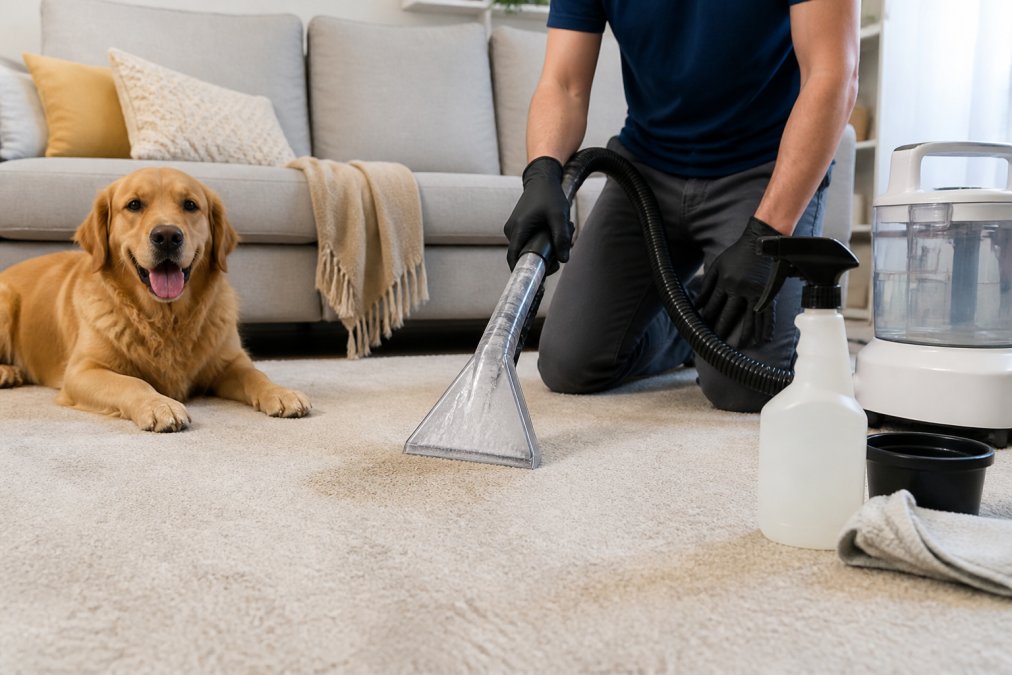
After treatment, vacuum thoroughly using a HEPA filter vacuum, which traps 99.97% of particles. For carpets with persistent odors even after treatment, hot water extraction (steam cleaning) becomes necessary. This method forces hot water deep into carpet fibers and backing, flushing out odor compounds that surface treatments cannot reach.
Professional steam cleaners reach 200°F+ and use truck-mounted or portable extraction systems that remove 95%+ of moisture, compared to 60-70% for rental machines.
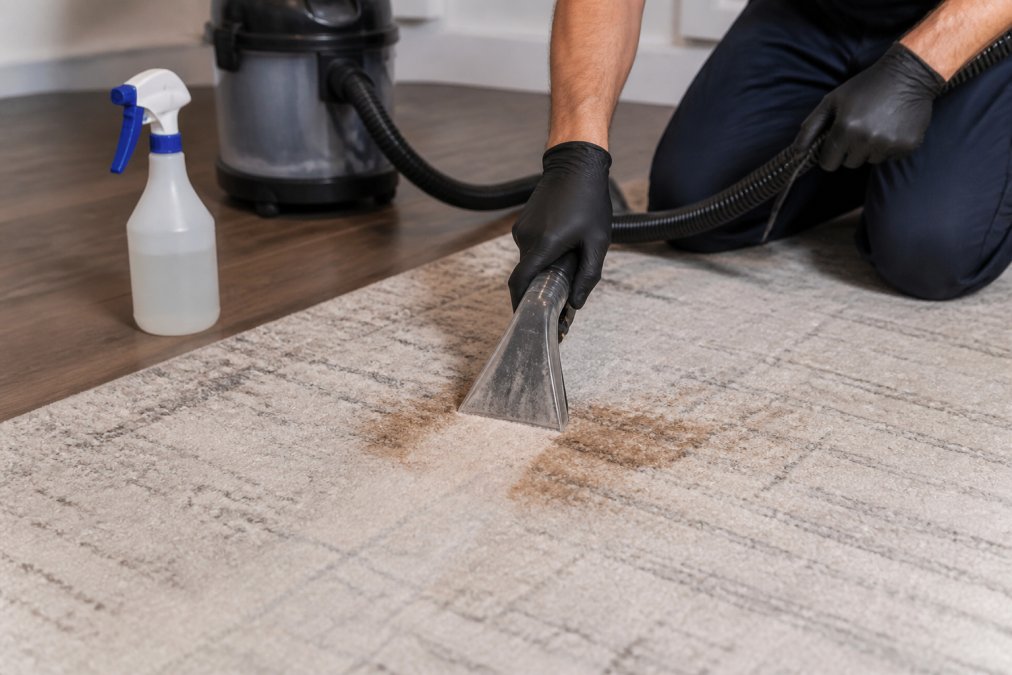
Cat urine on hardwood is particularly challenging because the liquid seeps through the finish into the wood itself. Act quickly, fresh cat urine can often be removed before it penetrates the finish. Blot immediately with paper towels, then apply a 50/50 white vinegar and water solution. Wipe with a damp cloth (not soaked) and dry immediately.
For older stains where urine has penetrated the finish, sanding and refinishing may be necessary. Enzymatic treatments designed for hardwood can help, but apply sparingly to avoid excess moisture on the wood.
Regular grooming and bathing reduce the amount of dander, oils, and bacteria that accumulate in your home. Dogs should be bathed every 4-8 weeks depending on breed and activity level. Cats typically don’t need baths but benefit from regular brushing, which removes loose fur and reduces shedding.
Dental health matters too. Pets with poor oral hygiene develop bad breath that contributes to overall home odors. Regular tooth brushing and professional cleanings reduce this problem significantly. A well-groomed pet produces 40-50% less odor than a neglected pet, even if both have the same accidents.
Homes with multiple pets face compounded odor challenges. One pet’s accident is manageable; three pets’ worth of dander and occasional accidents create an environment where odors become endemic unless actively prevented.
Pet bedding absorbs moisture, sweat, and oils from your pet’s skin. Wash bedding weekly in hot water with enzymatic detergent. For non-removable bedding, sprinkle baking soda weekly, let sit for a few hours, then vacuum. Consider rotating multiple sets of bedding so you always have clean options available.
Opening windows regularly exchanges odor-laden air for fresh air. Ceiling fans circulate air throughout the home, preventing odors from concentrating in corners. HEPA air purifiers capture pet dander and some odor particles. For multi-pet homes, consider activated charcoal filters in addition to HEPA purifiers.
Enzyme-based cleaners are generally safe because they contain naturally occurring bacteria. Baking soda and white vinegar are safe for all pets and children when used properly.
Avoid products containing ammonia, phenol, or essential oils like tea tree and eucalyptus. Ammonia smells similar to urine, potentially confusing pets and encouraging them to re-mark treated areas. Phenol is toxic to cats at even small concentrations.
| Prevention Method | Frequency | Cost | Effectiveness |
|---|---|---|---|
| Pet bedding washing | Weekly | Low | High |
| Baking soda application | Weekly | Low | Medium |
| Professional grooming | Every 6-8 weeks | Medium | High |
| HEPA air purifier | Continuous | Medium | Medium |
| Enzyme cleaner (fresh accidents) | As needed | Low-Medium | High |
| Professional steam cleaning | 1-2 times yearly | High | Very High |
Call a professional if odors persist after multiple treatment methods, return within weeks, you cannot locate the source, the affected area is large (more than 100 square feet), hardwood floors or valuable upholstery are affected, or you’re concerned about water damage.
Professional steam cleaning is the most effective method for deeply embedded pet odors. The process involves inspection using blacklight and odor detection, pre-treatment with enzyme-based cleaners, hot water extraction that forces heated water through carpet fibers and padding, secondary treatments if necessary, and drying with air movers and dehumidifiers.
At Stay Fresh Steam Cleaning, our certified technicians use truck-mounted extraction equipment that achieves superior results compared to portable machines. The truck-mounted system provides consistent heat and extraction power throughout the cleaning process, ensuring that odor-causing compounds are fully removed.
Removing stubborn pet odors requires addressing the root cause rather than just masking the smell. Whether you start with natural remedies like baking soda and vinegar, move to enzyme cleaners, or invest in professional steam cleaning, the key is persistence and proper technique. For pet owners in San Antonio dealing with severe or widespread odors, Stay Fresh Steam Cleaning offers certified technicians who use advanced extraction equipment to eliminate pet odors completely. Our satisfaction guarantee means your carpets and upholstery are treated until the odor is truly gone, not just temporarily improved. Contact Stay Fresh Steam Cleaning today for a professional assessment of your odor problem and a customized treatment plan.
The most effective approach combines multiple methods: identify the odor source (usually pet urine in carpet padding or hardwood), treat with enzyme cleaners to break down odor-causing bacteria, use baking soda or activated charcoal to absorb remaining smells, and ensure proper ventilation. For severe cases, professional steam cleaning reaches deep into carpet fibers and padding where odors hide. Consistent pet grooming and regular bedding washing also prevent odors from building up initially.
Baking soda is effective for absorbing odors but works best as part of a complete strategy. It neutralizes surface smells on carpets and furniture by absorbing odor molecules, especially when left to sit for several hours. However, baking soda alone cannot eliminate deep urine odors trapped in carpet padding or hardwood subfloors. Combine it with enzyme cleaners for stubborn pet accidents, enzymes break down the source compounds while baking soda handles remaining smells.
Enzyme cleaners work by breaking down uric acid and bacteria that cause pet urine smell. Look for products specifically labeled for pet urine with protease and amylase enzymes. Apply directly to affected areas, allow to sit per product instructions (usually 12-24 hours), then blot thoroughly. Enzyme cleaners are especially effective on fresh accidents; for old, set-in stains, pre-treat with white vinegar first to help the enzymes penetrate deeper into carpet padding and fibers.
Hardwood floors require careful moisture control. First, locate the exact spot using a blacklight (cat urine fluoresces). Blot thoroughly with absorbent cloths, do not soak the wood. Apply a diluted white vinegar solution (1 part vinegar to 3 parts water) with a spray bottle, let sit briefly, then wipe immediately with a dry cloth. For stubborn odors, enzyme cleaners designed for hardwood can penetrate surface finishes, but always test in an inconspicuous area first and avoid excess moisture that causes warping or finish damage.
Most natural remedies, baking soda, white vinegar, and activated charcoal, are pet-safe when used as directed. However, essential oils often recommended for odor control can be toxic to cats and dogs; avoid them entirely. Always ensure pets and children stay away from treated areas until they dry completely. When using any cleaner, provide good ventilation. If you have pets with respiratory sensitivity or young children, test products in a small area first and consult your veterinarian or pediatrician about specific ingredients.
This article was written using GrandRanker


