
- July 31, 2026
- in Blog
- by
- 140
- 0
Last Updated: July 31, 2026
Removing deep embedded dirt from carpet is one of the most challenging household cleaning tasks. Ground-in dirt works its way deep into carpet fibers, becoming trapped where ordinary cleaning methods can’t reach. This guide walks you through proven techniques, from DIY solutions to professional-grade methods, so you can decide the best approach for your situation.
Ground-in dirt accumulates gradually and becomes increasingly difficult to remove as it ages. When soil particles settle into carpet fibers, moisture and foot traffic compress them deeper into the pile.
Embedded dirt comes from multiple sources: foot traffic grinds particles into the carpet base, pet accidents and spills create organic matter that bonds to fibers, and tracked-in mud compounds the problem. High-traffic zones near entryways suffer the worst buildup. Moisture from wet shoes activates soil particles, allowing them to penetrate deeper. Once dry, these particles become nearly impossible to dislodge without specialized extraction methods. In San Antonio’s warm, humid climate, these conditions create an ideal environment for stubborn staining.
Regular vacuuming removes surface debris but cannot extract dirt embedded deep within carpet fibers. Vacuuming alone leaves 80-90% of embedded dirt untouched. Filtration soiling compounds this issue, fine dust particles settle into the carpet base and become trapped, creating a dark haze across the entire carpet.
Different carpet materials respond differently to cleaning methods. Choosing the wrong approach can damage fibers, cause excessive drying time, or leave residue.
Synthetic carpets dominate residential installations. Nylon and polyester fibers are durable, stain-resistant, and respond well to hot water extraction. Olefin (polypropylene) carpet is budget-friendly but more prone to staining. Natural fiber carpets, wool, sisal, and jute, require gentler treatment. Wool accepts dyes beautifully but excessive moisture causes shrinkage and mildew. Check the carpet manufacturer’s warranty for approved cleaning methods, as using the wrong method could void your warranty.
Pet stains demand enzymatic cleaners that break down urine proteins and feces particles. Mud and dirt respond well to hot water extraction. Food stains, especially grease, require pre-treatment with appropriate solvents before extraction.
A systematic approach yields the best results. Each step builds on the previous one, progressively loosening and extracting dirt.
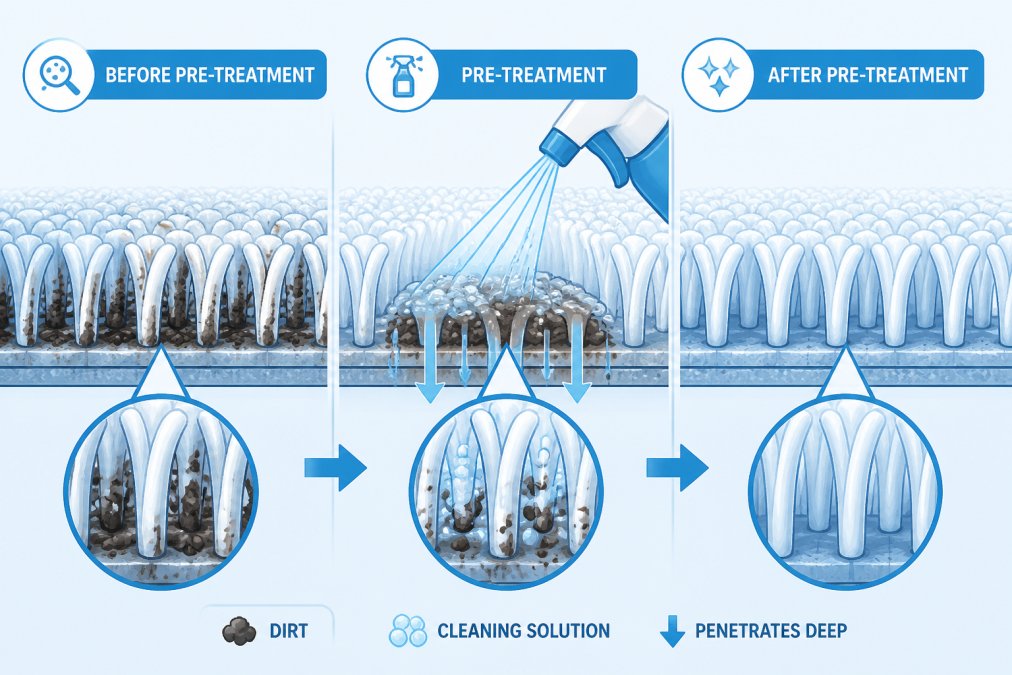
Begin by thoroughly vacuuming the entire carpet with slow, deliberate passes. Make multiple passes over high-traffic zones. Inspect the carpet carefully while vacuuming, identifying stained areas and assessing how deep the staining appears.
Apply appropriate pre-treatment solutions to stained areas 15-30 minutes before deep cleaning. For general embedded dirt, a mixture of dish soap and warm water works as a basic pre-treatment. For pet stains, use an enzymatic cleaner and allow it to sit for the time specified on the label. Avoid over-saturating the carpet during pre-treatment.
Select your cleaning method based on carpet type, dirt severity, and available equipment. Hot water extraction works best for most residential situations. Apply cleaning solution according to the machine’s instructions, working systematically across the room with slightly overlapping passes.
Agitation is the key to removing deep embedded dirt from carpet. The mechanical action breaks dirt’s bond to fibers. For stubborn spots, use a soft-bristled brush to gently agitate the carpet after applying cleaning solution, working in circular motions. Follow agitation immediately with extraction, making multiple passes over the same area to remove as much water as possible.
Open windows and doors to promote air circulation. Turn on ceiling fans and use portable fans to speed evaporation. In humid climates like San Antonio, running air conditioning helps remove moisture from the air. Avoid walking on the carpet until it’s completely dry. Drying typically takes 6-12 hours for hot water extraction. Once dry, vacuum the carpet again to lift flattened fibers and remove any residue.
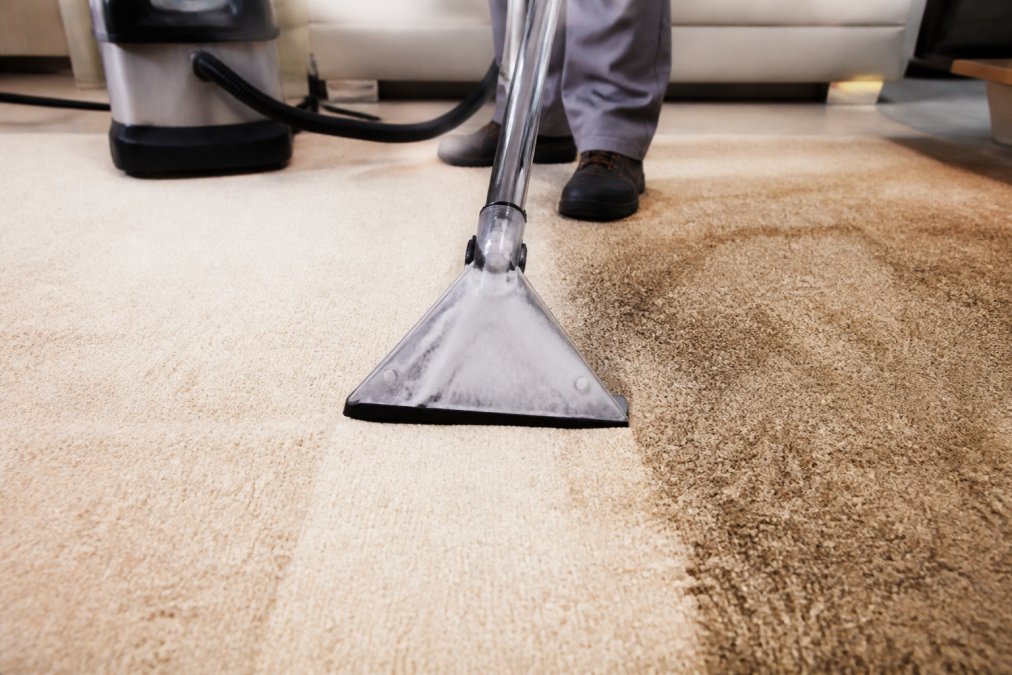
Hot water extraction, also called steam cleaning, is the most effective method for removing deep embedded dirt from carpet. It combines heat, moisture, chemical action, and mechanical extraction, all working together to dislodge stubborn soil.
Hot water extraction heats water to 200-220°F and pressurizes it into the carpet. The heat opens carpet fibers, allowing cleaning solution to penetrate deeply. The water jet’s pressure mechanically breaks dirt’s bond to fibers while the machine’s powerful suction extracts dirty water and loosened soil. Professional equipment applies more heat and pressure than rental machines, reaching higher temperatures and maintaining consistent pressure throughout the cleaning process.
Hot water extraction excels at removing all types of embedded dirt because it attacks the problem from multiple angles simultaneously. Heat loosens soil bonds, chemical solutions dissolve organic stains, pressure and agitation break mechanical bonds, and suction removes everything in one pass. This method works effectively on most carpet types and removes pet stains better than dry cleaning because the moisture and enzymes work together to break down organic compounds. It also addresses filtration soiling by removing fine dust particles that have settled into the carpet base.
Professional cleaning solutions cost money, but effective homemade alternatives use common household ingredients. These DIY solutions work surprisingly well for light-to-moderate embedded dirt.
Mix one part white vinegar with one part warm water in a spray bottle. Spray the solution onto soiled areas, working it into the carpet with a soft brush. Let it sit for 10-15 minutes while the chemical reaction loosens dirt. Sprinkle baking soda over the damp area and let it dry completely, usually 2-4 hours. Vacuum thoroughly once dry. This method works best for light-to-moderate soiling.
Mix one tablespoon of dish soap with one cup of 3% hydrogen peroxide and one tablespoon of white vinegar. Spray onto stained areas and let sit for 5-10 minutes. Use a soft brush to agitate the carpet gently. Extract with a damp cloth or carpet cleaning machine. Rinse with plain water to remove soap residue. This solution is stronger than baking soda and vinegar, making it better for stubborn stains. However, hydrogen peroxide can bleach dark carpets, so always test on a hidden area first.
Enzyme cleaners contain proteins that break down organic compounds, perfect for pet accidents, blood, grass, and food stains. Mix enzyme cleaner powder with water according to package directions. Spray generously onto stained areas and cover with plastic wrap to keep the area moist. Leave undisturbed for the time specified on the label. Once the time elapses, extract with a damp cloth or carpet cleaning machine. Rinse thoroughly to remove enzyme residue.
Choosing between rental and purchase, portable and upright machines depends on your cleaning frequency and budget.
Portable carpet cleaning machines are compact, lightweight, and ideal for spot cleaning and small areas. They cost less and store easily but lack the power and capacity of upright machines. Upright machines resemble traditional vacuums but include water tanks and heating elements. They cover larger areas quickly and provide stronger suction and agitation. For removing deep embedded dirt from carpet in an average home, an upright machine delivers superior results.
Renting a carpet cleaning machine costs $30-75 per day, making sense if you clean carpets once or twice yearly. Purchasing a machine makes sense if you clean monthly or more frequently. Consumer carpet cleaning machines range from $300-1,500. Over several years, ownership becomes more economical than repeated rentals.
| Option | Cost | Best For | Drying Time |
|---|---|---|---|
| Rental upright | $40-75/day | Occasional deep cleaning | 6-12 hours |
| Rental portable | $30-50/day | Spot cleaning, apartments | 4-8 hours |
| Purchase upright | $1,500-3,000 | Frequent cleaning, pet owners | 6-12 hours |
| Purchase portable | $300-800 | Occasional spot cleaning | 4-8 hours |
| Professional service | Varies by area | Severe soiling, delicate fibers | 6-12 hours |
Filtration soiling creates a dark haze across carpet, especially along baseboards and under doors. This occurs when fine dust particles become trapped in carpet fibers over time as household air circulates. Addressing filtration soiling requires removing the accumulated dust deep within the carpet pile. Hot water extraction works best because the moisture loosens particles and the suction removes them completely.
Prevention is easier than removal. Entry mats trap dirt before it reaches carpet. Regular vacuuming, twice weekly in high-traffic areas, removes particles before they settle. Carpet protector treatments create a barrier that prevents dirt from bonding to fibers. Once filtration soiling has developed, professional cleaning often produces the best results.
Deciding between DIY and professional cleaning involves comparing costs, time investment, effectiveness, and long-term carpet durability.
DIY cleaning costs depend on your approach. Homemade solutions cost under $10. Renting a carpet cleaning machine costs $40-75 per day. Purchasing a machine costs $300-3,000. Professional cleaning typically ranges from $150-500 for a typical home. If you rent equipment multiple times yearly, the costs approach professional cleaning prices.
DIY cleaning requires learning proper technique. Mistakes like over-wetting the carpet or using wrong solutions damage fibers and extend drying time. The process is labor-intensive, taking 4-8 hours for an average home. Professional cleaners complete the same work in 2-3 hours and know which solutions work for specific stains and carpet types.
Improper cleaning damages carpet more than dirt. Over-wetting causes mold and mildew. Using wrong solutions can bleach or discolor fibers. Professional cleaning protects carpet investment through proper technique, appropriate solutions, and correct drying procedures. Many carpet warranties require professional cleaning annually to remain valid.
Removing deep embedded dirt from carpet is challenging, but you have effective options ranging from DIY solutions to professional services. If you’ve tried multiple approaches without success, or if your carpet is valuable and you want expert results, Stay Fresh Steam Cleaning offers certified, background-checked technicians using advanced hot water extraction equipment. Our team has helped San Antonio homeowners and property managers restore carpets that seemed permanently soiled, ensuring your carpet investment lasts for years. Contact us for a free assessment of your carpet’s cleaning needs.
The most effective method depends on your carpet type and dirt severity. Hot water extraction offers professional-grade results by forcing cleaning solution deep into carpet fibers, then extracting dirt and moisture. For DIY approaches, pre-treat stains with a homemade solution of baking soda and vinegar or hydrogen peroxide and dish soap, then use a carpet cleaning machine with proper agitation. Multiple passes and adequate drying time are essential for removing ground-in dirt completely.
Yes, homemade solutions can be effective for moderate embedded dirt when combined with proper technique. Baking soda absorbs odors and helps lift dirt, vinegar breaks down residue, and hydrogen peroxide targets organic stains like pet accidents. However, these solutions work best on fresh or moderately soiled areas. Heavily embedded dirt in high-traffic zones often requires hot water extraction or professional equipment to achieve complete removal and prevent rapid re-soiling.
Hot water extraction uses pressurized hot water combined with cleaning solution to penetrate deep into carpet fibers, breaking apart ground-in dirt and stains. The machine then immediately extracts the dirty water, removing contaminants that other methods leave behind. This process is particularly effective for synthetic fibers like nylon and polyester, which hold embedded dirt in their structure. The combination of heat, moisture, agitation, and extraction addresses all stages of dirt removal in a single process.
Deep embedded dirt results from foot traffic grinding soil particles into carpet fibers, combined with moisture that causes dirt to bond to the fibers. Pet accidents, spills, and high-traffic areas are common culprits. Prevention strategies include using entry mats to trap outdoor dirt, establishing a no-shoes policy, vacuuming regularly with proper technique, and applying carpet protector treatments. Regular maintenance vacuuming and prompt spot cleaning prevent dirt from becoming deeply embedded over time.
This article was written using GrandRanker


