
- September 16, 2026
- in Blog
- by
- 124
- 0
Last Updated: August 4, 2026
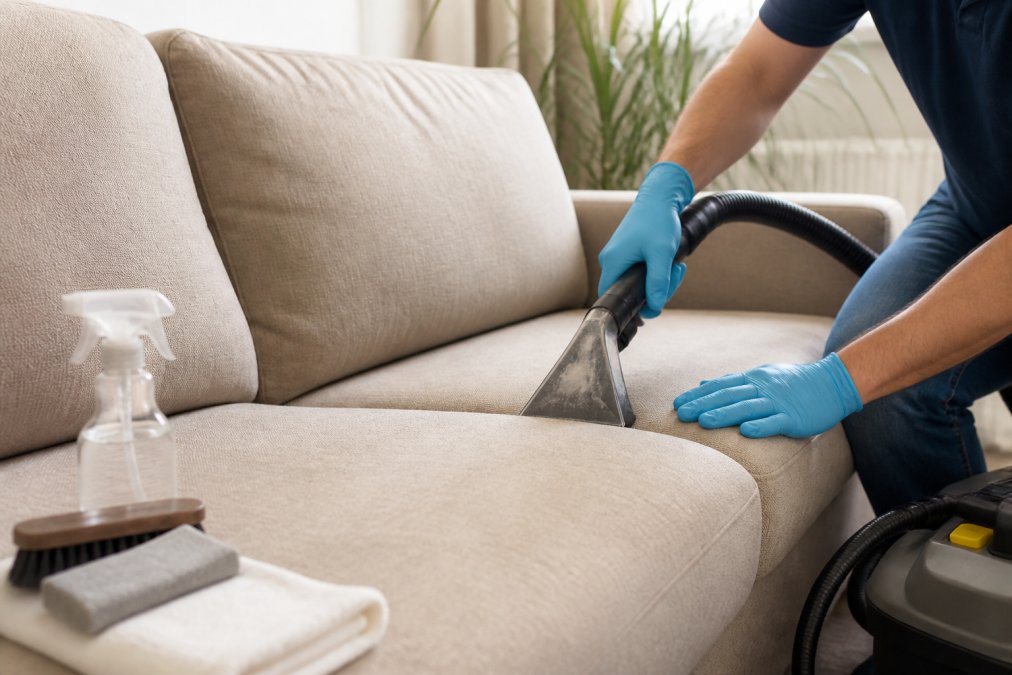
Many homeowners reach for Oxi Fresh when upholstery stains appear, but this product has real limitations, especially for deep cleaning, pet odors, and certain fabric types. An Oxi Fresh alternative for upholstery cleaning might be exactly what your furniture needs. Stay Fresh Steam Cleaning has worked with hundreds of homeowners in San Antonio and Bexar County who discovered that professional-grade alternatives deliver faster results, better stain removal, and longer-lasting cleanliness than over-the-counter spot treatments alone.
This guide breaks down the best Oxi Fresh alternative for upholstery cleaning options, from professional steam cleaning services to portable machines and non-toxic DIY solutions.
Spot treatment products like Oxi Fresh work for minor stains on light-colored upholstery, but they fall short with deep soil, pet accidents, or heavily soiled fabric. These products rely on surface-level agitation and absorption; they don’t extract embedded dirt, bacteria, or odor-causing compounds trapped deep in the fiber.
Professional cleaning methods use entirely different mechanics. Steam cleaning applies heat and pressure to suspend soil, then extracts it with powerful suction. Encapsulation methods wrap soil particles in a polymer that’s vacuumed away. Both remove far more dirt than spot treatment alone.
Pet owners face a special challenge. Enzyme-based cleaners work on organic matter, but they don’t eliminate odors at the source. Pet urine soaks into padding underneath the upholstery fabric itself. Professional extraction methods paired with specialized pet-odor treatments are the only reliable way to fully eliminate pet smells.
Professional cleaning delivers results that home products cannot match. The difference lies in equipment, technique, and chemistry working together at a scale spot treatments can’t replicate.
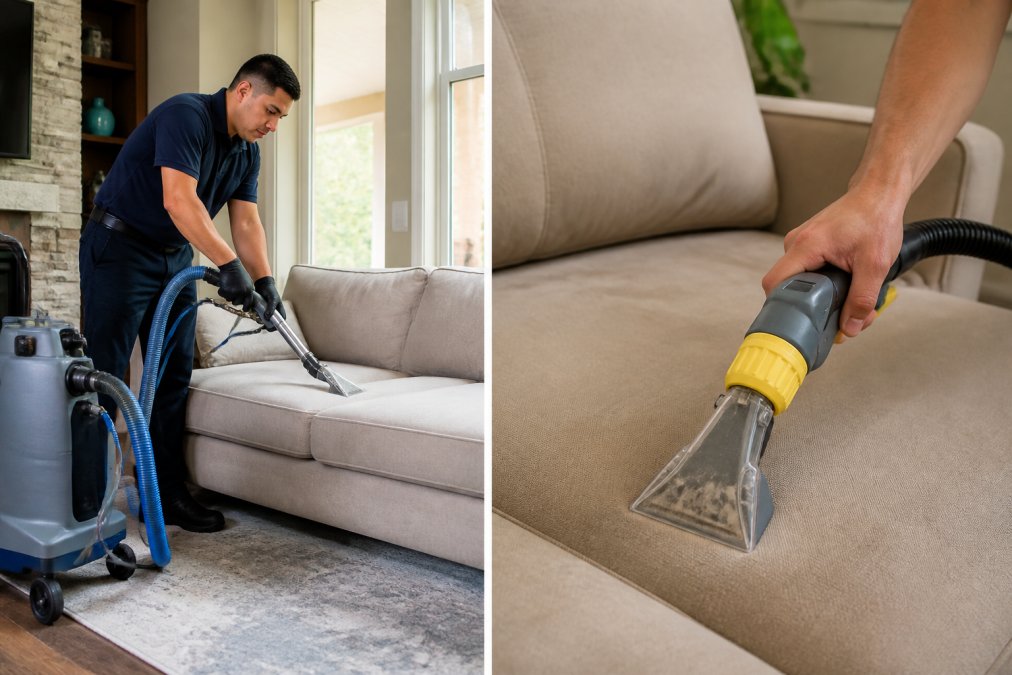
Steam cleaning is the gold standard for deep upholstery cleaning. Hot water extraction uses heated solution, agitation, and powerful vacuum suction to pull embedded soil, allergens, and bacteria from deep within the fibers. A brush head agitates fibers while solution is injected under pressure, lifting soil and breaking down stains. A separate vacuum port then extracts the dirty solution along with loosened soil. The result is fabric that’s genuinely clean at the fiber level, removing allergens, dust mites, pet dander, and odor-causing bacteria. Drying typically takes 4-8 hours depending on humidity and fabric thickness.
For delicate fabrics like silk or velvet, or antique upholstery, steam cleaning requires extra care to avoid shrinkage or color bleeding.
Encapsulation uses a specialized polymer-based cleaner that wraps soil particles in a crystalline coating. Once dry, these encapsulated particles are easily vacuumed away. Drying takes 1-2 hours instead of 4-8, making it safer for antique furniture, delicate fabrics, and upholstery with sensitive backing. Encapsulation works exceptionally well for maintenance cleaning and regular upkeep on furniture that isn’t heavily soiled.
| Method | Drying Time | Best For | Moisture Level | Stain Effectiveness |
|---|---|---|---|---|
| Steam Cleaning | 4-8 hours | Deep soil, pet odors, heavily soiled fabric | High | Excellent (80%+) |
| Encapsulation | 1-2 hours | Maintenance, delicate fabrics, quick turnaround | Low | Good (60-70%) |
| Oxi Fresh (DIY) | 30 minutes | Light spots, fresh stains | Very low | Fair (30-40%) |
Portable machines and rentals offer middle-ground solutions between spot treatment and professional service, using similar extraction principles at a smaller scale.
The BISSELL SpotClean Pro is the most popular portable option for homeowners. This lightweight, cordless extractor combines suction, scrubbing action, and cleaning solution in a single pass. It features a large 3/4-gallon tank, multiple attachments for different surfaces, and enough power to remove tough stains like wine, coffee, and pet messes. What makes it different from Oxi Fresh is the extraction component, you’re actively pulling dirty liquid back out of the fabric, mimicking professional extraction on a smaller scale.
Home Depot and Lowe’s rent upholstery cleaning machines for $20-40 per day. These are larger and more powerful than portable models. Renting makes sense for one-time deep cleaning projects. Buying a portable extractor costs $100-300 upfront and justifies the cost if you plan to use it monthly or more frequently.
Non-toxic DIY solutions can be surprisingly effective for light stains or maintenance cleaning when paired with proper technique.
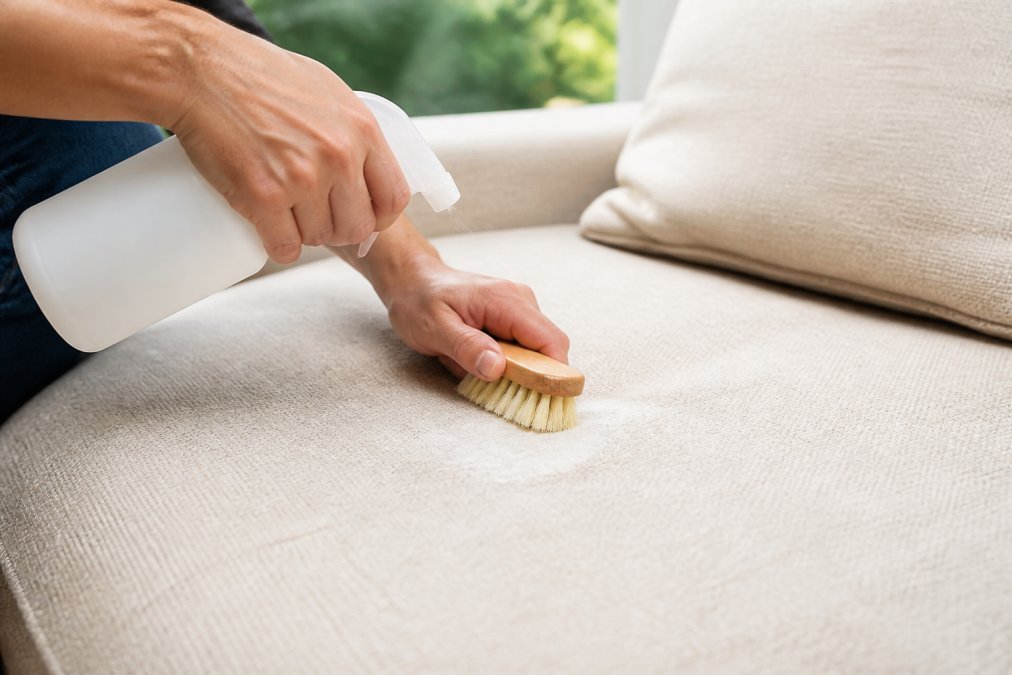
A simple mixture of white vinegar, water, and a drop of dish soap works on many stains without harsh chemicals. The vinegar’s acidity breaks down stain compounds, while soap provides surfactants to lift soil. For organic stains, a hydrogen peroxide solution is effective, mix equal parts hydrogen peroxide and water, apply to the stain, let it sit 5-10 minutes, then blot thoroughly. Baking soda is excellent for odor removal, sprinkle it on upholstery, let it sit 15-30 minutes, then vacuum thoroughly.
The key difference between DIY solutions and commercial products is pH balance. Professional cleaners use pH-balanced formulas that clean effectively without leaving residue that attracts dirt.
Step 1: Vacuum thoroughly. Remove all loose soil, dust, and debris to prevent grinding dirt deeper into fibers.
Step 2: Test on a hidden area. Apply your cleaning solution to an inconspicuous corner and wait 5 minutes to check for color bleeding or fabric damage.
Step 3: Pre-treat the stain. Apply your chosen solution directly to the stain. For fresh stains, let it sit 2-3 minutes; for set-in stains, allow 10-15 minutes.
Step 4: Agitate gently. Use a soft-bristled brush or cloth with circular motions and light pressure. Avoid harsh scrubbing, which can damage fibers or push the stain deeper.
Step 5: Blot, don’t rub. Use a clean, white cloth to press down firmly and absorb the dirty solution. Repeat with fresh cloth sections until no more color transfers.
Step 6: Rinse with clean water. Apply plain water to remove cleaning solution residue and blot again until water comes away clear. Residue left behind will attract dirt and cause the stain to return.
Step 7: Dry completely. Use a clean cloth to absorb remaining moisture and open windows or use a fan to speed drying.
Understanding cost structure helps you decide when to hire professionals versus handling cleaning yourself.
Professional upholstery cleaning pricing depends on furniture piece size, fabric condition, stain severity, and location. In San Antonio and Bexar County, services typically charge per piece rather than by square footage. Most professional cleaners offer package pricing for multiple pieces, which reduces per-piece costs. Many companies offer satisfaction guarantees, if you’re not happy with results, they’ll re-clean at no charge.
A portable extractor costs $100-300 upfront, with cleaning solution adding $10-20 per use. Over two years of monthly use, you’re spending $240-540 on equipment and supplies, breaking even against two or three professional cleaning sessions. However, professional cleaning delivers superior results and longer-lasting cleanliness. For pet owners or households with frequent spills, professional cleaning every 6-12 months combined with DIY spot treatment between services is often most cost-effective.
Not all cleaning methods work on all fabrics. Choosing the right approach depends on fiber type, backing, and the furniture’s age and condition.
Synthetic fibers (polyester, acrylic, nylon) are durable and forgiving. They withstand steam cleaning, encapsulation, and most DIY solutions without shrinkage or color bleeding. Natural fibers (wool, cotton, linen, silk) require more care. Wool tolerates steam cleaning well, but excessive moisture can cause shrinkage. Silk and velvet are delicate; high moisture and agitation risk permanent damage.
For natural fiber upholstery, encapsulation or professional dry-cleaning methods are safer than steam extraction. Always test any cleaning method on a hidden area first. Leather requires specialized treatment entirely and needs pH-balanced, leather-specific solutions applied by someone trained in leather care.
Antique or vintage upholstery deserves professional assessment before any cleaning. Velvet and crushed velvet are particularly vulnerable to moisture and agitation; encapsulation is safer than steam cleaning. Patterned or printed fabrics require care because dyes may not be colorfast, test any cleaning solution on a hidden area and wait 24 hours before proceeding.
How you care for upholstery after cleaning determines how long results last and whether new problems develop.
Proper drying is critical. Upholstery left damp longer than 24 hours risks mold, mildew, and musty odors. Steam cleaning takes 4-8 hours to dry fully; encapsulation dries in 1-2 hours; DIY spot treatment should dry within a few hours. Speed up drying by opening windows, running fans, or using dehumidifiers. Avoid using upholstery while it’s still damp, as sitting on wet furniture compresses fibers and traps moisture inside.
Residue is the enemy of clean upholstery. When cleaning solution isn’t fully extracted or rinsed, it remains in the fibers and attracts dirt. Professional services include a rinse cycle specifically designed to remove cleaning solution residue. DIY cleaners often skip this step, which is why results fade quickly. Always finish with a water-only rinse and extract. Maintenance vacuuming between cleanings prevents soil buildup, vacuum upholstery weekly if you have pets.
Pet owners face unique challenges. Urine, vomit, and feces don’t just stain; they create odor problems that persist even after surface cleaning.
Oxi Fresh works on fresh pet accidents if applied immediately. For set-in stains or old accidents, it’s largely ineffective. Pet urine soaks through fabric into padding, creating a bacteria and ammonia problem that surface cleaning can’t address. Professional steam cleaning extracts moisture and bacteria from deep within the furniture structure. Many professional cleaners use enzyme-based treatments designed specifically for pet urine, breaking down uric acid crystals that cause persistent odor.
Hydrogen peroxide is safe for pets and children at household concentrations. Vinegar is non-toxic. Baking soda is completely safe. Professional services should use EPA-certified, child-safe and pet-safe solutions. Ask what products they use before booking. Avoid bleach, ammonia, and petroleum-based solvents if children or pets are in the home.
| Option | Best For | Cost | Drying Time | Effectiveness | Safety |
|---|---|---|---|---|---|
| Professional Steam Cleaning | Deep soil, pet odors, heavy soiling | Higher | 4-8 hours | Excellent (80%+) | High |
| Professional Encapsulation | Delicate fabrics, quick turnaround | Medium-High | 1-2 hours | Good (60-70%) | High |
| Portable Extractor (BISSELL) | Spot treatment, stairs, light stains | Medium (one-time) | 2-4 hours | Fair-Good (50-70%) | High |
| DIY Vinegar/Water Solution | Light stains, maintenance | Low | 1-3 hours | Fair (30-50%) | Very High |
| DIY Hydrogen Peroxide | Organic stains, pet messes | Low | 1-3 hours | Good (50-70%) | Very High |
Stay Fresh Steam Cleaning has helped hundreds of San Antonio homeowners move beyond temporary spot treatments to lasting upholstery solutions. Whether you choose professional steam cleaning, encapsulation, or a portable extractor depends on your fabric type, budget, and stain severity. For pet owners, heavily soiled furniture, or delicate fabrics, professional service delivers results that DIY alternatives cannot match.
Contact Stay Fresh Steam Cleaning for a free assessment of your upholstery. Our certified, background-checked technicians will evaluate your fabric type, stain severity, and specific challenges, then recommend the most effective cleaning method. With our satisfaction guarantee, you’ll know your furniture is in expert hands.
Steam cleaning uses hot water extraction to inject cleaning solution deep into fibers and then vacuum out soil and moisture, typically requiring 4-8 hours drying time. Low-moisture encapsulation applies cleaning agents that crystallize around soil particles, allowing them to be vacuumed away with minimal moisture and faster drying. Steam cleaning removes more embedded allergens and bacteria, while low-moisture methods work well for maintenance and prevent residue buildup that can attract future dirt.
Many DIY solutions using hydrogen peroxide, pH-balanced mixtures, and non-toxic ingredients are safe for homes with pets and children when used properly. Avoid harsh chemicals and always test solutions on hidden fabric areas first. Professional services often use EPA-certified, pet-safe cleaning solutions. If you're concerned about chemical exposure, ask providers about their ingredient lists and look for non-toxic options that don't leave residue buildup on fibers.
Professional services offer deep cleaning with industrial-grade equipment, trained technicians, and expertise in fabric care, but require scheduling and higher upfront cost. Rental machines give you control and lower per-use cost for spot treatments, but require physical effort, may not achieve the same soil extraction depth, and lack professional knowledge about fabric compatibility. For pet stains and heavy soiling, professional-grade cleaning efficiency typically justifies the investment; for light maintenance, a rental or portable cleaner may suffice.
Some carpet cleaning machines can clean upholstery, but portable spot cleaners designed for furniture are generally safer and more effective. Full-size carpet extractors may apply too much water, risking fiber damage and extended drying times. Portable upholstery cleaners have smaller hoses and tools designed for delicate surfaces. Always check your furniture's care label and test any equipment on a hidden area first to ensure compatibility with your specific fabric type.
Professional steam cleaning results typically last 4-6 weeks with regular vacuuming, though this depends on fabric type, usage, and household traffic. Low-moisture methods may extend this slightly due to reduced residue. Pet owners and high-traffic households may see faster re-soiling. Regular maintenance vacuuming and prompt spot treatment of spills extend the time between professional cleanings. Scheduling deep cleaning every 6-12 months helps maintain fiber integrity and prevents permanent staining.
[EXTERNAL_LINK: EPA guidelines on cleaning product safety and certification | epa.gov]
[EXTERNAL_LINK: The Carpet and Rug Institute standards for upholstery cleaning methods | carpet-rug.org]
[EXTERNAL_LINK: Professional fabric care recommendations from the International Fabricare Institute | ifi.org]
This article was written using GrandRanker


