- September 16, 2026
- in Blog
- by
- 86
- 0
Last Updated: August 21, 2026
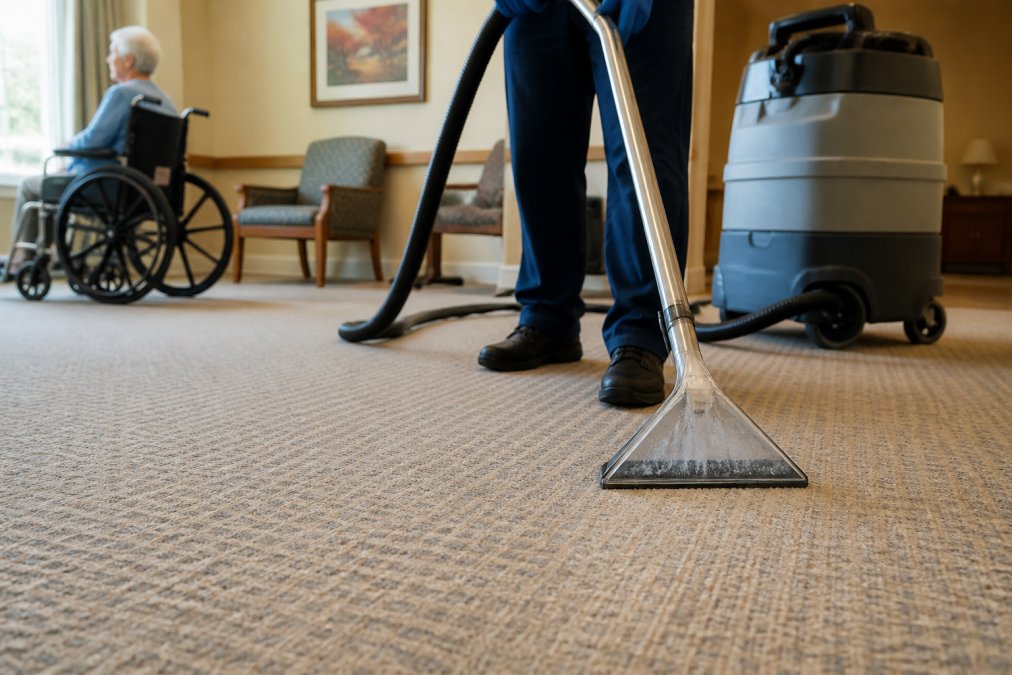
Nursing homes face a unique challenge: carpets accumulate far more than everyday dirt. Incontinence, mobility issues, spills from medications and meals, and the natural wear of high-traffic corridors create an environment where standard vacuuming simply isn’t enough. At Stay Fresh Steam Cleaning, we’ve worked with healthcare facilities across San Antonio and Bexar County and seen firsthand how commercial carpet cleaning for nursing homes directly impacts resident health, facility compliance, and the overall impression visitors receive when they walk through your doors.
The stakes are higher in healthcare settings. Carpets trap bio-contaminants, allergens, and odor-causing bacteria that regular cleaning misses. When a family member visits their loved one and encounters stale odors or visibly soiled carpet in common areas, it raises immediate questions about facility standards and care quality. Beyond perception, there’s a real health component: poor carpet maintenance contributes to respiratory issues, particularly problematic for elderly residents with compromised immune systems.
Commercial carpet cleaning for nursing homes isn’t optional maintenance, it’s part of your infection control protocol and your facility’s reputation management. The difference between a rushed weekly vacuum and a strategic deep-cleaning program can determine whether your facility feels welcoming or neglected.
The frequency of carpet cleaning in nursing homes depends on traffic patterns, incontinence rates, and your facility’s specific layout. High-traffic areas like hallways, common rooms, and dining areas need more aggressive attention than private resident rooms.
Recommended cleaning schedule:
The supporting keyword how often to clean carpets in nursing homes reflects this reality. Waiting too long between professional cleanings allows soil load to build up, the accumulation of dirt, dust, and organic matter that becomes increasingly difficult to extract. Once soil load reaches critical levels, even commercial-grade equipment struggles to restore the carpet fully.
Incontinence-related accidents demand immediate attention. Urine and fecal matter contain bacteria and odor compounds that penetrate carpet fibers and backing if not addressed quickly. Spot treatment within hours prevents these compounds from setting permanently into the carpet structure. Many facilities establish protocols where staff immediately notify the cleaning team of accidents, allowing for same-day spot treatment before the stain dries completely.
Stay Fresh Steam Cleaning offers flexible scheduling that works around resident routines. Early morning or evening cleaning minimizes disruption to activities and allows carpets adequate drying time before residents are back in those areas.
Healthcare facility carpet cleaning standards exist to protect residents and staff. Understanding these requirements ensures your facility maintains both legal compliance and genuine health safety.
The CDC and infection prevention guidelines emphasize that carpets in healthcare settings must be cleaned using methods that effectively remove pathogens and allergens (the CDC). Hot water extraction (steam cleaning) is the gold standard because it uses heat and pressure to dislodge and remove contaminants that surface cleaning cannot reach (the CDC). The supporting keyword healthcare facility carpet cleaning standards reflects these evidence-based recommendations.
Key compliance considerations include:
Professional cleaning services like Stay Fresh Steam Cleaning understand these standards and structure their approach accordingly. They use healthcare-appropriate cleaning agents, maintain proper drying protocols, and document their work in ways that support your compliance documentation.
Incontinence accidents are a reality in nursing homes. The challenge isn’t just removing the visible stain, it’s eliminating the odor and bacteria that persist long after the stain appears dry.
Immediate response protocol:
The difference between DIY spot treatment and professional intervention becomes clear when you consider what happens beneath the carpet surface. Urine penetrates the carpet backing and the subfloor if not completely extracted. Over time, bacteria colonize these areas, creating persistent odors that no surface cleaning can eliminate. Professional commercial carpet cleaning for nursing homes addresses this by using truck-mounted extraction systems that generate pressure and suction far exceeding portable equipment.
Products designed specifically for incontinence odors, such as enzymatic treatments that target urine and fecal bacteria, are more effective than general-purpose cleaners. These formulations contain active enzymes that continue working for hours after application, breaking down organic matter at the molecular level.
High-traffic areas in nursing homes show visible wear patterns called traffic lanes. These areas accumulate embedded soil that regular vacuuming cannot remove. Deep extraction is the only method that effectively restores these zones.
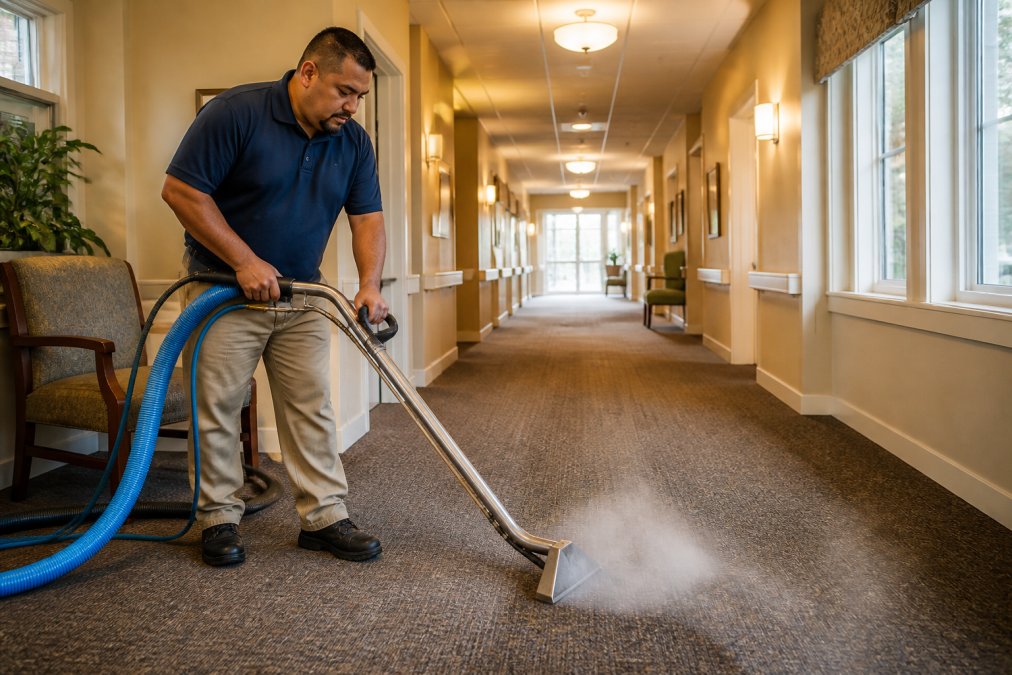
Hot water extraction (steam cleaning) is the industry standard for deep cleaning. The process works by:
Truck-mounted systems generate significantly more pressure and suction than portable units. This matters in nursing homes because the volume of soil embedded in high-traffic areas requires professional-grade equipment. Portable machines often leave carpets overly wet and fail to extract soil from deeper fiber layers.
Low-moisture encapsulation cleaning is an alternative method that uses specialized equipment to apply a polymer-based cleaning agent. The agent encapsulates soil particles, which are then vacuumed away. This method dries faster (30-60 minutes versus 2-4 hours) and reduces slip hazards, making it suitable for occupied facilities where drying time is a concern. However, encapsulation is better suited for maintenance cleaning rather than heavy-soil removal.
Stay Fresh Steam Cleaning uses truck-mounted hot water extraction for nursing home deep cleaning because it delivers superior soil removal and sanitization, critical for healthcare environments. The combination of heat, pressure, and extraction removes not just visible soil but also allergens and bio-contaminants embedded in carpet fibers.
Traffic lane treatment specifically:
This targeted approach restores traffic lanes to match the appearance of less-traveled areas, improving the facility’s overall appearance and hygiene perception.
Odor in nursing homes stems from multiple sources: incontinence accidents, spills, mold growth in damp carpets, and the general accumulation of organic matter. Masking odors with fragrances doesn’t solve the underlying problem, it masks it temporarily while bacteria continue multiplying.
True odor elimination requires addressing the source. This means:
Commercial carpet cleaning for nursing homes incorporates odor neutralization as a core component. After extraction, professional cleaning includes:
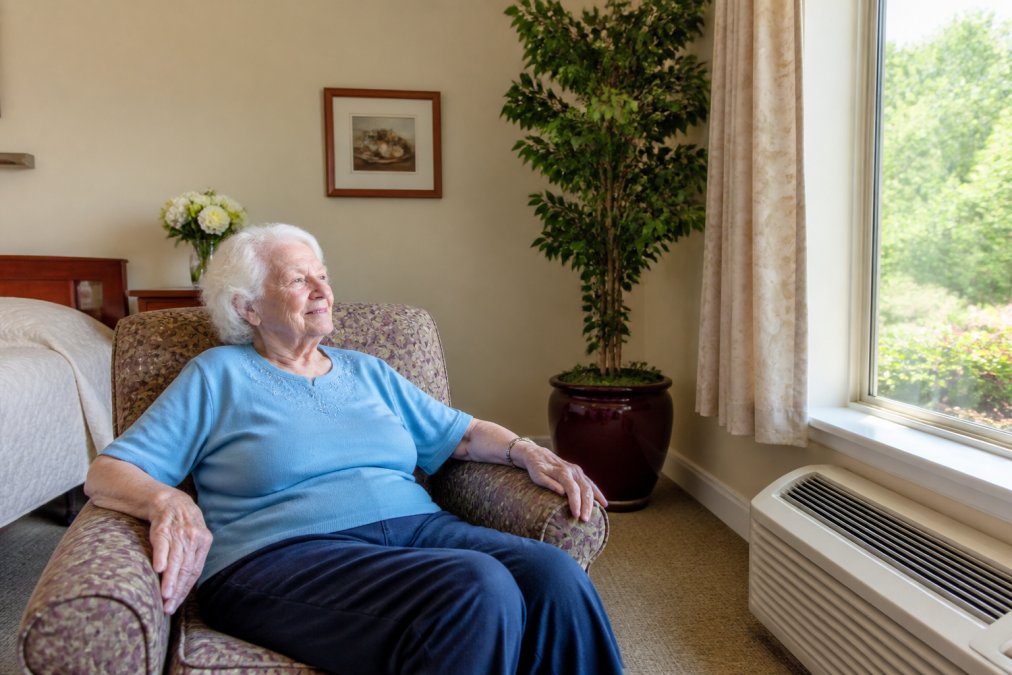
Indoor air quality in nursing homes directly affects resident respiratory health. Carpets that trap dust, allergens, and mold spores contribute to respiratory issues, particularly in elderly residents. Professional deep extraction removes these contaminants, improving air quality measurably.
Facilities that implement regular professional cleaning and odor neutralization report fewer resident complaints about smell, higher family satisfaction during visits, and reduced respiratory-related incidents among residents with asthma or COPD (peer-reviewed research).
Carpet in nursing homes represents a significant capital investment. Replacing carpet prematurely due to poor maintenance is expensive; extending carpet life through proper care is cost-effective facility management.
How professional maintenance extends carpet life:
Carpet fibers degrade when soil particles accumulate. These particles act like tiny blades, cutting and fraying fibers each time someone walks on the carpet. Regular professional cleaning removes soil before it can cause this damage.
Preventative treatments applied during professional cleaning also extend life:
Commercial carpet cleaning for nursing homes should be viewed as maintenance that preserves your facility’s appearance and functionality, not an expense to minimize.
Stay Fresh Steam Cleaning includes carpet protection treatments in their professional service offerings. These treatments are particularly valuable in nursing homes where incontinence accidents and spills are frequent. A protected carpet can be spot-cleaned immediately without permanent staining, whereas unprotected carpet may retain stains despite professional cleaning efforts.
Cost-benefit analysis:
The investment in professional commercial carpet cleaning for nursing homes pays for itself through extended carpet life and reduced replacement frequency.
Maintaining clean, fresh-smelling carpets in your nursing home requires more than standard vacuuming. It demands a strategic approach that addresses incontinence accidents, high-traffic wear, odor control, and infection prevention. Stay Fresh Steam Cleaning specializes in commercial carpet cleaning for nursing homes with truck-mounted extraction equipment, non-toxic cleaning solutions, and a satisfaction guarantee. Their certified, background-checked technicians understand healthcare facility standards and deliver results that keep your carpets looking fresh while supporting your infection control protocols. Contact Stay Fresh Steam Cleaning for a consultation on a customized maintenance program that extends your carpet investment and improves your facility’s environment for residents and staff.
=== FAQ ANSWERS (audit these too, same rules) ===
[1] Q: How often should carpets be deep cleaned in healthcare facilities?
A: Healthcare facilities should deep clean carpets every 6-12 months, depending on foot traffic and soiling levels. High-traffic areas like hallways, common rooms, and dining spaces may need quarterly deep extraction. Spot cleaning and preventative maintenance should occur weekly or as needed. Professional commercial carpet cleaning removes embedded soil, allergens, and bio-contaminants that routine vacuuming cannot address, maintaining both hygiene standards and carpet longevity.
[2] Q: What cleaning products are safe for use in nursing homes?
A: Safe products for nursing homes must be non-toxic, fragrance-free or lightly scented, and free from harsh chemicals that could irritate residents with respiratory sensitivities. Eco-friendly, biodegradable cleaners and enzyme-based odor eliminators are ideal. Hospital-grade disinfectants that target pathogens like MRSA and VRE are effective for infection control. Always verify products meet CDC guidelines and do not contain volatile organic compounds (VOCs) that compromise indoor air quality. Professional cleaning services use certified, safe formulations appropriate for sensitive healthcare environments.
[3] Q: How do you remove odors from carpets in assisted living facilities?
A: Odor removal in assisted living requires a multi-step approach: spot treatment with enzyme-based cleaners that break down organic compounds at the source, deep hot water extraction to remove embedded urine and fecal matter, and application of natural deodorizing granules or sanitizing products. Professional extraction methods are far more effective than surface sprays because they reach carpet fibers and backing where odor-causing bacteria live. Follow-up treatments and regular maintenance schedules prevent odor recurrence and maintain a fresh environment for residents.
[4] Q: What is the difference between residential and commercial carpet cleaning for healthcare?
A: Commercial carpet cleaning for healthcare facilities uses truck-mounted extraction equipment, hospital-grade disinfectants, and protocols designed for high-traffic, high-contamination environments. It addresses infection control, handles larger areas efficiently, and meets regulatory compliance standards. Residential cleaning focuses on spot treatment and lighter soiling. Healthcare commercial cleaning prioritizes pathogen elimination, allergen reduction, and sanitization, critical for protecting vulnerable populations. Professional services also manage the volume and scheduling demands of facility operations without disrupting resident care.
Healthcare facilities should deep clean carpets every 6-12 months, depending on foot traffic and soiling levels. High-traffic areas like hallways, common rooms, and dining spaces may need quarterly deep extraction. Spot cleaning and preventative maintenance should occur weekly or as needed. Professional commercial carpet cleaning removes embedded soil, allergens, and bio-contaminants that routine vacuuming cannot address, maintaining both hygiene standards and carpet longevity.
Safe products for nursing homes must be non-toxic, fragrance-free or lightly scented, and free from harsh chemicals that could irritate residents with respiratory sensitivities. Eco-friendly, biodegradable cleaners and enzyme-based odor eliminators are ideal. Hospital-grade disinfectants that target pathogens like MRSA and VRE are effective for infection control. Always verify products meet CDC guidelines and do not contain volatile organic compounds (VOCs) that compromise indoor air quality. Professional cleaning services use certified, safe formulations appropriate for sensitive healthcare environments.
Odor removal in assisted living requires a multi-step approach: spot treatment with enzyme-based cleaners that break down organic compounds at the source, deep hot water extraction to remove embedded urine and fecal matter, and application of natural deodorizing granules or sanitizing products. Professional extraction methods are far more effective than surface sprays because they reach carpet fibers and backing where odor-causing bacteria live. Follow-up treatments and regular maintenance schedules prevent odor recurrence and maintain a fresh environment for residents.
Commercial carpet cleaning for healthcare facilities uses truck-mounted extraction equipment, hospital-grade disinfectants, and protocols designed for high-traffic, high-contamination environments. It addresses infection control, handles larger areas efficiently, and meets regulatory compliance standards. Residential cleaning focuses on spot treatment and lighter soiling. Healthcare commercial cleaning prioritizes pathogen elimination, allergen reduction, and sanitization, critical for protecting vulnerable populations. Professional services also manage the volume and scheduling demands of facility operations without disrupting resident care.
This article was written using GrandRanker


