
- September 16, 2026
- in Blog
- by
- 120
- 0
Last Updated: August 19, 2026
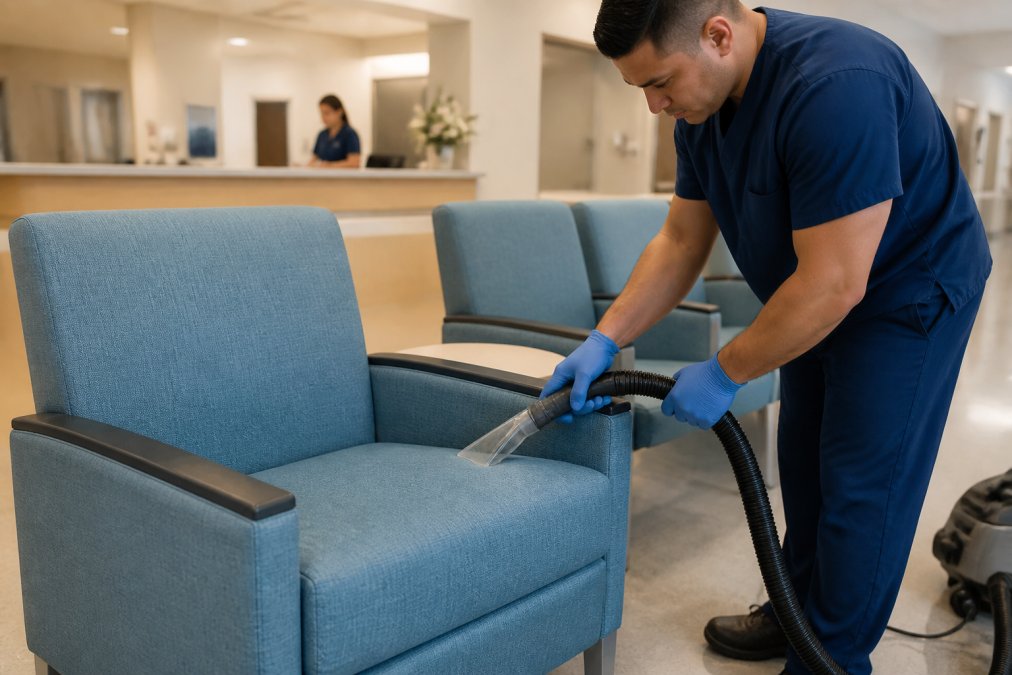
Healthcare facility upholstery faces unique challenges. Patient chairs, waiting room seating, and examination furniture endure constant contact with multiple individuals daily, creating environments where pathogen transmission and surface contamination represent genuine risks. Unlike office furniture, healthcare upholstery must withstand aggressive disinfection protocols, frequent cleaning cycles, and exposure to bodily fluids while maintaining structural integrity.
Poor upholstery maintenance directly impacts patient safety, facility reputation, and operational costs. Premature degradation leads to expensive replacements, while incorrect disinfection causes fabric deterioration, seam failure, and foam breakdown.
This guide covers disinfection protocols meeting clinical standards, material selection strategies prioritizing durability, staff training approaches, and repair versus replacement frameworks.
Disinfection in healthcare requires eliminating or significantly reducing pathogens on high-touch surfaces without degrading the material. Most facilities struggle here: they apply harsh chemicals or excessive moisture that damage upholstery while believing they’re improving safety.
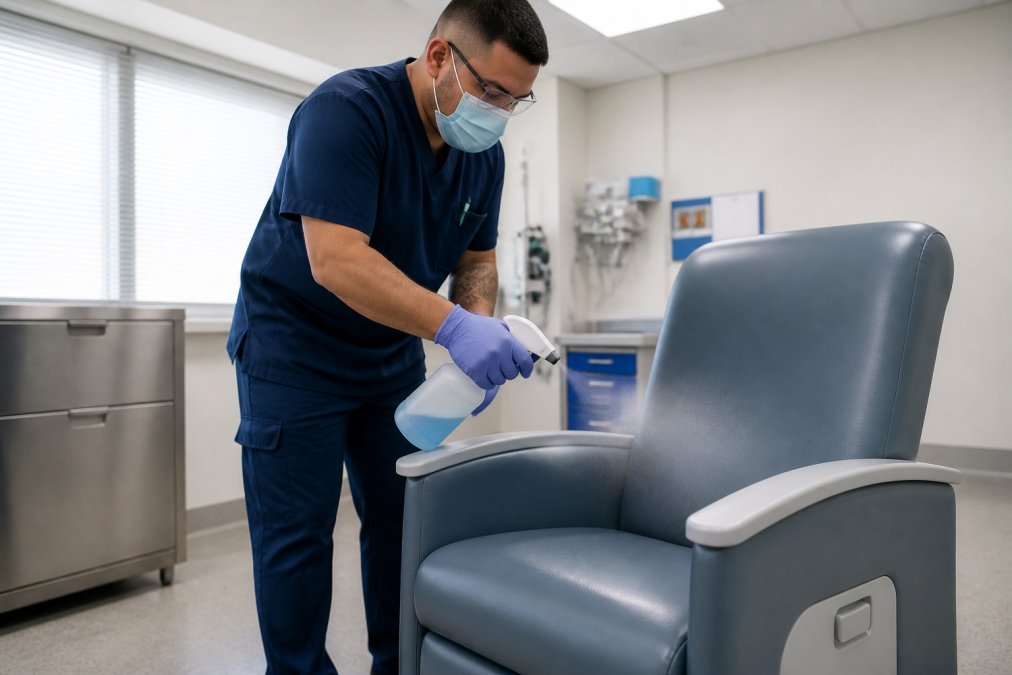
Surface integrity is the foundation of effective infection control. Compromised upholstery, cracked vinyl, fraying seams, exposed foam, creates pockets where pathogens hide and multiply. Intact surfaces can be disinfected effectively and remain sanitary between cleaning cycles.
High-touch surfaces require different protocols than low-touch areas. Patient chairs, armrests, reception seating, and examination tables need disinfection every 24-48 hours in acute care settings. Outpatient waiting rooms typically need 2-3 cycles weekly. Match your disinfection frequency to your actual patient volume and risk profile.
Chemical compatibility determines whether your disinfectant enhances or destroys upholstery. Vinyl tolerates most hospital-grade disinfectants well, but fabric upholstery can be damaged by harsh quaternary ammonia solutions.
Dwell time, the time a disinfectant must remain wet on a surface to be effective, ranges from 30 seconds to 10 minutes depending on the product and pathogen. Many facilities apply disinfectant and wipe immediately, which looks clean but fails to achieve necessary contact time for actual pathogen elimination.
Before selecting a disinfection protocol, know three things: your upholstery material composition, the specific pathogens you’re targeting, and the dwell time your chosen disinfectant requires. Test the combination on a hidden furniture area before facility-wide implementation.
Stain removal in healthcare requires precision because upholstery is often expensive and replacement isn’t immediate. A single aggressive stain removal attempt can cause more damage than the stain itself.
Different stains require different removal approaches. Blood stains should be treated with enzymatic cleaners designed for protein-based stains. Bodily fluid stains often require enzymatic treatment followed by disinfection. Medication stains (iodine, gentian violet) can permanently stain vinyl if not treated immediately. Standard food and beverage stains respond well to mild detergent solutions with proper extraction.
Step 1: Blot, don’t rub. Your first action should always be blotting with absorbent material. Rubbing spreads the stain deeper.
Step 2: Identify the stain type. Is this blood, bodily fluid, medication, or standard food/beverage? Your answer determines your next step.
Step 3: Apply the appropriate treatment. For blood or bodily fluids, use an enzymatic cleaner. For medication stains, use a mild solvent appropriate to the specific medication. For food/beverage stains, use a mild detergent solution with cool water.
Step 4: Allow dwell time. Enzymatic cleaners need 10-15 minutes to break down organic matter. Mild detergents need 5-10 minutes to penetrate and loosen the stain.
Step 5: Extract with controlled moisture. Use a clean cloth dampened (not soaked) with distilled water to extract the treatment solution and dissolved stain. Multiple light passes are better than one aggressive pass.
Step 6: Dry completely. Any remaining moisture can lead to mildew growth or foam degradation. Use absorbent cloths and allow air circulation.
Step 7: Disinfect if necessary. Once the stain is removed and the area is dry, apply your standard disinfection protocol if the stain involved biological material.
The biggest mistake facilities make is over-wetting during stain removal. Excessive moisture is worse than the stain itself because it can damage foam backing, create mildew growth, and weaken seams.
Cleaning frequency is not one-size-fits-all in healthcare settings. A surgical suite differs from a waiting room. The right frequency balances infection control, material preservation, and operational cost.
High-touch surfaces are where most pathogen transmission occurs. Patient chairs, armrests, reception seating, and examination table upholstery require more frequent attention than low-touch areas.
For acute care hospitals, high-touch patient furniture typically requires disinfection every 24 hours minimum, with spot cleaning as needed. For outpatient clinics, high-touch seating usually requires disinfection 2-3 times weekly. For long-term care facilities, frequency depends on patient acuity. Behavioral health facilities often use a disinfection protocol after each patient discharge, plus daily disinfection of common areas.
Facilities that follow consistent disinfection schedules experience fewer infection outbreaks, less material degradation, and longer furniture lifespan.
Patient volume directly impacts cleaning frequency. Waiting rooms and reception areas typically need 3-4 disinfections weekly with daily spot cleaning. Examination and treatment rooms require daily disinfection. Patient rooms in inpatient settings may require disinfection every 48 hours during occupancy, then complete disinfection upon discharge.
Assess your patient volume, patient acuity, and risk profile for each space. Establish a disinfection schedule matching that risk profile and review quarterly.
Choosing the right material for healthcare upholstery is one of the most important decisions you can make. The wrong material leads to premature degradation, higher replacement costs, and potential infection control problems.
Healthcare upholstery materials must meet three core requirements: durability under frequent cleaning, fluid resistance to prevent pathogen penetration, and tear strength to withstand daily use.
Medical-grade vinyl is the industry standard because it excels in all three areas. Vinyl is inherently fluid-resistant, preventing bodily fluids from penetrating to foam backing. It withstands aggressive disinfection protocols without degrading. Vinyl can typically be cleaned 500+ times before showing significant wear, making it cost-effective over a 7-10 year lifespan.
Medical-grade polyester blends (often 65% polyester, 35% other fibers) offer good durability and tear strength but have variable fluid resistance depending on the specific blend. Polyester is generally less resistant to harsh disinfectants than vinyl. Polyester typically lasts 5-8 years in healthcare settings.
Natural fabrics and leather are unsuitable for healthcare upholstery because they absorb fluids, harbor pathogens, and degrade quickly under aggressive disinfection.
Standard operating procedures ensure consistency, reduce errors, and protect both patients and staff. A written SOP for upholstery cleaning and disinfection is essential for infection control compliance and material preservation.
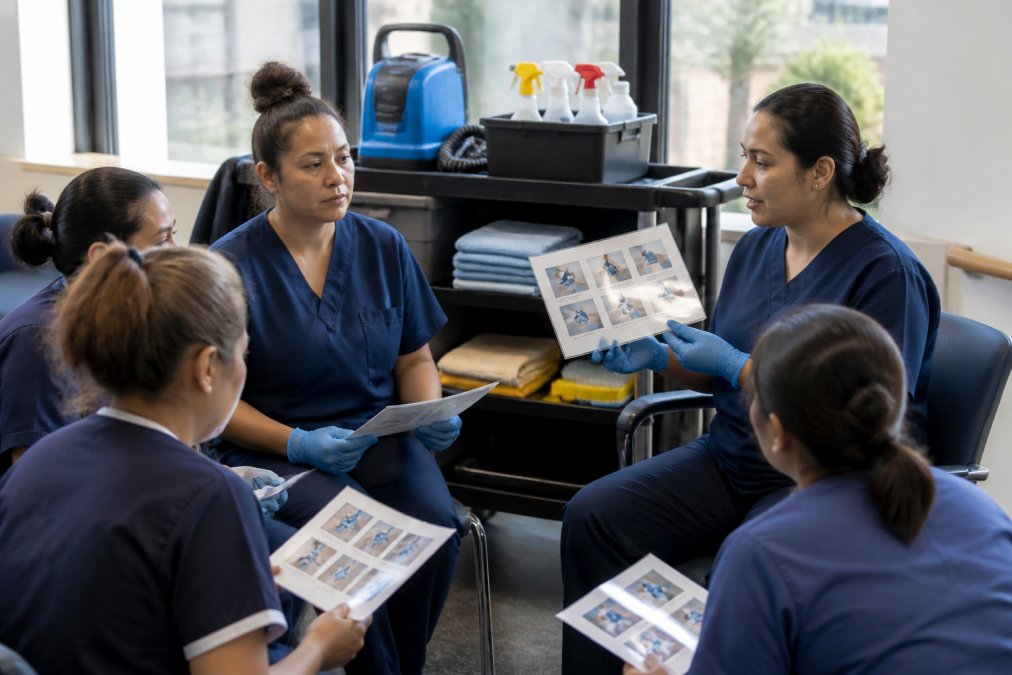
Aseptic technique in upholstery cleaning means preventing cross-contamination between surfaces and preventing contamination of the cleaning solution itself. Staff must understand that every surface could be contaminated and every piece of equipment could transmit pathogens if not properly managed.
Your training program must cover these core principles: PPE requirements (gloves at minimum, additional protection for high-risk areas), hand hygiene before and after cleaning, equipment disinfection between surfaces using color-coded cloths to prevent cross-contamination, fresh solution for each surface or area, and proper waste management according to facility protocol.
Documentation creates accountability and provides data for monitoring trends. A simple checklist system that staff complete after cleaning each area is sufficient for most facilities.
The checklist should include: date and time of cleaning, area or furniture cleaned, disinfectant used and concentration, staff member initials, any issues observed (stains, damage, material degradation), and time spent on cleaning.
A preventative cleaning checklist should specify what staff should look for during routine cleaning: visible stains or soiling, seam separation or fraying, foam degradation or sagging, vinyl cracking or peeling, odors indicating moisture or mildew, loose buttons or hardware, and visible wear patterns.
Upholstery degrades gradually. By the time a chair is unusable, it’s been showing warning signs for months. Learning to recognize these signs allows you to plan replacements strategically rather than making emergency replacements.
Early-stage degradation appears as color fading, minor seam separation, or small tears. Mid-stage degradation includes visible foam breakdown, widespread seam issues, and significant staining that resists cleaning. Late-stage degradation means the furniture is no longer sanitary or safe and requires immediate replacement.
With proper maintenance, medical-grade vinyl typically lasts 7-10 years. With poor maintenance or high patient volume, it might last only 3-4 years. Polyester blends typically last 5-8 years.
Not every damaged chair needs replacement. Small tears can be patched. Seam separation can be re-stitched. Stains can sometimes be removed. The decision depends on repair cost, remaining useful life, and infection control implications.
If repair costs exceed 40-50% of replacement cost, replacement is usually more economical. If repair costs are less than 30% of replacement cost, repair is usually justified. Infection control considerations sometimes override pure cost analysis. If upholstery degradation creates pockets where pathogens can hide, replacement may be necessary even if repair is cheaper.
Document all repair and replacement decisions. Over time, this data shows which furniture types are most cost-effective and which degrade faster, guiding future purchasing decisions.
Healthcare upholstery maintenance is a system connecting infection control, material science, staff training, and financial planning. Facilities that excel treat it as a core operational process.
The payoff is significant: longer furniture life, fewer infection control incidents, lower replacement costs, and a facility that looks and feels clean and well-maintained.
Contact Stay Fresh Steam Cleaning to discuss your facility’s specific upholstery maintenance needs. We can assess your current protocols, identify improvement opportunities, and help you implement systems that extend furniture life while maintaining infection control standards.
Cleaning frequency depends on area type and patient volume. High-touch surfaces in patient care areas require weekly or bi-weekly cleaning, while common areas may need monthly deep cleaning. Behavioral health units often need more frequent sanitization due to higher bioburden and potential fluid exposure. Establish a preventative maintenance schedule based on your facility's patient census and infection control protocols to minimize hospital-acquired infections and extend furniture lifecycle.
Use EPA-registered disinfectants with proven efficacy against healthcare pathogens. Verify chemical compatibility with your specific vinyl formulation before application. Hospital-grade quaternary ammonium compounds and phenolic disinfectants are common choices, but always follow the manufacturer's dwell time requirements and avoid bleach-based products on colored vinyl. Test on a hidden seam first to ensure the fabric's fluid resistance and color stability remain intact.
Identify the stain type first: biological (blood, bodily fluids), chemical, or oxidative stains require different approaches. For biological stains, use enzymatic cleaners that break down proteins without harsh scrubbing. For chemical stains, gentle extraction with distilled water often works. Always use minimal moisture to preserve surface integrity, and avoid abrasive scrubbing that can compromise tear strength or create micro-tears where pathogens can harbor. Professional steam cleaning with controlled pressure maintains fabric durability while achieving deep sanitization.
Medical-grade vinyl and polyurethane-coated fabrics offer superior fluid resistance, tear strength, and abrasion resistance compared to standard upholstery. Look for materials with antimicrobial properties and high stain resistance ratings. Sealed seams and welded construction prevent bioburden accumulation in seams. Consider breathability for patient comfort while maintaining infection control barriers. Eco-friendly, non-toxic options are now available that meet healthcare durability standards without compromising patient safety or staff exposure.
Healthcare upholstery faces unique challenges: high bioburden from patient contact, exposure to bodily fluids, and strict infection control requirements. Standard methods don't achieve the dwell time needed for hospital-acquired infection prevention or properly decontaminate high-touch surfaces. Healthcare-specific cleaning requires EPA-registered disinfectants, controlled moisture levels to prevent mold and pathogen transmission, and techniques that preserve medical-grade fabric integrity while meeting aseptic standards.
Regular preventative cleaning removes bioburden and pathogens from high-touch surfaces, breaking the transmission chain for hospital-acquired infections. Maintaining surface integrity prevents micro-tears where bacteria hide. Proper disinfection protocols with correct dwell times kill pathogens on contact. Environmental services staff trained in aseptic technique and using appropriate disinfectants create a cleaner clinical environment. Scheduled maintenance prevents upholstery degradation that traps contaminants and reduces the need for emergency replacement during active patient care.
Yes, when they meet infection control standards. Many EPA-registered, plant-based disinfectants now match the efficacy of traditional hospital-grade products while reducing staff exposure to harsh chemicals. Eco-friendly options reduce environmental impact and improve staff safety during daily use. Verify that any green product carries proper EPA registration for your specific pathogens and meets healthcare durability standards. Cost-benefit analysis often shows that safer products reduce worker compensation claims and improve staff retention, offsetting initial price differences.
Minor surface damage (small tears, stains) can be repaired cost-effectively if structural integrity remains intact. However, extensive upholstery degradation compromises infection control: torn seams harbor pathogens, loss of fluid resistance increases contamination risk, and worn fabric cannot maintain antimicrobial properties. Replace upholstery when tear strength is compromised, seams are failing, or chemical compatibility is lost. A cost-benefit analysis should factor in infection control costs, staff safety, and patient outcomes, not just material costs.
This article was written using GrandRanker


