
- September 16, 2026
- in Blog
- by
- 120
- 0

Last Updated: August 5, 2026
Professional upholstery cleaning pricing varies based on furniture type, fabric condition, and cleaning method. Most services structure pricing around individual pieces rather than square footage. A heavily soiled sectional requires different treatment than a lightly used accent chair, and pet stains demand specialized attention that generic pricing cannot capture.
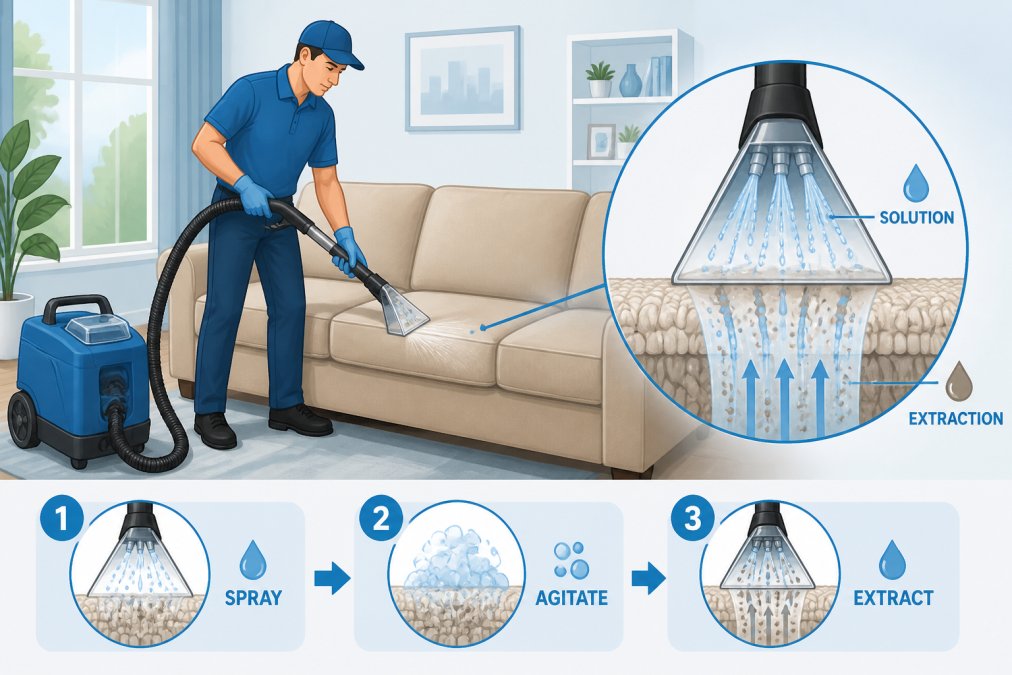
The national upholstery cleaning pricing guide shows that most homeowners invest in professional cleaning when they recognize that DIY rental machines cannot deliver the same results. The difference between a surface clean and a deep clean justifies professional intervention for anyone serious about extending furniture life and maintaining a healthy indoor environment.
Several key variables determine what you’ll pay for professional upholstery cleaning.
Furniture Size and Dimensions represent the foundation of pricing. A loveseat costs less than a sectional because it contains less fabric and requires less cleaning solution and labor time. Oversized recliners with multiple moving parts demand more technician attention than standard sofas.
Fabric Type and Material Composition significantly impact the approach and cost. Delicate natural fibers like silk or wool require careful handling and specialized cleaning agents. Synthetic blends tolerate more aggressive extraction methods. Leather upholstery demands conditioning after cleaning, adding to the service cost.
Soiling Level and Stain Severity directly influence labor time and solution requirements. Light dust and minor surface stains take minutes to address. Heavy pet soiling, food stains, or years of accumulated grime require extended treatment time, multiple passes, and sometimes pre-treatment applications.
Accessibility and Furniture Condition affect how quickly technicians can work. Furniture easily accessible in an open living room cleans faster than pieces wedged in tight spaces. Furniture in poor structural condition may require extra care or might be declined due to liability concerns.
Geographic Location and Local Labor Costs create pricing variations across regions. Urban areas with higher cost of living see higher service charges than rural communities. San Antonio and Bexar County pricing reflects local market rates and competition among professional cleaning services.
Different fabrics require different cleaning approaches, and these differences directly affect pricing.
Synthetic Fabrics like polyester and microfiber are the most affordable to clean because they tolerate hot water extraction and aggressive agitation. Standard steam cleaning works effectively on synthetics, making them the least expensive option.
Natural Fiber Fabrics including cotton, linen, and wool command higher cleaning costs due to their delicate nature. These materials can shrink, fade, or lose texture if treated incorrectly. Professional technicians must use cooler water temperatures and gentler extraction methods.
Leather and Suede Upholstery represent the most expensive cleaning category because they’re conditioned and protected rather than cleaned like fabric. Leather requires pH-balanced solutions that won’t strip natural oils. After cleaning, leather receives conditioning treatment to maintain suppleness and prevent cracking.
Velvet and Crushed Velvet fall into the premium category because these fabrics have directional pile that shows footprints and crushing. Technicians must work with the pile direction and use minimal moisture to prevent pile flattening.
Blended Fabrics with mixed fiber content require assessment of the most delicate component. A cotton-wool blend is treated according to wool’s requirements, not cotton’s, which increases cost because the service must accommodate the most sensitive material present.
A sofa represents the largest upholstered furniture piece in most homes, making it a significant cleaning investment. The average cost depends heavily on its condition. A lightly soiled sofa with no stains costs less than one with visible pet damage, food stains, or years of accumulated dirt.
Sectional sofas command higher pricing than standard sofas because they contain more fabric. An L-shaped or U-shaped sectional might cost 50% to 100% more than a standard sofa due to the additional surface area and complexity.
The fabric type determines whether a sofa receives steam cleaning or dry cleaning treatment. Microfiber and synthetic upholstery typically cost less to clean than wool, silk, or leather sofas that require specialized techniques.
Sectionals present unique pricing challenges because they’re essentially multiple pieces combined into one configuration. Some services charge per section, others charge a single comprehensive price. Clarifying the pricing structure before booking prevents misunderstandings.
Armchairs fall into a mid-range pricing category. A standard upholstered armchair costs less than a sofa but more than a small accent chair. Oversized recliners with mechanical components command premium pricing because technicians must work carefully around moving parts.
Accent chairs, ottomans, and smaller pieces typically cost the least individually, but property managers or homeowners with multiple pieces benefit from package pricing. Many professional services offer discounts for cleaning multiple pieces in the same visit.
Two primary cleaning methods dominate professional upholstery cleaning: hot water extraction (steam cleaning) and dry cleaning.
Hot Water Extraction uses pressurized hot water mixed with cleaning solution to penetrate fabric fibers and extract embedded dirt. This method works exceptionally well on synthetic fabrics and moderately soiled pieces. Hot water extraction typically costs less than dry cleaning because the equipment and process are more standardized.
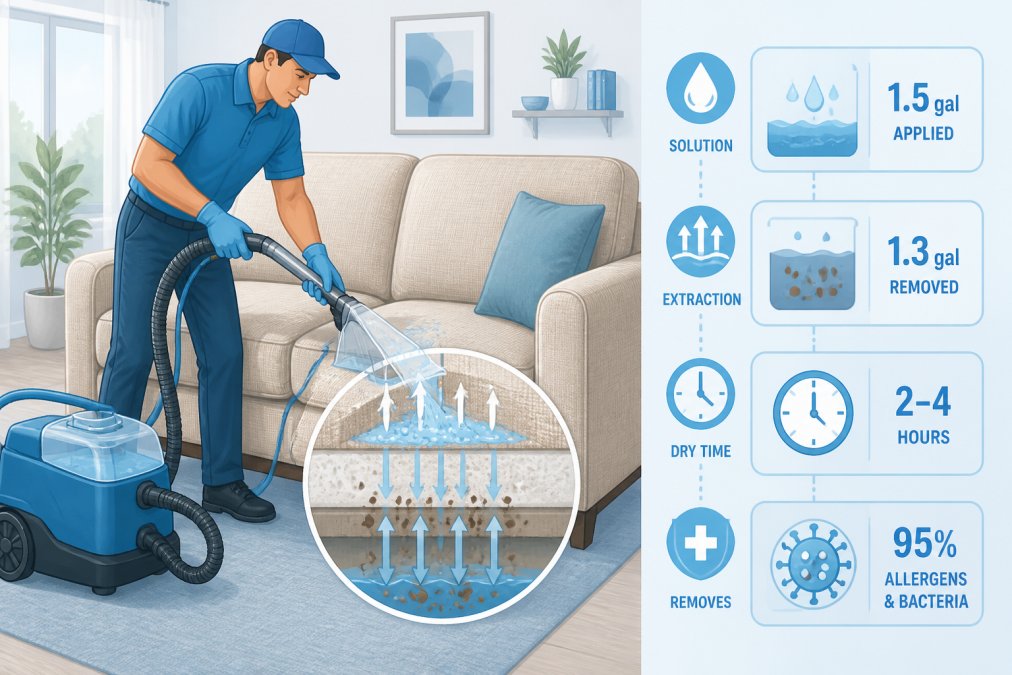
Dry Cleaning uses minimal moisture and specialized solvents to clean delicate fabrics. The process applies solvent-based cleaning agents, agitates them into the fabric, then extracts the solvent without leaving moisture behind. This method suits delicate natural fibers, leather, and suede that shouldn’t be exposed to water. Dry cleaning costs more because it requires expensive chemical solutions, specialized equipment, and technician training.
The choice between methods depends on fabric type and soiling level. Synthetic upholstery with moderate soiling benefits from hot water extraction’s deep-cleaning power and lower cost. Delicate natural fibers or heavily stained pieces might justify dry cleaning’s premium cost to prevent damage.
| Cleaning Method | Best For | Cost Level | Drying Time |
|---|---|---|---|
| Hot Water Extraction | Synthetic fabrics, moderate soiling | Lower | 24-48 hours |
| Dry Cleaning | Delicate fabrics, leather, suede | Higher | 2-4 hours |
The duration of professional upholstery cleaning varies based on furniture size, soiling level, and cleaning method selected.
A single armchair typically requires 30 to 45 minutes of active cleaning time. A standard sofa takes 45 minutes to 90 minutes depending on size and condition. A large sectional might require 2 to 3 hours or longer if heavily soiled or with multiple stain issues.
Drying time occurs after the technician leaves. Most cleaned upholstery dries within 24 to 48 hours depending on humidity, air circulation, and the cleaning method used. Dry cleaning dries faster, often within 2 to 4 hours, because it uses minimal moisture.
Stay Fresh Steam Cleaning schedules appointments with realistic time expectations so customers understand when they can use their furniture again. Proper drying is crucial; using furniture before it’s completely dry can reactivate soil and undo the cleaning benefits.
Professional upholstery cleaning pricing sometimes includes additional charges beyond the base cleaning cost.
Stain Removal Surcharges apply when specific stains require specialized treatment beyond standard cleaning. Pet accidents, wine spills, grease stains, and ink marks often need pre-treatment with targeted solutions. Some services include one or two stain treatments in the base price, then charge per additional stain. Certain stains, like old set-in stains or permanent marker, may be impossible to remove completely.
Pet Odor Treatment is frequently an add-on service. Standard cleaning removes visible pet stains but doesn’t always eliminate odors trapped deep in cushioning and fabric. Enzymatic treatments or specialized deodorizers address odor sources but cost extra.
Fabric Protection Application represents another common surcharge. After cleaning, technicians can apply protective coatings that repel liquids and prevent soil from embedding into fibers. This treatment extends the time between cleanings and protects against future stains.
Rush Service or Weekend Appointments may carry premium pricing. Travel Fees occasionally apply if you’re located far from the service provider’s primary service area.
Request a detailed quote that specifies what’s included in the base price and what constitutes additional charges. Reputable services explain potential surcharges upfront rather than surprising you at the end of service.
Getting an accurate quote requires providing detailed information about your furniture and its condition.
Describe Your Furniture Accurately. Specify the type (sofa, sectional, armchair, etc.), approximate dimensions, and fabric type if you know it. Check furniture tags for fabric content information. If you can’t find a tag, describe the fabric as best you can.
Document Visible Issues. Mention specific stains, pet damage, odors, or heavily soiled areas. Take photos if possible; visual documentation helps the service provider understand what they’re dealing with and provide accurate pricing.
Clarify What’s Included. Ask whether the quote includes stain treatment, fabric protection, deodorizing, or other add-ons. Understanding the scope prevents confusion when the invoice arrives.
Ask About Guarantees. Reputable services stand behind their work. Ask about satisfaction guarantees or re-cleaning policies if you’re unhappy with results. Stay Fresh Steam Cleaning’s satisfaction guarantee demonstrates confidence in their work and provides peace of mind for customers.
Request References or Reviews. Check online reviews to verify that quoted prices match actual customer experiences. Services with consistently positive reviews and reasonable pricing are more likely to deliver fair quotes.
Get Multiple Quotes. Contact several providers and compare their quotes. Don’t automatically choose the lowest price; consider the company’s reputation, guarantees, and what’s included in their pricing. A slightly higher quote from a reputable, established service often provides better value than a bargain price from an unknown provider.
Professional upholstery cleaning pricing reflects the expertise, equipment, and care required to properly restore your furniture. Investing in quality service protects your upholstery investment and extends furniture life far beyond what DIY methods can achieve.
Professional upholstery cleaning represents a smart investment in maintaining your home’s furnishings and creating a clean, welcoming environment for family and guests. When you’re ready for expert care, Stay Fresh Steam Cleaning’s certified, background-checked technicians deliver deep cleaning results using advanced hot water extraction techniques that protect your upholstery while removing embedded soil and stains. Contact Stay Fresh Steam Cleaning for a personalized quote and experience the difference professional expertise makes in revitalizing your furniture.
The cost of professional upholstery cleaning varies based on furniture type, fabric, size, and condition. Sofas typically range from moderate to higher costs, while chairs cost less. Pricing also depends on the cleaning method, steam cleaning and dry cleaning have different price points. For an accurate estimate specific to your furniture and location, contact a local professional cleaning service directly to discuss your needs and receive a customized quote.
Several key factors affect upholstery cleaning cost: furniture type and size, fabric material (natural vs. synthetic fibers), current condition and staining level, cleaning method chosen (steam vs. dry), pet odor treatment needs, and any stain removal surcharges. Labor costs, travel time, and the technician's expertise also play a role. Properties with multiple pieces or heavily soiled upholstery typically cost more than those needing basic maintenance cleaning.
Yes, fabric type significantly impacts pricing. Delicate natural fibers like silk or wool often require specialized handling and cost more than synthetic fabrics. Leather requires different conditioning and treatment than cloth upholstery. The fabric's ability to withstand moisture, drying time, and the cleaning solution needed all influence the final cost. Always disclose your furniture's fabric type when requesting a quote to ensure accurate pricing and appropriate cleaning methods.
Professional upholstery cleaning extends the life of your furniture, removes deep-set stains and odors that DIY methods cannot address, and provides sanitization benefits. For pet owners and families with high-traffic furniture, professional cleaning prevents premature deterioration and maintains a cleaner, healthier home environment. While rental machines are cheaper upfront, professional services deliver superior results, save time, and protect your investment in quality furniture.
Most experts recommend professional upholstery cleaning every 12-18 months for average household use. Homes with pets, children, or high traffic should clean every 6-12 months. Lightly used furniture in adult-only homes may only need cleaning every 2-3 years. Regular vacuuming and spot cleaning between professional services extend the time between deep cleanings and help maintain fabric appearance and longevity.
A standard service typically includes inspection of the fabric and condition, pre-treatment of stains, deep cleaning using steam or dry methods, deodorization, and drying. Some services include fabric protection application. Additional services, such as pet odor treatment, specialized stain removal, or leather conditioning, may incur extra charges. Ask your service provider for a detailed breakdown of what's included in their standard package before booking.
Professional upholstery cleaning pricing varies by region, business overhead, equipment investment, and technician expertise. Most service providers charge by piece, by square footage, or by hourly labor rates. Factors like fabric type, soiling level, and additional services (stain removal, pet odor treatment) justify premium pricing. Research local competitors, calculate your operating costs, and factor in profit margins. For residential services in most markets, pricing ranges widely based on these variables.
Professional upholstery cleaning can remove most pet stains and odors using specialized treatments, enzymatic solutions, and deep extraction methods. However, extremely old or set-in stains may require multiple treatments. Pet odor treatment services use targeted deodorization to neutralize odors at the source rather than just masking them. Success depends on stain age, fabric type, and whether the stain has penetrated the cushion fill. Discuss your specific situation with a professional to set realistic expectations.
This article was written using GrandRanker


