
- September 16, 2026
- in Blog
- by
- 34
- 0
Last Updated: September 3, 2026
Pet owners face a genuine dilemma: keep carpets clean or protect their animals from harsh chemicals. Safe non-toxic carpet cleaning combines effective stain removal with genuine safety for your family.
Traditional carpet cleaners contain volatile organic compounds and surfactants that irritate pet respiratory systems, trigger allergies, and leave residue that pets ingest through their paws. Pets spend hours on carpeted surfaces daily, making them the most exposed family members to chemical residue.
Non-toxic cleaning solutions work effectively on stains and odors without forcing you to choose between a clean home and a safe environment.
Non-toxic carpet cleaning methods often outperform conventional approaches on pet-specific problems. Enzyme-based cleaners break down organic compounds in urine and feces at a molecular level, delivering better results on stubborn pet accidents than traditional detergents.
Pet-safe carpet cleaning solutions fall into three main categories: enzyme-based cleaners, biodegradable options, and probiotic formulas, each addressing pet stains differently.
Enzyme-based cleaners represent the gold standard for pet stain removal. These solutions use natural enzymes to break down organic compounds in pet urine, feces, and vomit at a molecular level, unlike surfactants that only suspend dirt particles.
Pet urine contains uric acid crystals that traditional cleaners can’t fully remove. These crystals reactivate when moisture returns, which is why pet stains often return after cleaning. Enzyme-based cleaners destroy these crystals completely, preventing reactivation.
Enzymes require time and moisture to work. Most enzyme cleaners need 12 to 24 hours of contact time to fully break down urine compounds, requiring temporary pet access restriction.
Application matters significantly. Saturate the affected area thoroughly since enzyme cleaners work through moisture, not surface contact. Professional applications use extraction equipment that ensures deep saturation and proper removal of excess liquid.
Biodegradable cleaning solutions break down naturally without leaving persistent chemical residue. These cleaners use plant-based surfactants and natural ingredients that decompose into harmless compounds.
Hypoallergenic formulations eliminate common allergens that trigger reactions in sensitive pets. Switching to hypoallergenic, non-toxic solutions frequently resolves sneezing, itching, or respiratory issues within days.
Biodegradable doesn’t automatically mean hypoallergenic, and vice versa. Look for products that explicitly claim both certifications.
Plant-based surfactants derived from coconut oil, palm oil, or sugar clean effectively without toxicity concerns. They cost more to produce, but the safety benefit justifies the expense.
Probiotic cleaners use beneficial bacteria to eliminate odors at their source by consuming the organic compounds causing the odor, rather than masking or neutralizing them.
This approach works particularly well on chronic pet odor problems where conventional cleaners have failed. The beneficial bacteria colonize carpet fibers and continue working long after application, providing residual odor control.
Probiotic cleaners fundamentally change the microbial environment in your carpet, making them especially valuable for homes where pets have had repeated accidents in the same spots.
Effectiveness requires keeping treated areas relatively dry for 24 to 48 hours and avoiding additional cleanings that would disrupt bacterial colonization. Professional applications work better than DIY attempts.
Removing pet stains effectively requires understanding the difference between fresh accidents and set-in stains, as your approach changes dramatically based on stain age and depth.
Fresh pet accidents caught within hours respond well to immediate spot treatment. The faster you act, the less urine penetrates carpet fibers and backing.
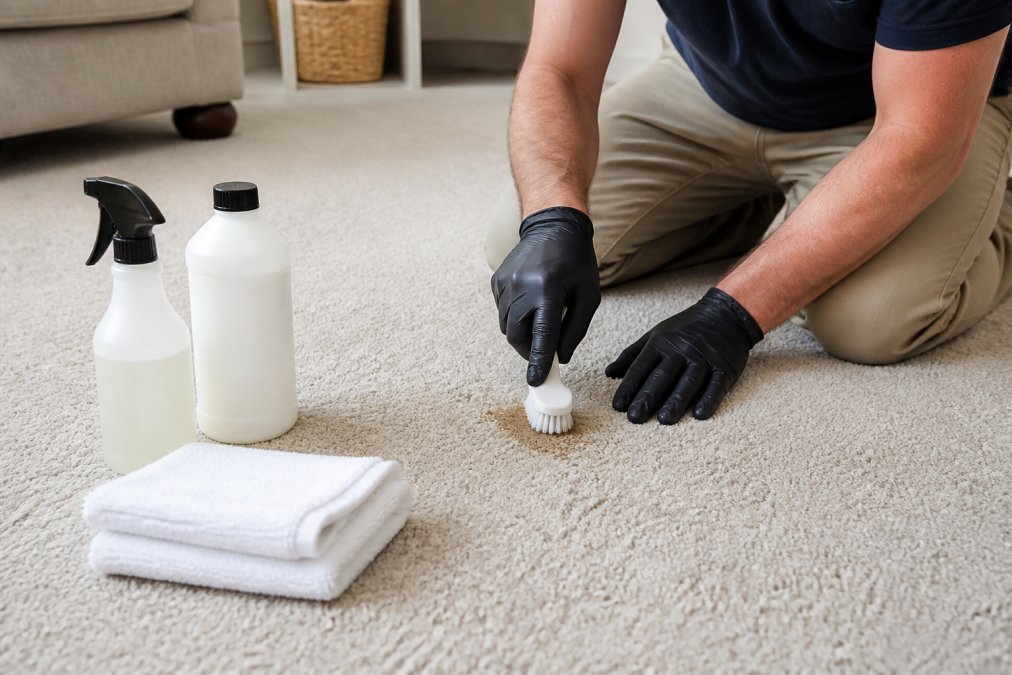
Remove excess moisture and solid waste by blotting (never rubbing) with paper towels or cloth. Rubbing spreads the stain deeper; blotting lifts moisture to the surface. For solid waste, pick up what you can, then blot remaining moisture.
Apply your chosen non-toxic cleaner directly to the stain, saturating the affected area. Allow the solution to penetrate for 10 to 15 minutes so enzymes can begin breaking down urine compounds.
Blot again with fresh towels, working from the outside of the stain toward the center. Continue blotting until the carpet feels barely damp. For enzyme cleaners, allow 12 to 24 hours for enzymes to complete their work before additional moisture exposure.
Sprinkle baking soda over the treated area after it dries to absorb residual odors. Leave it for several hours, then vacuum thoroughly.
Set-in stains present for days, weeks, or longer have penetrated deep into carpet fibers and padding. Spot treatment alone won’t reach these stains; professional-grade deep cleaning becomes necessary.
Hot water extraction forces heated water and cleaning solution deep into carpet fibers and backing, then immediately extracts contaminated water. The heat helps enzymes work more efficiently, and extraction removes dissolved stain compounds before reabsorption.
Professional equipment matters significantly. Rental machines lack the pressure and suction power of commercial-grade equipment, often leaving carpets too wet. Professional equipment extracts 80 to 90 percent of applied moisture, leaving carpet damp but not soaked (iicrc.org).
Multiple passes improve results on stubborn stains. For severe pet stains, three to four passes might be necessary. Professional cleaning costs more than DIY attempts because the equipment and expertise deliver superior results.
Encapsulation applies a cleaning solution that encapsulates stain particles in a crystalline coating. Once dry, the coating is vacuumed away, carrying the stains with it. This works particularly well combined with enzymatic treatment.
Professional carpet cleaning frequency depends on pet type, number of pets, and carpet condition. General guidance suggests professional cleaning every 6 to 12 months for most pet-owning households (the CDC).
Single pets in light-traffic homes can extend professional cleaning to 12 months. Multiple pets typically need professional cleaning every 6 months. Households with pets prone to accidents might benefit from quarterly service.
Visible soiling, persistent odors, or allergic symptoms signal that professional cleaning is overdue. Professional cleaning addresses problems vacuuming cannot handle: odor compounds embedded in fibers, bacteria growth in carpet backing, and allergen accumulation.
Between professional cleanings, maintain carpets with weekly vacuuming and immediate spot treatment of accidents. This maintenance routine extends the time between professional cleanings.
Professional cleaning every 6 to 8 months for households with multiple pets prevents odor and stain buildup while maintaining carpet appearance and extending carpet lifespan.
Not all carpets respond equally to all cleaning methods, and not all pets tolerate all cleaning products identically. Understanding carpet material and testing for chemical sensitivity prevents damage and adverse reactions.
Carpet fiber types respond differently to moisture, heat, and chemical exposure. Wool carpets can shrink if exposed to excessive heat or alkaline solutions. Professional cleaners assess carpet type before selecting cleaning methods and solutions.
Chemical sensitivity in pets varies individually. Before applying any new cleaning solution to your entire carpet, test it on a small, inconspicuous area and observe your pet for 24 hours for sneezing, coughing, excessive itching, or behavioral changes.
pH balance matters significantly. Highly alkaline solutions can damage fibers and leave residue that irritates pet skin and respiratory systems. Non-toxic, pH-balanced cleaners protect both carpet and pets.
Natural fiber carpets like wool or sisal require specialized non-toxic cleaners. Wool particularly benefits from wool-specific formulations that won’t strip natural oils or damage fiber structure. Ask a professional if uncertain about carpet type.
The decision between DIY and professional cleaning comes down to comparing real costs and realistic results.
DIY carpet cleaning requires purchasing or renting equipment and cleaning solutions. Rental machines cost $50 to $100 per day, and quality non-toxic solutions run $15 to $40 per bottle (the FTC). A thorough carpet cleaning takes 4 to 8 hours, making the actual cost substantial.
Professional equipment applies cleaning solution at higher pressure and extracts moisture more completely than rental machines. Professional technicians understand carpet types, fiber composition, and solution chemistry, knowing how long to allow solutions to work and when to switch methods.
Professional cleaning costs depend on square footage, carpet condition, and location. Professional results last 6 to 8 months; DIY-cleaned carpets often show soiling again within 2 to 3 months.
Professional service every 6 months can be comparable to DIY rental costs while delivering superior results.
Professional cleaning offers additional value: technicians identify problems you might miss, such as early signs of carpet damage, padding saturation, or permanent staining that requires replacement rather than cleaning.
Choosing non-toxic carpet cleaning for pets addresses both pet safety and environmental responsibility.
Traditional carpet cleaners enter waterways through household drainage systems and accumulate in aquatic ecosystems. Non-toxic, biodegradable solutions break down naturally without accumulating in the environment.
Enzyme-based and probiotic cleaners biodegrade within days to weeks, releasing harmless byproducts. These solutions don’t persist in groundwater or aquatic environments the way synthetic chemicals do.
Never pour cleaning solutions down storm drains; they flow directly to waterways without treatment. Household drains connect to municipal treatment systems, but concentrated amounts should be diluted first.
When carpets reach end-of-life, they typically go to landfills where they persist for decades. Extending carpet lifespan through proper maintenance and professional non-toxic cleaning delays replacement and reduces waste.
Some carpet manufacturers offer take-back programs for worn carpets, recycling fibers for new products. Investigate whether your manufacturer participates in recycling programs.
Keeping your carpet clean and your pets safe doesn’t require choosing between these priorities. Safe non-toxic carpet cleaning for pets delivers both, effective stain and odor removal without health compromises. Professional cleaning using enzyme-based, biodegradable, or probiotic solutions protects your family while extending carpet lifespan and maintaining your home’s appearance.
Stay Fresh Steam Cleaning specializes in exactly this balance. Our certified technicians use advanced non-toxic cleaning methods specifically selected for pet-owning households. We understand carpet materials, pet sensitivities, and the deep cleaning techniques that eliminate odors permanently rather than masking them temporarily. Contact us for a consultation and discover how professional non-toxic cleaning transforms pet-soiled carpets while keeping your family safe.
Safe non-toxic carpet cleaners for pets typically contain enzyme-based, biodegradable, or probiotic ingredients that break down stains and odors without harmful chemicals. Look for products labeled hypoallergenic and free from volatile organic compounds (VOCs), phosphates, and harsh surfactants. Many pet-safe options use natural ingredients like plant-based enzymes or beneficial bacteria to neutralize urine and eliminate odors while remaining safe for children and pets.
Enzyme-based and probiotic cleaners are the most effective natural approaches for odor elimination. These products use living microorganisms or enzymatic action to break down the chemical compounds in pet urine that cause odors, rather than masking them. For immediate relief, baking soda can absorb surface odors, but professional deep cleaning with enzyme-based solutions addresses odors trapped deep in carpet fibers and padding where bacteria colonies form.
Standard commercial carpet cleaners often contain VOCs and harsh surfactants that can irritate pets’ respiratory systems and sensitive skin. Pet-safe, non-toxic alternatives are specifically formulated to eliminate these hazards while delivering effective cleaning. Always verify that products are labeled pet-safe, hypoallergenic, and free from toxic chemicals. Professional services using certified non-toxic methods provide an extra layer of assurance through trained technicians who understand carpet material compatibility and proper application.
Homes with pets typically benefit from professional carpet cleaning every 3-6 months, depending on the number and type of pets, traffic patterns, and existing stains or odors. High-traffic areas and homes with multiple pets may need cleaning every 3 months, while lighter-use areas might extend to 6 months. Regular professional cleaning maintains carpet longevity, reduces allergens, and prevents odor buildup more effectively than DIY methods alone.
This article was written using GrandRanker


