- September 16, 2026
- in Blog
- by
- 88
- 0
Last Updated: August 6, 2026
Household cleaning products release volatile organic compounds (VOCs) that accumulate in your home’s air, surfaces, and dust. Eco-friendly cleaning solutions reduce that exposure while maintaining cleaning power. Children’s developing lungs are particularly vulnerable to these exposures, and pets spend hours on treated carpets and floors. Fewer chemicals in your home means fewer chemicals in your family’s bodies.
The good news: effective cleaning doesn’t require harsh chemicals. Plant-based surfactants work. Baking soda and vinegar tackle stubborn grime. Essential oils provide antimicrobial benefits without synthetic fragrance. The only barrier is knowing where to start.
Cleaning without harsh chemicals means understanding what actually removes dirt and grime. Surfactants break down oils. Mild abrasives scrub surfaces. Acids cut through mineral deposits. Enzymes break down organic matter. You don’t need ammonia or bleach to accomplish these tasks.
The practical approach starts with three core ingredients: baking soda, distilled white vinegar, and castile soap. These three items handle roughly 80% of household cleaning tasks. Add essential oils for antimicrobial properties and pleasant scent.
Household toxins include ammonia, bleach, phthalates, and synthetic fragrance compounds commonly found in conventional cleaners. These chemicals don’t disappear after you wipe a surface; they remain in the air, settle into dust, and accumulate on soft furnishings. The EPA estimates that indoor air can be 2-5 times more polluted than outdoor air, largely due to household products.
Identifying which products contain harmful chemicals requires reading labels carefully. Terms like "fragrance" or "parfum" can hide dozens of undisclosed chemical compounds. Products labeled "antibacterial" often contain triclosan, which disrupts hormonal systems. "All-natural" claims mean nothing; the term has no legal definition.
The solution: switch to products with transparent ingredient lists or make your own.
These recipes use simple, affordable ingredients based on chemistry, not marketing.
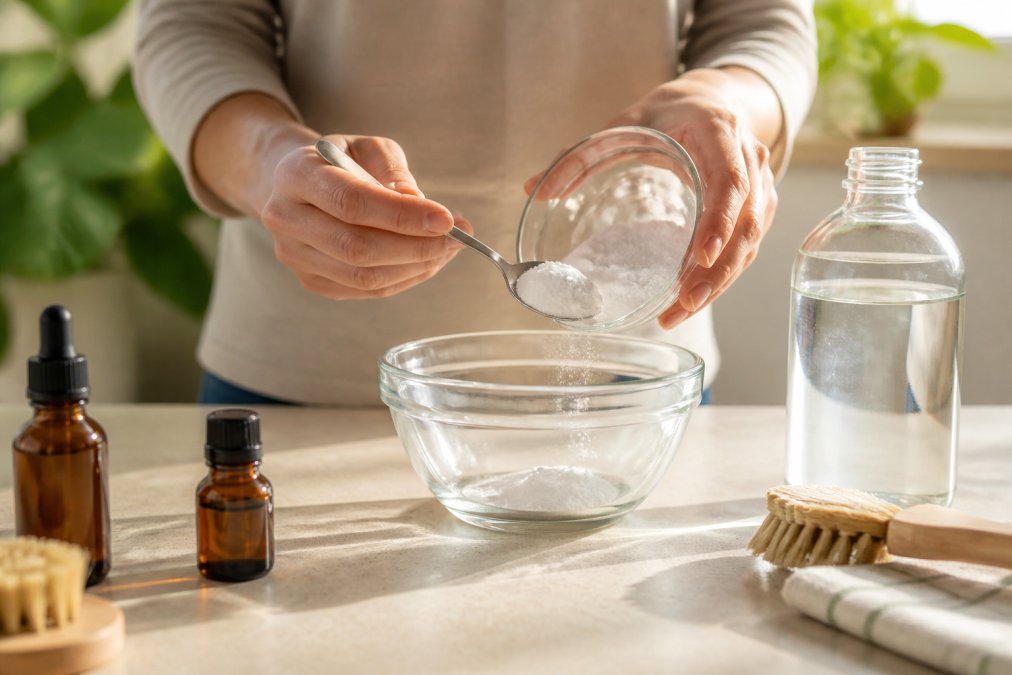
Ingredients: 2 cups distilled white vinegar, 2 cups water, 20 drops essential oil (lemon or tea tree), 1 tablespoon castile soap
Instructions: Combine vinegar and water in a spray bottle. Add essential oil and castile soap. Shake well before each use.
What it does: Vinegar cuts through grease and mineral deposits. Castile soap provides surfactant action to lift dirt. Essential oils add antimicrobial properties and fragrance. This formula handles kitchen counters, bathroom tiles, mirrors, and most hard surfaces.
Ingredients: 1 cup distilled white vinegar, 1 cup water, 10 drops essential oil, 1 tablespoon rubbing alcohol
Instructions: Mix in a spray bottle. The rubbing alcohol helps the solution dry streak-free on glass.
Pro tip: For stubborn soap scum, spray and let sit for 10-15 minutes before wiping to dissolve mineral deposits.
Stain pretreatment: Mix equal parts castile soap and water. Apply directly to stains before washing and let sit for 15 minutes.
Laundry booster: Add 1/2 cup baking soda to your regular wash cycle. Baking soda enhances cleaning power and neutralizes odors.
Fabric softener alternative: Add 1/4 cup white vinegar to the rinse cycle. The vinegar removes soap residue and softens fabrics naturally.
The EPA Safer Choice label identifies products that meet rigorous safety standards for both human health and the environment. Products earning this label have ingredients that are less toxic to humans than conventional alternatives, less likely to persist in the environment, and transparent about all active and inactive ingredients.
When shopping, look for the EPA Safer Choice label on the back of the product. For families with young children or pets, this verification is worth seeking out.
Blueland The Clean Essentials Kit offers concentrated tablets that dissolve in water, creating cleaning solutions in reusable bottles. Refill tablets cost significantly less than buying new bottles repeatedly, eliminating single-use plastic waste.
Branch Basics Premium Starter Kit centers on a single plant-based concentrate that dilutes for multiple cleaning needs. One bottle replaces five or six conventional products, making it ideal for minimalist households or families with sensitive skin.
Common Good All Purpose Cleaner prioritizes refill infrastructure through refill stations and home delivery. The plant-based formula handles most household cleaning tasks, and B Corporation certification verifies environmental and social responsibility standards.
Seventh Generation Free & Clear Line removes fragrance, dyes, and artificial brighteners entirely. For families with asthma, allergies, or chemical sensitivities, this line eliminates common irritants.
Mrs. Meyer’s Clean Day Multi-Surface Everyday Cleaner uses essential oils and plant-derived ingredients with Leaping Bunny Certified cruelty-free formulation.
Puracy Multi-Surface Cleaner delivers plant-powered cleaning with refill pouches available to reduce plastic waste.
ECOS All-Purpose Cleaner carries EPA Safer Choice certification and uses plant-based formula with enzymes to break down organic residue effectively.
AspenClean All-Purpose Cleaner holds EWG Verification, indicating transparency about ingredients and safety standards.
A phased approach lets you test products and adjust based on your family’s specific needs. This three-month transition plan focuses on high-impact items first.
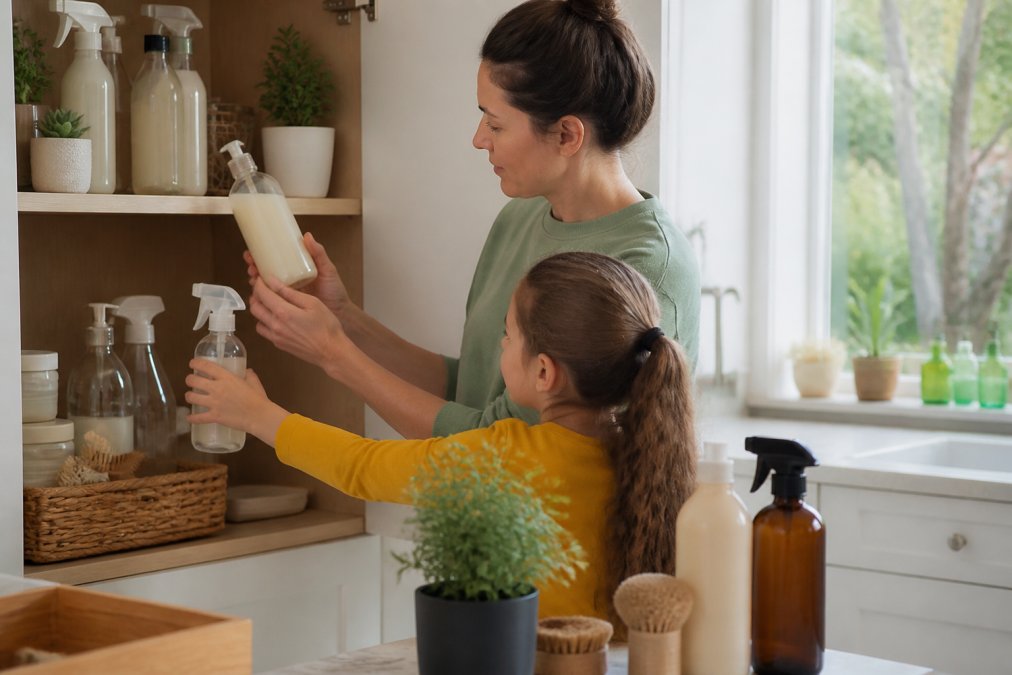
Begin with products you use most frequently: all-purpose surface cleaner and laundry detergent.
Week 1: Choose one all-purpose cleaner. If budget is primary concern, make the DIY vinegar-and-castile-soap recipe. If convenience matters, purchase a ready-made option like Puracy or Mrs. Meyer’s.
Week 2-3: If the first choice works, maintain it. If not, try a different formulation. This testing phase reveals your family’s preferences.
Week 4: Switch laundry detergent to a plant-based, fragrance-free option like Seventh Generation or Branch Basics.
Expand to items used several times weekly: bathroom cleaners, floor cleaners, and laundry additives.
Week 5-6: Introduce a bathroom cleaner using the DIY vinegar-and-rubbing-alcohol recipe or a commercial option.
Week 7: Add baking soda as a laundry booster. For families with pets, this step addresses organic compounds that conventional products mask rather than eliminate.
Week 8: If you use a floor cleaner, transition to diluted castile soap (1 part soap to 10 parts water).
Fine-tune your system based on what you’ve learned and address remaining conventional products.
| Transition Phase | Focus Products | Timeline | Expected Outcome |
|---|---|---|---|
| Month One | All-purpose cleaner, laundry detergent | Weeks 1-4 | Core cleaning routine established |
| Month Two | Bathroom cleaner, floor cleaner, laundry boosters | Weeks 5-8 | High-use items replaced |
| Month Three | Specialty products, system optimization | Weeks 9-12 | Complete transition with personal customization |
Even with the best household cleaning routine, deep carpet and upholstery stains require professional intervention. Pet accidents penetrate carpet fibers and padding, creating odors that surface cleaning can’t reach. Professional steam cleaning extracts embedded contaminants while maintaining surface longevity.
Stay Fresh Steam Cleaning uses advanced methods to address pet stains and years of accumulated grime. The team’s certified technicians understand how moisture affects different materials, ensuring deep cleaning without damage. For families managing multiple pets, professional cleaning every 6-12 months maintains both cleanliness and indoor air quality.
Stay Fresh Steam Cleaning’s satisfaction guarantee means if results don’t meet expectations, they return to re-clean at no charge. The team’s background-checked, uniformed staff addresses common concerns about letting strangers into your home.
Switching to eco-friendly cleaning solutions for families protects what matters most: your family’s health. The transition doesn’t require perfection or expense. Start with one or two products, test them, and expand. Your family’s indoor air quality improves immediately. Your kids and pets stop absorbing unnecessary chemicals. Your home stays clean. For families in San Antonio and Bexar County managing pet stains, stubborn odors, or wanting a deeper clean than household methods provide, Contact Us at Stay Fresh Steam Cleaning to schedule professional steam cleaning that complements your green cleaning routine.
Plant-based, fragrance-free products work best for families managing allergies and pets. Look for EPA Safer Choice certified cleaners or plant-derived options like Branch Basics or Seventh Generation Free & Clear. DIY solutions using baking soda, castile soap, and distilled white vinegar are also effective and eliminate chemical exposure. Avoid synthetic fragrances and essential oils if family members have respiratory sensitivity. For stubborn pet stains, professional steam cleaning removes odors without harsh chemicals better than DIY methods alone.
DIY recipes using baking soda, hydrogen peroxide, and distilled white vinegar handle everyday dirt effectively. However, store-bought eco-friendly cleaners often contain plant-based enzymes and surfactants that tackle grease and stubborn stains more efficiently. For general maintenance, DIY solutions save money and reduce plastic waste. For deep cleaning, pet stains, and odor removal, professional-grade eco-friendly products or professional steam cleaning deliver superior results. Most families benefit from combining both approaches based on the cleaning task.
The EPA Safer Choice label certifies that products meet strict ingredient safety standards, meaning they contain less hazardous chemicals without sacrificing cleaning power. Look for this label on bottles to ensure manufacturers have disclosed all ingredients and tested them for human health and environmental safety. Other trustworthy certifications include EWG Verified and Leaping Bunny Certified. Avoid products listing ammonia, bleach, or volatile organic compounds (VOCs). Reading ingredient lists and checking for plant-based or biodegradable claims helps identify genuinely safe products for your family.
Start by making DIY cleaners using inexpensive pantry staples: baking soda, distilled white vinegar, and castile soap cost less than $15 total and replace multiple commercial products. Replace one high-use item monthly rather than switching everything at once. Refillable systems like Blueland or Branch Basics reduce long-term costs despite higher initial investment. Buy concentrated cleaners to stretch your dollar further. For tough jobs like pet stain removal or move-out cleaning, professional eco-friendly steam cleaning prevents costly carpet replacement and delivers better results than budget alternatives.
This article was written using GrandRanker


