
- September 29, 2026
- in Blog
- by
- 33
- 0
Last Updated: September 28, 2026
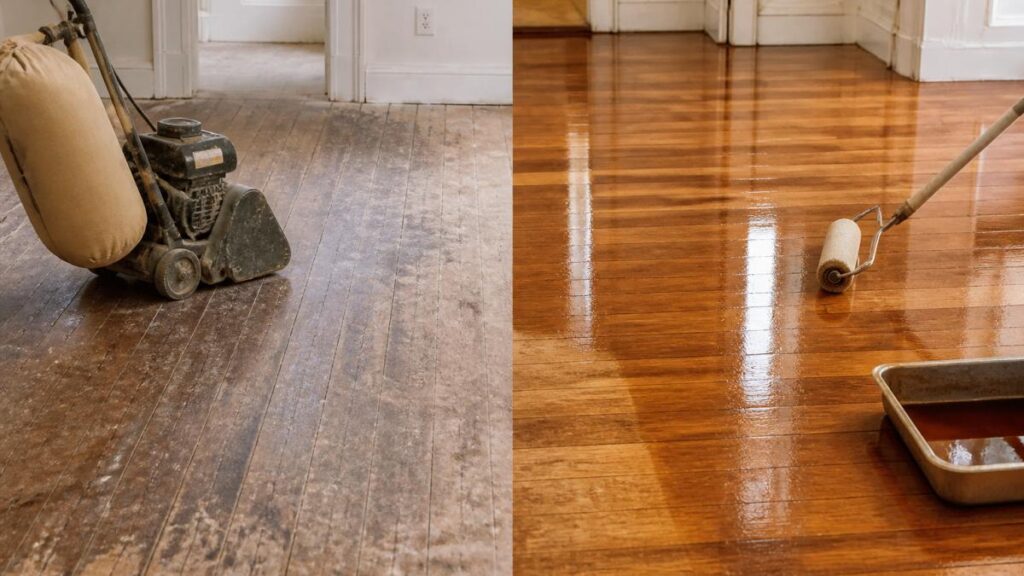
The difference between refinishing vs restoring old hardwood floors comes down to how much wood you remove and how much you keep. Refinishing sands the surface down to bare wood and applies new finish. Restoring repairs specific damage while preserving the existing surface wherever possible. The right answer almost always depends on what’s actually wrong with the floor.
Refinishing is a full reset. A technician runs a drum sander across the entire floor, taking off the old finish and a thin layer of wood itself. Every scratch, stain, and worn patch disappears in the process.
The trade-off is thickness. Solid hardwood can only be sanded so many times before the tongue-and-groove edges weaken. A common mistake is refinishing a floor that still has plenty of life left in its existing finish.
Restoration keeps the original wood intact. Instead of sanding everything, a technician addresses specific problems: replacing individual damaged boards, filling gaps, treating stains, and recoating the surface to bring back shine.
This approach works best when the wood itself is sound but the finish has dulled or a few boards have taken damage. You keep the character of an older floor, including its patina, without sacrificing material thickness.
Your floor needs refinishing when the finish has worn through to bare wood across large areas, not just in high-traffic spots. A simple test: drip a few drops of water on the surface. If it beads up, the finish is still protecting the wood. If it soaks in within a few minutes, the finish is gone.
Watch for these signals:
If you’re seeing one or two of these in isolated spots, restoration may handle it. Widespread bare wood across a whole room usually points to refinishing.
The hardwood floor restoration process starts with assessment, not sanding. A technician inspects board-by-board to determine what can be saved and what needs replacing.
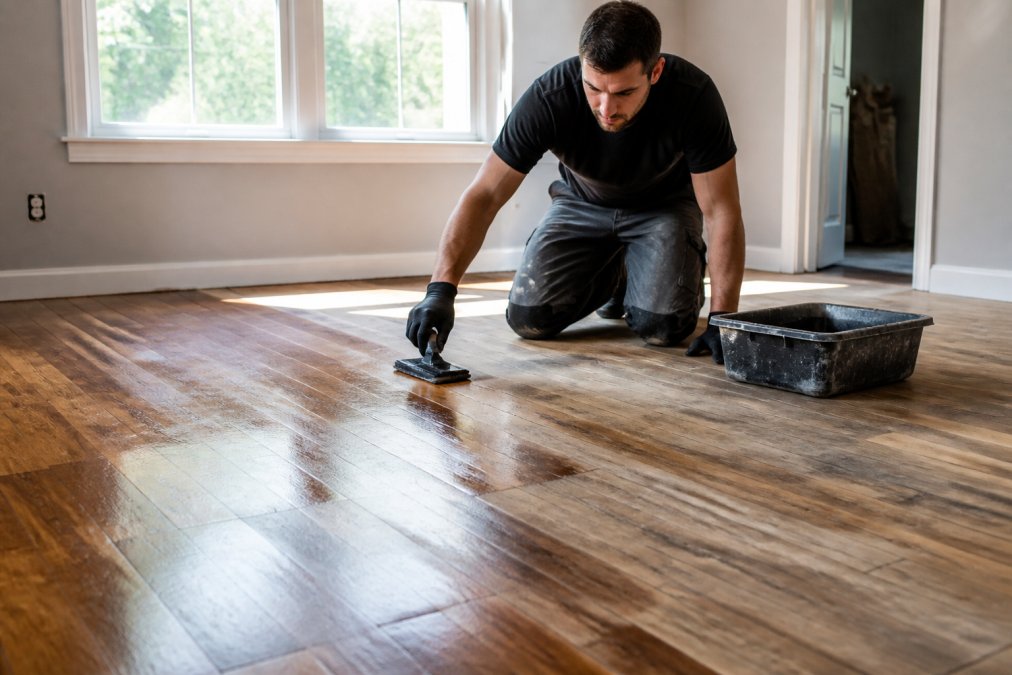
Here’s how the work typically unfolds:
The whole process usually takes less time than a full refinish because there’s no deep sanding stage.
Hardwood floor refinishing cost depends on square footage, wood condition, and how much prep work is required. Most contractors quote by the square foot, and the range widens quickly once repairs enter the picture.
The biggest cost drivers:
Restoration typically costs less per square foot because it skips the deep sanding stage. For an accurate number on your specific floor, request a written quote rather than relying on a national average.
A properly refinished floor typically lasts 10 to 15 years before it needs attention again, depending on traffic and care. Restoration buys you less time, usually 3 to 7 years, but it can be repeated more often without wearing the wood thin.
The trade-off is simple. Refinishing gives you a longer runway but consumes a sanding cycle. Restoration preserves thickness but delivers a shorter result. If your floor has already been refinished two or three times, restoration becomes the smarter long-term play because it doesn’t burn another cycle.
| Factor | Refinishing | Restoring |
|---|---|---|
| Wood removed | Thin top layer | None |
| Typical lifespan | 10-15 years | 3-7 years |
| Best for | Widespread wear, bare wood | Sound wood, surface damage |
| Disruption | Higher (dust, cure time) | Lower |
| Repeatable | Limited cycles | More often |
Start with condition, then let budget narrow the choice. If the finish is intact across most of the floor and only a few boards are damaged, restoration is the better call. If bare wood shows across large areas, refinishing is the only way to get a uniform result.
A quick decision framework:
Professional cleaning and maintenance between projects extends the life of either approach. Professional cleaning and maintenance between projects extends the life of either approach.
Choosing between refinishing vs restoring old hardwood floors is really a question of how much wood you’re willing to give up. Refinishing delivers a longer-lasting result but consumes a sanding cycle; restoration preserves the wood but returns a shorter runway. At Stay Fresh Steam Cleaning, our certified, background-checked technicians handle the deep cleaning and maintenance that keeps your floors looking sharp. We’re family-owned, we stand behind our work with a satisfaction guarantee, and we serve homes and businesses throughout the area. Contact us to schedule an assessment and find out which path your floors actually need.
Refinishing sands the floor down to bare wood and applies new stain and finish, removing deep scratches and worn layers. Restoring is less invasive: it repairs damaged boards, fills gaps, and revives the existing finish without sanding everything down. Refinishing changes the wood’s appearance more dramatically, while restoring preserves original character and costs less when the wood is still structurally sound.
Check the thickness of the wear layer above the tongue. If less than about 1 millimeter remains, sanding again risks exposing the tongue-and-groove joints. Look for deep stains that reach the wood’s core, widespread water damage, or boards that flex underfoot. A professional assessment can confirm whether refinishing is viable or if restoration or replacement makes more sense for your floor.
Refinishing typically costs a fraction of replacement and preserves the original wood, which often adds character and value. Replacement becomes necessary when boards are too thin to sand again, have structural rot, or when you want a different wood species. For most floors with solid wood remaining, refinishing delivers the better return on investment.
Refinished hardwood floors can improve perceived value because buyers see a move-in-ready surface rather than a project. The return depends on your local market and the floor’s original quality. Even a basic refinish removes years of wear and makes rooms feel brighter, which helps during showings and open houses.


