
- 4
- 0
Table of Contents
- How Often Should You Reseal Bathroom Grout? The Short Answer
- The 6-Month Rule for Showers and Wet Areas
- The 12-Month Rule for Low-Use Bathrooms
- How Long Does Grout Sealer Last in a Bathroom?
- How to Tell If Grout Needs Sealing: The Water-Drop Test
- Factors That Change Your Resealing Schedule
- How to Clean Grout Before Sealing
- Best Grout Sealer for Showers: What to Look For
- Common Mistakes That Shorten Sealer Life
- Frequently Asked Questions
Last Updated: October 16, 2026
How Often Should You Reseal Bathroom Grout? The Short Answer
Most bathrooms need to reseal bathroom grout every 6 to 12 months. Showers and wet areas usually need it closer to every 6 months, while a lightly used guest bathroom can stretch to a year.
The 6-month and 12-month numbers are starting points, not laws. Your real schedule depends on moisture, traffic, and the sealer you chose.
The 6-Month Rule for Showers and Wet Areas
Showers are the hardest-working grout in your home. Water hits daily, and steam keeps surfaces damp long after you towel off, breaking down sealer fast.
For a daily-use shower, reseal every 6 months. If two or more people shower there daily, lean toward the shorter end. Shower floor grout wears fastest because it holds standing water.
A quick rule to remember:
- Daily shower, one user: reseal about every 6 months
- Daily shower, two or more users: reseal every 5 to 6 months
- Guest shower used a few times a month: reseal once a year
The 12-Month Rule for Low-Use Bathrooms
A powder room or guest bath that rarely sees water can go a full year between reseals. Still, do not skip the annual check: toilet splashes, sink overflow, and humid summer air wear on grout over time.
Set a 12-month reminder and run a water test before you reseal. If water still beads up, wait a few more months; if it soaks in, reseal now.
How Long Does Grout Sealer Last in a Bathroom?
Most grout sealers last 6 months to 2 years, depending on the type and the room. A penetrating sealer in a dry bathroom can hold up for a year or more; the same sealer in a busy shower may need refreshing twice as often.
But the calendar is only a rough guide. The real question is how much protection is left.
What Actually Breaks a Sealer Down
Sealer wears away in layers as several forces work on it:
- Water exposure. Repeated wet-dry cycles push water past the sealer film. Shower floors that stay damp wear fastest.
- Chemical attack. Acidic cleaners, bleach-heavy products, and abrasive powders dissolve or scrub away the protective layer, often the biggest cause of early failure.
- Abrasion. Foot traffic, squeegees, scrub brushes, and abrasive pads physically remove the sealer.
Penetrating Sealers vs. Membrane Sealers
Penetrating sealers soak into the grout and block water from inside, leaving no film and lasting longer. Membrane sealers, also called topical sealers, sit on top and form a coating.
Penetrating sealers are breathable, so vapor escapes through the grout. Topical sealers trap moisture underneath, which is why they blister and peel in wet rooms.
How Grout Type Changes the Lifespan
Not all grout holds sealer the same way:
- Cement-based grout is porous and absorbs sealer well, but also absorbs water when the sealer wears thin. Expect to reseal more often.
- Epoxy grout is largely non-porous and resists water on its own. It may need sealing rarely, if ever, and some manufacturers advise against it because sealer cannot bond.
- Sanded vs. unsanded grout affects how much surface area the sealer can grip. Sanded grout holds a penetrating sealer slightly longer; unsanded grout in narrow joints may need more frequent touch-ups.
If you are not sure which grout you have, a damp finger helps: cement-based grout darkens and feels chalky, while epoxy stays hard and slick.
How to Check How Much Protection Is Left
Rather than trusting the date on the bottle, test the grout directly with the water-drop test:
- Dry the grout line with a paper towel.
- Place a few drops of water along the joint.
- Watch for 1 to 2 minutes.
If the water beads and sits on top, the sealer is still working. If it soaks in and darkens the grout, protection is gone or nearly gone. A middle result, beads briefly, then slowly absorbs, means you are near the end of its life.
Key Takeaway
Treat the 6-month and 2-year figures as bookends, not deadlines. The water-drop test tells you where you actually sit between them, and it takes less than two minutes.
Treat the 6-month and 2-year figures as bookends, not deadlines. The water-drop test tells you where you actually sit between them, and it takes less than two minutes.
What Shortens Sealer Life
Several things cut a sealer’s life short:
- Harsh acidic cleaners
- Standing water that never dries
- Heavy scrubbing with abrasive pads
Watch Out
Using an acidic cleaner on sealed grout is one of the fastest ways to strip protection. The acid breaks down the sealer, and once it is gone, water soaks straight into the grout and stains set in fast.
Using an acidic cleaner on sealed grout is one of the fastest ways to strip protection. The acid breaks down the sealer, and once it is gone, water soaks straight into the grout and stains set in fast.
A Realistic Lifespan Table
| Situation | Typical Sealer Lifespan |
|---|---|
| Penetrating sealer, guest bath, light use | 18 months to 2 years |
| Penetrating sealer, daily shower, one user | 9 to 12 months |
| Penetrating sealer, daily shower, multiple users | 6 to 9 months |
| Topical sealer, any wet area | 3 to 6 months |
| Epoxy grout, any bathroom | Often not needed; verify with water test |
These ranges assume the grout was cleaned properly before sealing and pH-neutral cleaners are used afterward. Skip either step and the numbers shrink.
How to Tell If Grout Needs Sealing: The Water-Drop Test
The water-drop test tells you in seconds whether your sealer is still working.
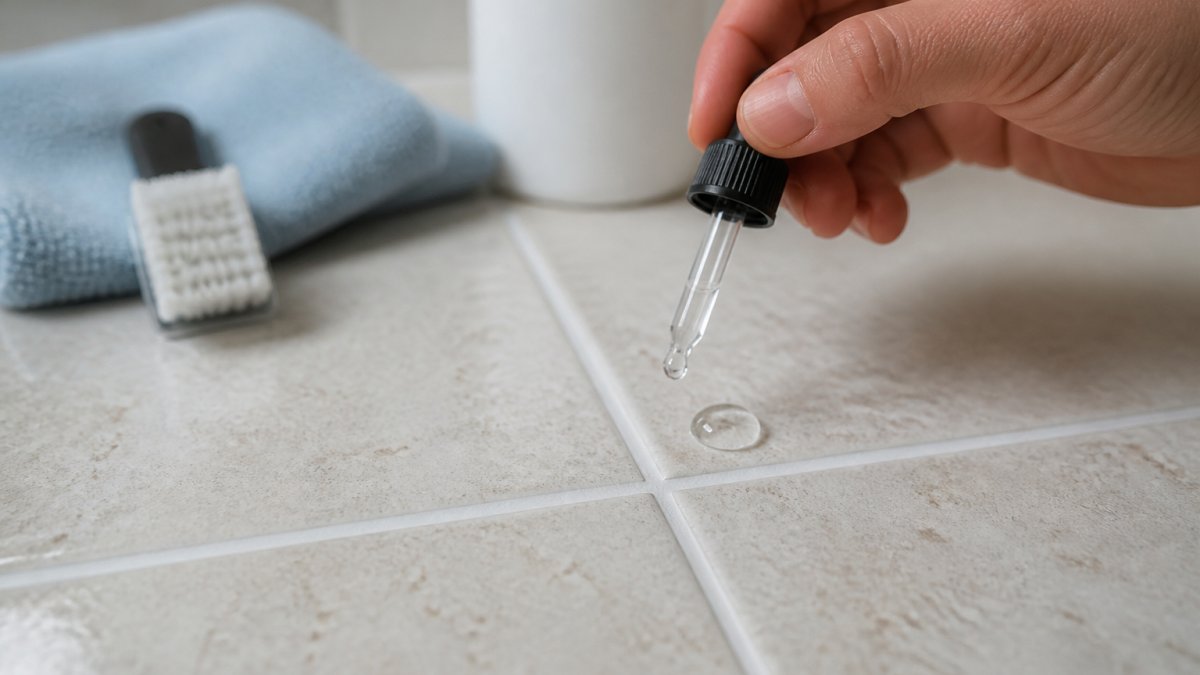
Run this test every few months, and always before you reseal. It is the most reliable way to tell if grout needs sealing.
Other Warning Signs to Watch For
The water test is the best check, but your eyes catch plenty too:
- Grout looks darker than a few months ago
- Stains will not wipe away with a damp cloth
- Grout feels gritty or chalky
Factors That Change Your Resealing Schedule
No single schedule fits every bathroom. Several factors push your reseal date earlier or later.
Grout Type and Tile Material Differences
Cement-based grout is porous and soaks up water, so it needs sealing more often. Epoxy grout resists water on its own and may need sealing rarely, if ever.
Here is how the material pairing changes the schedule:
| Grout + Tile Combination | Reseal Frequency |
|---|---|
| Cement grout + ceramic or porcelain tile | Every 6 to 12 months |
| Cement grout + natural stone (marble, travertine, slate) | Every 6 months, plus a separate stone sealer |
| Epoxy grout + any tile | Rarely; test first, seal only if water absorbs |
| Cement grout + glass or mosaic tile | Every 6 to 12 months; small joints dry slower |
A common mistake is sealing natural stone tile with the same product used on grout. Stone and grout sealers are formulated differently, and the wrong one can dull or discolor stone, so check the label for stone compatibility.
High-Traffic vs. Low-Use Areas
A main bathroom used by the whole family wears faster than a guest bath. High-traffic areas see more water, cleaning, and wear, so grout lines break down sooner, while low-use rooms can wait longer.
A simple way to think about it: count showers per week. Under five is light use, five to fifteen is moderate, and more than fifteen is heavy.
Humidity, Cleaning Products, and Wear
High humidity slows drying and keeps grout damp, shortening sealer life. pH-neutral cleaners protect sealer, while acidic or abrasive ones strip it, and daily foot traffic and scrubbing add up. All three push your reseal date sooner.
Shower-Specific Moisture Management
The biggest lever you control is how fast the shower dries between uses. A few habits add months to sealer life:
- Squeegee the walls and floor after every shower. Removing standing water before it soaks in is the highest-impact habit.
- Run the exhaust fan for 20 to 30 minutes after showering, or leave the door open if there is no fan. Trapped steam keeps grout damp for hours.
- Hang towels and bath mats outside the shower so they are not releasing moisture into the room.
Pro Tip
If your bathroom has no exhaust fan, a small plug-in dehumidifier or a cracked window during and after showers can do most of the same work. The goal is simply to get the room dry within an hour of use.
If your bathroom has no exhaust fan, a small plug-in dehumidifier or a cracked window during and after showers can do most of the same work. The goal is simply to get the room dry within an hour of use.
When the Schedule Should Override the Calendar
Even if your calendar says you are not due, reseal sooner if any of these are true:
- The water-drop test shows absorption.
- Grout looks darker than a few months ago.
- Mold or mildew in the grout lines.
The calendar is a reminder; the grout’s condition is the real signal.
How to Clean Grout Before Sealing
Sealer cannot bond to dirty grout. Sealing over grime traps dirt and fails early, and skipping the clean is the most common reason a reseal job does not last.
Step-by-Step Cleaning Process
- Clear the area and ventilate with a fan or open window
- Sweep or vacuum loose debris from the grout lines
- Mix a pH-neutral cleaner with warm water
- Scrub with a soft brush in small circles
- Wipe away dirty water and rinse with a clean, damp cloth
- Let the grout dry completely before sealing
For stubborn stains or heavy mold, a professional steam clean reaches deep into the grout and lifts out what a brush cannot. That is where our team at Stay Fresh Steam Cleaning can help.
Why Grout Must Be Fully Dry Before Sealing
Sealer needs dry grout to work. If moisture is trapped, the sealer cannot soak in and will peel or cloud. Wait at least 24 hours after cleaning, longer in a humid bathroom, and test with a dry paper towel: if it comes away damp, keep waiting.
Best Grout Sealer for Showers: What to Look For
The best grout sealer for showers is a penetrating sealer made for wet areas. It soaks into the grout instead of sitting on top, so it holds up to daily water exposure. Look for a product labeled for showers and bathrooms that resists mold and mildew.
Penetrating vs. Topical Sealers
| Sealer Type | How It Works | Best For | Lifespan |
|---|---|---|---|
| Penetrating | Soaks into grout, blocks water inside | Showers, wet areas | 1-2 years |
| Topical | Coats the surface with a film | Dry areas, decorative finish | 6-12 months |
Penetrating sealers win for showers. Topical sealers can work in a guest bath but peel faster in wet rooms.
Reading the Label: Safety and Application Tips
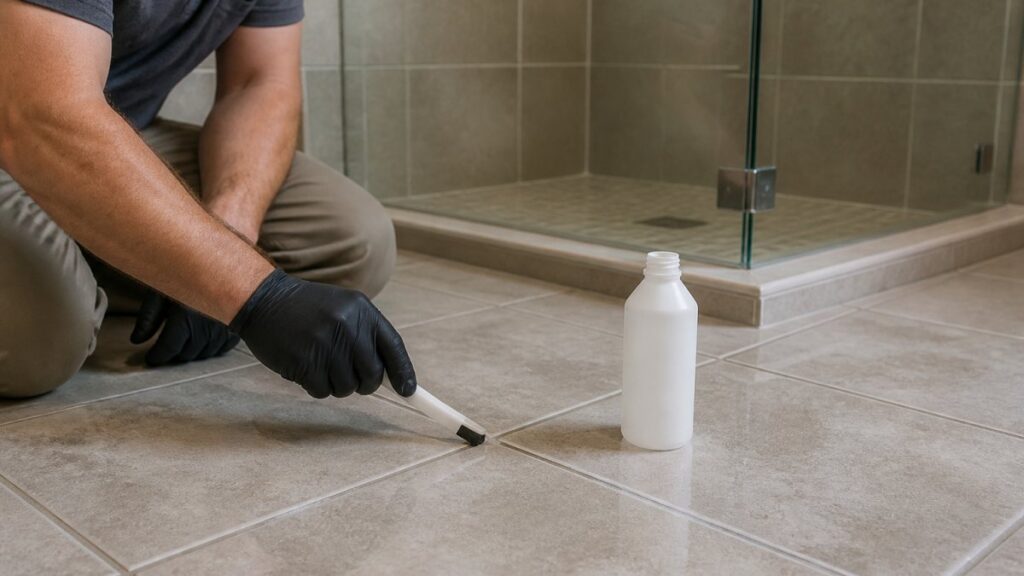
Always follow the manufacturer instructions and check safety warnings before opening the bottle. Most sealers need ventilation, gloves, and eye protection. Apply in thin coats, let each cure, and avoid walking on the surface until fully dry.
Common Mistakes That Shorten Sealer Life
A few easy mistakes cut your sealer’s life in half. Avoid these and your reseal job will last.
- Sealing over dirty or damp grout
- Using acidic cleaners after sealing
- Applying too thick a coat, which peels
Pro Tip
Set a phone reminder for 6 months after you reseal a shower. Most people forget, and by the time they notice the grout looks dark, water has already soaked in and stains have set. A simple reminder keeps you ahead of the damage.
Set a phone reminder for 6 months after you reseal a shower. Most people forget, and by the time they notice the grout looks dark, water has already soaked in and stains have set. A simple reminder keeps you ahead of the damage.
One more thing worth knowing: grout, caulk, and waterproofing are three different jobs. Grout fills the gaps between tiles, caulk seals corners and joints where tiles meet, and waterproofing sits behind the tile to stop water reaching the wall. Sealing grout protects the grout itself but does not replace caulk or waterproofing. If corners are cracking or peeling, that is a caulk problem, not a sealer problem.
Bathroom grout takes a beating from water, steam, and daily use, and staying ahead of resealing is the only way to protect it. Our certified, background-checked technicians use advanced steam methods to lift dirt and stains from tile and grout, and our satisfaction guarantee means we stand behind every job.
Frequently Asked Questions
Does bathroom grout need to be resealed?
Yes, if your grout was sealed at installation, the sealer wears down over time and needs to be reapplied. Sealer blocks moisture, stains, and mildew from soaking into the porous grout. Without it, water penetrates the grout lines, which can lead to discoloration, mold growth, and eventually cracked or crumbling grout. A simple water-drop test tells you whether your sealer is still doing its job or needs to be refreshed.
Is it worth sealing grout in a shower?
Sealing grout in a shower is one of the highest-value maintenance tasks you can do. Showers see constant moisture, soap scum, and humidity, all of which break down grout faster than in any other room. A good penetrating sealer gives you six months to a year of protection, makes routine cleaning easier, and helps prevent mold and mildew from taking hold in the grout lines. The cost of a sealer is far less than regrouting.
How long does grout sealer last in a bathroom?
Most penetrating sealers last six months to one year in a bathroom, with shower walls and floors at the shorter end because of constant water exposure. Low-use bathrooms or powder rooms can go 12 months or longer. Membrane or topical sealers may need reapplication more often, sometimes every three to six months, because they sit on the surface and wear away with cleaning.
Can you apply grout sealer over old sealer?
It depends on the type. Penetrating sealers soak into the grout, so applying a fresh coat over an older penetrating sealer is usually fine as long as the grout is clean and dry. Topical or membrane sealers form a film on the surface, and layering new sealer over a worn film can cause peeling or uneven coverage. When in doubt, strip the old topical sealer, clean the grout, let it dry fully, and then apply a new coat.


