
- 3
- 0
Last Updated: October 23, 2026
Quick Summary
The benefits of steam cleaning for pet stains include sanitizing bacteria and allergens without chemicals, using 90% less water than traditional methods, and effectively removing odors from fresh stains. However, the odor benefit depends on enzyme pre-treatment for set-in urine, as heat alone cannot neutralize crystallized uric acid.
- Steam cleaning uses high-temperature water to break down pet stains and extract moisture from carpet fibers and backing.
- Fresh pet stains respond best to steam cleaning within the first 24-48 hours before urine crystals set into fibers.
- Set-in stains require enzyme pre-treatment for 12-24 hours before steam cleaning to break down uric acid crystals.
- Steam cleaning leaves carpet damp for 4-8 hours in dry conditions or 12-24 hours in humid conditions.
- Verify cleaning success with a blacklight recheck and damp recheck after the carpet fully dries.
Table of Contents
- How Steam Cleaning Works on Pet Stains
- How to Remove Pet Urine From Carpet: A Safe Approach
- Steam Cleaner vs. Carpet Shampooer for Pet Stains
- Steam Cleaning Pet Odors From Upholstery
- How Long Carpet Takes to Dry After Steam Cleaning
- Key Benefits: Sanitizing, Allergen Removal, and Odor Neutralization
- Risks of Heat on Pet Urine and When to Avoid Steam Cleaning
- Frequently Asked Questions
How Steam Cleaning Works on Pet Stains
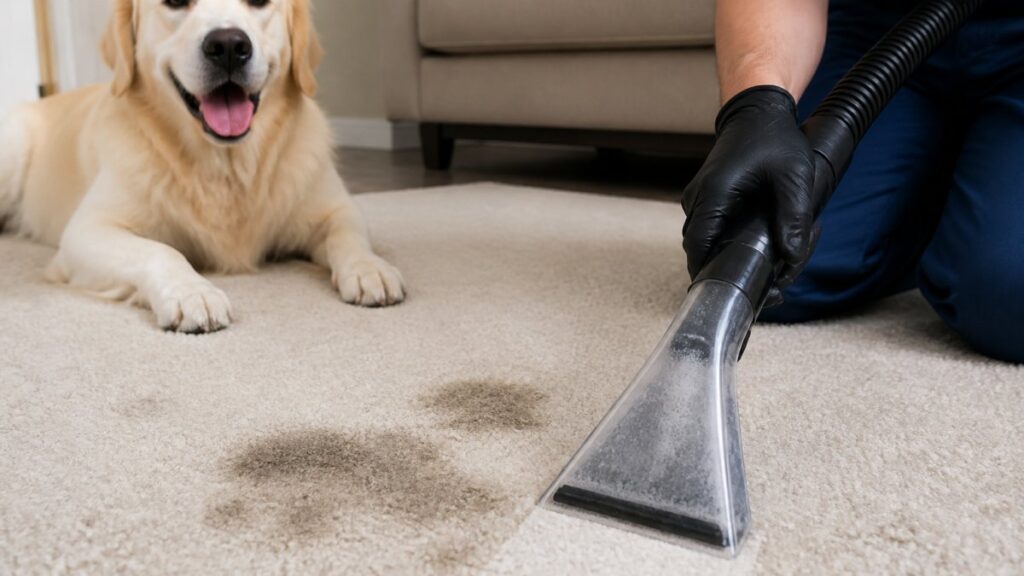
Steam cleaning uses high-temperature water to break down and lift pet stains from carpet fibers, and understanding the benefits of steam cleaning for pet stains helps pet owners choose the right cleaning method.
The process is straightforward. According to research published in the National Library of Medicine’s peer-reviewed studies, steam technology consumed 90% less water compared to a two-step cleaning method.
Steam cleaning is most effective on fresh stains. The heat works quickly before urine crystals set into the carpet fibers and backing. For older stains, a pre-treatment step becomes critical.
Pro Tip
Fresh pet stains respond best to steam cleaning within the first 24-48 hours. The longer urine sits, the more it bonds to fibers and backing, requiring extra pre-treatment work before steam cleaning can be effective.
Fresh pet stains respond best to steam cleaning within the first 24-48 hours. The longer urine sits, the more it bonds to fibers and backing, requiring extra pre-treatment work before steam cleaning can be effective.
How to Remove Pet Urine From Carpet: A Safe Approach
Removing pet urine safely requires a step-by-step process for both fresh and set-in stains. Rushing it often leads to incomplete odor removal or fiber damage.
Pre-Treatment and Locating Hidden Stains
Before steaming, find all the stains.
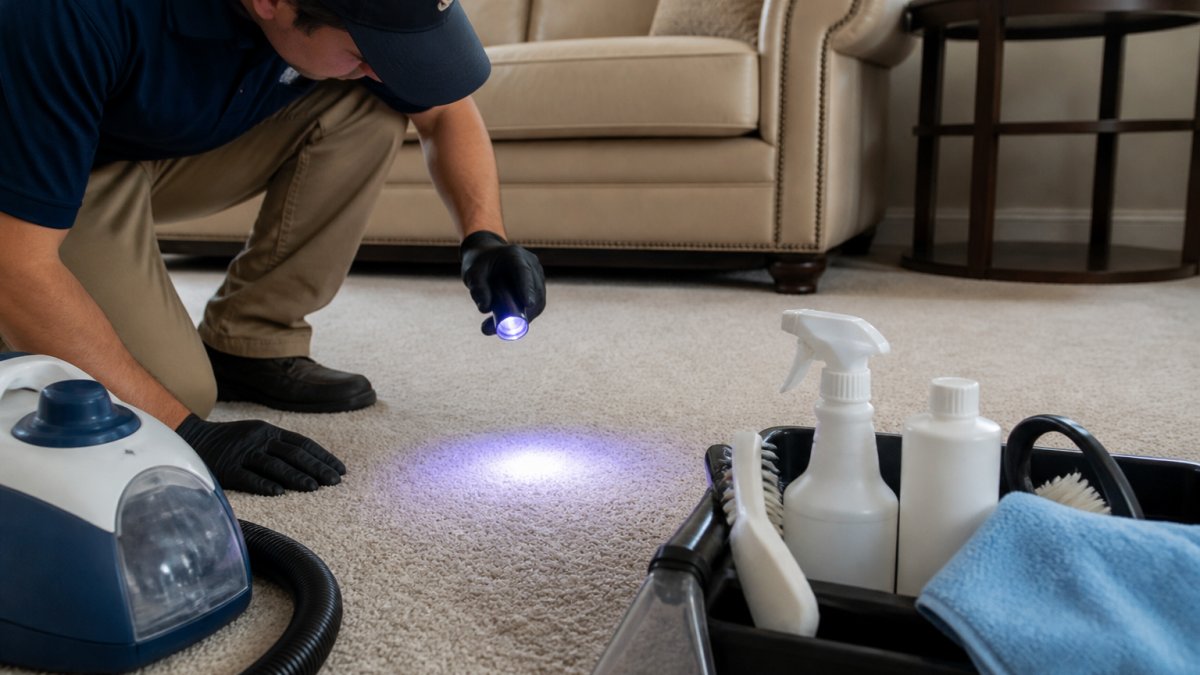
Once located, pre-treat. Blot fresh urine with clean towels, don’t rub.
This waiting period is not optional. Skipping it and jumping straight to steam cleaning often leaves odor behind because the uric acid crystals embedded in the backing are never addressed.
Fresh Stains vs. Set-In Urine Damage
Fresh urine stains respond quickly to steam cleaning.
Set-in stains are different. When urine sits for weeks or months, it penetrates the backing and subfloor, and uric acid crystals bond to fibers.
Many guides claim steam cleaning removes all pet urine odors, true only for fresh stains.
The timeline matters. Fresh stains take one steam-cleaning session. Set-in stains may need two sessions with enzyme treatment between them.
Steam Cleaner vs. Carpet Shampooer for Pet Stains
Steam cleaners and carpet shampooers work differently, and it matters for pet stains.
Steam cleaners inject high-temperature water and immediately extract it.
Carpet shampooers agitate the carpet with brushes or jets using a cleaning solution, then extract the soapy mixture. Gentler on delicate fibers, but they leave more residue.
| Feature | Steam Cleaner | Carpet Shampooer |
|---|---|---|
| Water temperature | 200-300°F | Room temperature |
| Drying time | 4-8 hours | 12-24 hours |
| Pet odor removal | Excellent for fresh stains | Moderate |
| Chemical residue | Minimal | Higher |
| Best for | Pet urine, sanitizing | General dirt, traffic stains |
For pet stains, steam cleaning wins: heat kills odor-causing bacteria and extraction removes urine compounds.
Rental machines don’t address this.
Steam Cleaning Pet Odors From Upholstery
Upholstered furniture holds pet odors differently than carpet. Urine soaks into the fabric face and padding but not a subfloor, contamination is shallower, but the materials are less forgiving of heat and moisture.
The single most important step happens before you plug anything in: check the manufacturer’s cleaning code, usually on a tag under the seat cushion or on the frame. Codes follow a standard industry system:
- W, water-based cleaning is acceptable. Steam is generally safe at low settings.
- S, solvent-based cleaning only. Do not steam; water can shrink, stain, or distort the fabric.
- WS, either water or solvent is acceptable. Steam is usually fine with a spot test.
- X, vacuum only. Do not steam or wet-clean; call a professional.
If the tag is missing, treat the piece as S until a professional confirms otherwise. Manufacturer guidance overrides any general advice, including this article.
Matching the Method to the Material
| Surface | Steam appropriate? | Key caution |
|---|---|---|
| Carpet (synthetic, most residential) | Yes, after pre-treatment | Watch backing and seams; avoid oversaturation |
| Area rugs (wool, silk, viscose) | Usually no for DIY | Heat and moisture can shrink, bleed dye, or distort fringe |
| Upholstery coded W or WS | Yes, low setting, spot test first | Padding holds moisture; dry fast |
| Upholstery coded S or X | No | Water-based cleaning can damage the fabric |
| Pet beds (washable covers) | Prefer machine washing per label | Foam filling may not survive heat |
| Sealed hard floors (tile, sealed stone, LVP) | Yes, with a hard-floor attachment | Avoid unsealed grout, wood, and laminate |
| Unsealed wood or laminate | No | Moisture causes swelling and warping |
For upholstery that passes the code check, the process mirrors carpet cleaning with shorter dwell times: locate the stain with a blacklight, blot fresh urine, then apply enzyme cleaner for 8-12 hours rather than 24.
Steam at the lowest setting that still produces vapor, keep the nozzle moving, and follow immediately with dry-pass extraction. Learn detailed steps for removing pet odors from upholstery to ensure you handle each material safely.
Drying Upholstery Correctly
Drying is where most DIY upholstery cleaning fails. After steaming, place fans around the furniture, open windows, and run a dehumidifier in humid weather. Pieces take 12-24 hours to dry, thicker cushions longer. Stand cushions on edge and rotate them so air reaches all sides, and don’t put them back until dry to the touch at the seams and core.
Watch Out
Never steam clean upholstery with the same settings you would use on carpet. Check the cleaning code first, spot test a hidden seam, and keep pets off the furniture until it is fully dry. Excess heat and moisture can damage fabric, cause shrinkage, and trap moisture in padding where mildew grows.
Never steam clean upholstery with the same settings you would use on carpet. Check the cleaning code first, spot test a hidden seam, and keep pets off the furniture until it is fully dry. Excess heat and moisture can damage fabric, cause shrinkage, and trap moisture in padding where mildew grows.
Professional upholstery cleaning is recommended when the cleaning code is S or X, when the piece is antique or valuable, or when odor persists after one careful DIY attempt. Home steam cleaning works for light odors on water-coded fabric, but deep pet damage in padding often requires extraction equipment and expertise that rental units cannot match.
How Long Carpet Takes to Dry After Steam Cleaning
Drying time depends on humidity, air circulation, and how much moisture the steam cleaner extracted.
Steam cleaning leaves carpet damp, not soaked. Extraction removes most water, but some remains in fibers and backing.
Full drying takes:
- 4-8 hours in dry conditions with good air circulation
- 12-24 hours in humid conditions or without fans
- Up to 48 hours in basements or poorly ventilated spaces
Speed drying by opening windows, running ceiling fans, and pointing portable fans at the carpet. Dehumidifiers help in humid climates.
Don’t replace furniture or rugs until the carpet is completely dry, trapped moisture breeds mildew and odor.
Key Benefits: Sanitizing, Allergen Removal, and Odor Neutralization
The benefits of steam cleaning for pet stains are real for pet owners, but they depend on what you are cleaning and when. The honest version is more useful than the marketing version.
Sanitizing and Reducing Pet Dander
Heat kills many bacteria, viruses, and dust mites on contact when the surface reaches the right temperature. Steam reduces bacteria colonies in carpet backing without chemical residue, and extraction removes pet dander and the dust mites it feeds.
The sanitizing benefit extends beyond visible stains: carpet that looks clean can harbor bacteria from unnoticed accidents, and steam cleaning treats the whole carpet, not just visible spots.
Water Efficiency and Chemical-Free Cleaning
Steam cleaning uses minimal water because heat does most of the work. According to research published in the National Library of Medicine’s peer-reviewed studies, steam technology consumed 90% less water compared to a two-step cleaning method.
Chemical-free cleaning appeals to households with young children and pets. Steam relies on heat and extraction rather than solvents or fragrances, leaving only moisture, which air circulation removes. Discover non-toxic carpet cleaning methods for pets that protect your family while eliminating odors.
The Benefit That Depends on Stain Age
Most guides oversimplify here. Steam cleaning’s odor benefit is strongest on fresh urine that hasn’t crystallized. Once uric acid crystals bond to fibers and backing, heat alone doesn’t neutralize them, it can release odor compounds deeper into the backing and subfloor.
A practical rule: enzyme pre-treatment first, then steam. Enzymes break down the uric acid crystals; steam then sanitizes and extracts. Skipping the enzyme step is the most common reason a steam-cleaned carpet still smells.
How to Verify the Benefit Actually Happened
Don’t judge success by appearance alone. After the carpet is fully dry, check:
- Nose test at the source. Get low and sniff the treated spot after 24 hours. Odor that returns when the carpet is damp suggests crystals remain.
- Blacklight recheck. Scan the area in a dark room. Residual fluorescence means urine residue is still present.
- Damp recheck. Lightly mist the spot with clean water and smell again. This mimics humid days, when hidden urine odor is most noticeable.
- Walk test. Clean socks on the treated area should not pick up residue or odor.
If odor returns after one enzyme-and-steam cycle, repeat the enzyme treatment with a longer dwell time rather than steaming again immediately, repeated heat without enzymes pushes the problem deeper. If two cycles fail, or the stain is large or has reached the subfloor, get a professional assessment.
Key Takeaway
Steam cleaning reduces bacteria, allergens, and odor without chemicals and uses far less water than traditional methods. The odor benefit is strongest on fresh stains and depends on enzyme pre-treatment for set-in urine. Verify results with a blacklight and a damp recheck after the carpet dries.
Steam cleaning reduces bacteria, allergens, and odor without chemicals and uses far less water than traditional methods. The odor benefit is strongest on fresh stains and depends on enzyme pre-treatment for set-in urine. Verify results with a blacklight and a damp recheck after the carpet dries.
Risks of Heat on Pet Urine and When to Avoid Steam Cleaning
Steam cleaning isn’t always right for pet urine, heat can make some problems worse.
When NOT to steam clean:
Untreated old urine should not be steam cleaned immediately.
The solution: pre-treat with an enzyme cleaner first.
Delicate or antique rugs should not be steam cleaned at home. High heat can damage fibers, bleed colors, and shrink natural wool or silk; professionals have the equipment and expertise to handle them safely. Learn about safe carpet cleaning for sensitive pets to understand what precautions matter.
Carpet with backing damage or separating seams can be damaged further by steam cleaning, water penetrates damaged areas and weakens adhesive.
Reality check: Steam cleaning is powerful but not suitable for every situation.
Pet stains and odors are frustrating, but steam cleaning offers a real solution when used correctly. Stay Fresh Steam Cleaning specializes in pet stain removal with professional carpet cleaning techniques that address both fresh and stubborn odors.
Frequently Asked Questions
Can steam cleaning actually remove pet urine stains and odors?
Steam cleaning can effectively reduce fresh pet urine stains and neutralize odors when the urine is treated before heat is applied. However, old or set-in urine requires enzymatic pre-treatment first, applying heat directly to untreated old urine can set the stain or intensify odors. The key is addressing the urine chemically before using steam cleaning for final sanitization and odor removal.
What’s the difference between a steam cleaner and a carpet shampooer for pet stains?
Steam cleaners use high-temperature water and extraction to sanitize and remove moisture, consuming 90% less water than traditional methods. Carpet shampooers apply chemical cleaning solutions and rely on agitation and suction. For pet stains, steam cleaners excel at sanitizing and odor neutralization on fresh stains. Many professionals use both methods in sequence for best results.
How long does carpet take to dry after steam cleaning?
Carpet typically dries within 4-8 hours after professional steam cleaning, depending on humidity, airflow, and carpet thickness. Proper extraction removes most moisture, significantly shortening drying time compared to older carpet cleaning methods. Opening windows, using fans, and maintaining good ventilation speeds up the process. Avoid heavy foot traffic until the carpet is completely dry to prevent re-soiling.
Is steam cleaning safe for all carpet and upholstery materials?
Steam cleaning works well on most synthetic carpets and sturdy upholstery fabrics, but delicate materials like silk, wool blends, or antique fabrics may require lower temperatures or alternative methods. Always test on a hidden area first. Carpet backing and padding can be damaged by excessive moisture, so professional-grade extraction is essential. Check your carpet or upholstery manufacturer’s care label, or consult a professional to verify material compatibility before proceeding.


