
- 15
- 0
Table of Contents
- Why Safe Carpet Cleaning Matters for Sensitive Pets
- Pet-Safe Carpet Cleaning Products and Ingredients to Use
- How to Remove Pet Stains from Carpet: A Step-by-Step Approach
- Steam Cleaning Carpets with Pets: What You Need to Know
- How Long to Keep Pets Off Carpet After Cleaning
- Comparing Cleaning Methods for Sensitive Pets
- Preparing Your Home and Pets for Carpet Cleaning
- Conclusion
- Frequently Asked Questions
Last Updated: October 12, 2026
Why Safe Carpet Cleaning Matters for Sensitive Pets
Pets with sensitivities, whether allergies, asthma, respiratory conditions, or skin irritation, are vulnerable to chemical residues left behind in carpet fibers.
At Stay Fresh Steam Cleaning, we understand that pet owners need cleaning solutions that work without compromising their pet’s wellbeing. Many pet owners assume all carpet cleaners use the same approach. They don’t.
Your carpet holds more than just visible stains. Pet dander, urine salts, and bacteria accumulate deep in the fibers. If these aren’t fully removed and rinsed away, they continue to irritate sensitive pets long after the cleaning is done.
Key Takeaway
Safe carpet cleaning sensitive pets requires three things: pet-safe products, thorough rinsing, and complete drying before pets return to the area.
Safe carpet cleaning sensitive pets requires three things: pet-safe products, thorough rinsing, and complete drying before pets return to the area.
Pet-Safe Carpet Cleaning Products and Ingredients to Use
Not all carpet cleaning products are created equal. When you have a sensitive pet, reading labels matters. You’re looking for products without harsh chemicals that can irritate respiratory systems or skin.
What to look for:
- Plant-based surfactants instead of synthetic ones
- Products labeled non-toxic and hypoallergenic
- Cleaners free from ammonia, bleach, and phosphates
- Solutions with minimal fragrance (natural scents are safer than artificial)
Common pet-safe ingredients:
- White vinegar (a natural deodorizer and mild disinfectant)
- Baking soda (absorbs odors without chemicals)
- Citric acid (gentle on fibers, safe for pets)
- Enzymatic cleaners (break down organic matter without toxic residues)
The challenge with DIY solutions is knowing the right dilution ratios. A vinegar-based cleaner that’s too strong can damage carpet fibers or leave a smell that bothers your pet. A solution that’s too weak won’t clean effectively. This is one reason many pet owners turn to professionals, the math is done for you, and the equipment ensures proper application.
Pro Tip
If you use a homemade vinegar solution, dilute it to a 1:3 ratio (one part vinegar to three parts water). Test it on a hidden corner of your carpet first to check for any discoloration.
If you use a homemade vinegar solution, dilute it to a 1:3 ratio (one part vinegar to three parts water). Test it on a hidden corner of your carpet first to check for any discoloration.
How to Remove Pet Stains from Carpet: A Step-by-Step Approach
Removing pet stains starts the moment an accident happens. Fresh stains are far easier to treat than set-in ones. The longer urine or other pet accidents sit in the carpet, the deeper they penetrate the fibers and padding beneath.
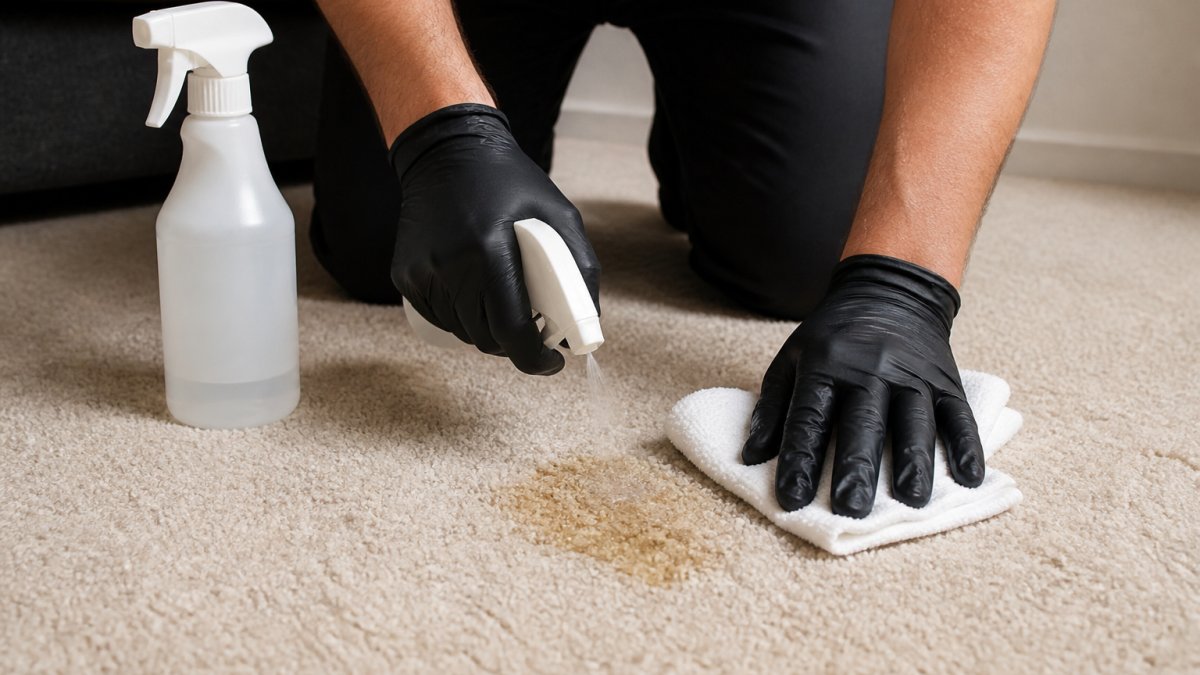
For fresh stains (within hours):
-
Blot, don’t rub. Use paper towels or a white cloth to absorb as much liquid as possible. Press down firmly but don’t scrub, scrubbing pushes the stain deeper into the fibers.
-
Apply your cleaning solution. Spray a pet-safe cleaner directly onto the stain. Let it sit for 5-10 minutes so it can break down the urine or accident.
-
Blot again. Use a fresh cloth and repeat the blotting process. You may need to do this several times until the cloth comes away mostly dry.
-
Rinse with water. This step is crucial. Spray clean water on the area and blot again. Any residue left behind can irritate your pet’s paws or respiratory system.
-
Dry thoroughly. Use fans or open windows to speed drying. The area should be completely dry before your pet returns.
Fresh Stains vs. Set-In Stains
Fresh stains respond quickly to treatment. A stain that’s hours old usually comes out with one or two applications of a pet-safe cleaner. Set-in stains, those that have sat for days or weeks, are a different challenge.
When a stain has been there for weeks, home treatments rarely work completely. The odor especially becomes stubborn. This is where professional-grade equipment and enzymatic cleaners make a real difference. Professionals use hot-water extraction and specialized solutions designed to break down the compounds that cause both the stain and the smell.
Neutralizing Odors at the Source
Pet odors don’t just sit on the surface, they’re embedded in the carpet fibers and the padding. To truly eliminate odor, you need to neutralize the source, not just mask it.
Enzymatic cleaners are the key. These products contain natural enzymes that break down the organic compounds in pet urine.
Application matters. You need enough cleaner to penetrate deep into the carpet and reach the padding.
Drying speed affects odor control. If your carpet stays damp for days, bacteria can grow and create new odors. Fast drying with proper ventilation prevents this.
Steam Cleaning Carpets with Pets: What You Need to Know
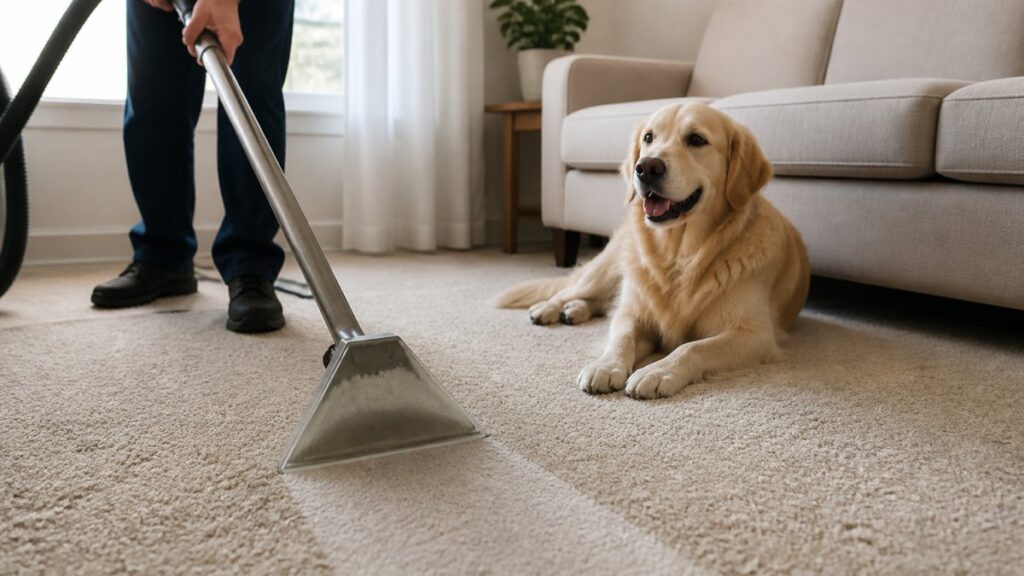
Steam cleaning, also called hot-water extraction, is one of the most effective methods for deep cleaning carpets with pets. It uses hot water and pressure to lift dirt, pet hair, dander, and stains from deep within the fibers.
How it works:
- Hot water (typically 200-220°F) mixed with a cleaning solution is injected into the carpet
- The pressure and heat break down stains and loosen debris
- A powerful vacuum immediately extracts the water and dirt
- The result is cleaner fibers with less moisture remaining
Why it’s safe for sensitive pets:
- The heat can help neutralize some allergens and bacteria
- If done properly, rinsing removes chemical residues
- The extraction process leaves less moisture, which means faster drying
- Professional-grade equipment uses more water pressure and heat than rental machines, resulting in cleaner carpets
The catch: Steam cleaning leaves more moisture in the carpet than dry methods. This means longer drying time, which is why keeping pets off the carpet for 24-48 hours is essential.
Watch Out
If your carpet isn’t fully dry before pets return, moisture can promote mold and mildew growth, which can trigger respiratory issues in sensitive animals. Ensure adequate ventilation and drying time.
If your carpet isn’t fully dry before pets return, moisture can promote mold and mildew growth, which can trigger respiratory issues in sensitive animals. Ensure adequate ventilation and drying time.
How Long to Keep Pets Off Carpet After Cleaning
This is one of the most important questions pet owners ask. Keeping your pet off a freshly cleaned carpet isn’t just about protecting the cleaning job, it’s about safety.
Minimum time: 24 hours. Most carpets need at least a full day to dry completely. Some take longer depending on humidity, ventilation, and the cleaning method used.
Best practice: 48 hours. If your pet has respiratory sensitivities or if humidity is high, waiting two days is safer.
How to tell if it’s dry:
- Touch the carpet in the middle of the area that was cleaned. It should feel dry to the touch, not damp.
- Walk across it in socks. Your socks shouldn’t pick up moisture.
- The smell of the cleaning solution should be gone or nearly gone.
During the drying period, keep pets in a different room or area of your home.
Comparing Cleaning Methods for Sensitive Pets
Different cleaning methods have different trade-offs. The best choice depends on your carpet type, the severity of stains and odors, and your pet’s specific sensitivities.
| Method | Drying Time | Residue Risk | Best For | Cost Range |
|---|---|---|---|---|
| DIY Spot Treatment | 4-8 hours | Higher | Fresh, small stains | Low |
| Dry Compound Cleaning | 1-2 hours | Minimal | Maintenance, light soiling | Moderate |
| Hot-Water Extraction | 24-48 hours | Lower if rinsed properly | Deep cleaning, set-in stains | Moderate to High |
| Encapsulation Cleaning | 2-4 hours | Very low | Frequent cleaning needs | Moderate |
DIY Spot Treatment vs. Professional Deep Cleaning
DIY spot treatments work for fresh, small stains. You control what products go on your carpet, which is reassuring if your pet has severe sensitivities.
Professional deep cleaning reaches areas DIY methods can’t. The equipment is more powerful, the solutions are more concentrated, and the extraction is thorough.
The real difference shows up weeks later. A DIY-cleaned stain might look fine at first, but odor often returns. Professional cleaning, done correctly, lasts longer because it removes the problem at the source.
When to Call a Professional
You should consider professional cleaning when:
- Stains have been there for more than a few days
- Odors persist despite multiple DIY attempts
- Your pet has diagnosed respiratory sensitivities or severe allergies
- Your carpet has delicate fibers that could be damaged by DIY equipment
- You have multiple pets or large contaminated areas
- You want a guarantee that the carpet is safe for your pet to return to
Stay Fresh Steam Cleaning specializes in pet-safe deep cleaning for exactly these situations. Our certified technicians understand the specific needs of homes with sensitive pets.
Preparing Your Home and Pets for Carpet Cleaning
Preparation makes the cleaning process smoother and safer for your pets.
Before cleaning arrives:
- Remove pet toys, food bowls, and bedding from the area
- Vacuum thoroughly to remove loose pet hair and dander
- Identify all stained areas so the cleaner can focus on problem spots
- Brief the cleaner on your pet’s sensitivities (respiratory issues, skin conditions, anxiety)
During cleaning:
- Keep pets in a separate room or area away from the cleaning work
- Ensure good ventilation, open windows if weather permits
- Don’t let pets watch or interfere with the process
After cleaning:
- Keep pets away from the carpet for at least 24 hours
- Ensure the area has airflow to speed drying
- Check that the carpet is fully dry before allowing pets back
- Monitor your pet for any signs of irritation in the first few days
Pro Tip
If your pet has severe respiratory sensitivities, consider having them stay with a friend or family member during cleaning and for 24 hours after. This removes them from any residual odors or moisture.
If your pet has severe respiratory sensitivities, consider having them stay with a friend or family member during cleaning and for 24 hours after. This removes them from any residual odors or moisture.
Conclusion
Safe carpet cleaning for sensitive pets requires attention to products, method, rinsing, and drying time.
The challenge most pet owners face is knowing whether their efforts are truly safe. DIY methods feel controllable, but they often leave residue or moisture behind. Professional cleaning removes more thoroughly, but you need to trust the service provider.
Stay Fresh Steam Cleaning removes that uncertainty. Our certified, background-checked technicians understand pet sensitivities. Contact us for a consultation and let us show you the difference professional, pet-safe carpet cleaning makes.
Frequently Asked Questions
What carpet cleaning methods are safest for pets with allergies or respiratory sensitivities?
Hot-water extraction and steam cleaning are among the safest methods when done with pet-safe products. These methods rinse away residue thoroughly, which is critical for pets with respiratory conditions or skin sensitivities. Avoid dry compound cleaning if your pet has asthma, as the powder particles can irritate lungs. Always verify that all cleaning solutions are non-toxic and free from ammonia, bleach, and phenols before use. Professional cleaners familiar with sensitive pets can adjust water temperature and extraction strength to minimize irritation while still removing stains and odors effectively.
How long should pets stay off carpet after cleaning?
Keep pets off cleaned carpet for at least 4-6 hours, though 24 hours is ideal for sensitive pets or those prone to accidents. The carpet needs time to dry completely and for any residual moisture to evaporate. Wet carpet can harbor bacteria and mold, which pose health risks to pets. If you used a steam cleaning method, allow extra drying time in humid conditions. Before reintroducing pets, check that the carpet is completely dry by touching it with your hand, it should feel cool and dry, not damp. Ensure the room is well-ventilated to speed drying and reduce any lingering chemical odors.
Are homemade cleaning solutions like white vinegar safe for pets?
White vinegar diluted in water (typically 1:1 ratio) is generally safe for pets when used for spot treatment, though the smell can be strong initially. Vinegar helps neutralize odors and break down stain compounds without toxic chemicals. However, never use vinegar on wool carpet, as it can damage fibers. Always test any solution on a hidden carpet area first to check for discoloration. For pets with sensitive skin or respiratory issues, ventilate the room well during and after application. Avoid vinegar solutions if your pet has a history of urinary tract infections, as the acidity may irritate sensitive tissues. For stubborn stains or deep odors, professional-grade pet-safe products often work better than vinegar alone.
What ingredients should I avoid in carpet cleaning products for sensitive pets?
Avoid products containing ammonia, bleach, phenols, peroxide, and optical brighteners, these can cause respiratory irritation, chemical burns, or poisoning if ingested. Check labels carefully for these terms and their synonyms. Many conventional carpet cleaners contain surfactants and solvents that irritate pet skin and lungs. Look for products labeled non-toxic, pet-safe, and biodegradable. Avoid heavily fragranced cleaners, as synthetic fragrances can trigger asthma or allergies in sensitive pets. Always read the entire ingredient list, not just marketing claims. When in doubt, contact the manufacturer to confirm safety for your specific pet’s condition. Professional cleaners should be willing to disclose their product ingredients and provide safety data sheets upon request.
American Lung Association guidance on indoor air quality and pet allergens
EPA recommendations for safe household cleaning products
Carpet and Rug Institute standards for carpet fiber care and cleaning


