
- September 16, 2026
- in Blog
- by
- 97
- 0
Last Updated: August 15, 2026
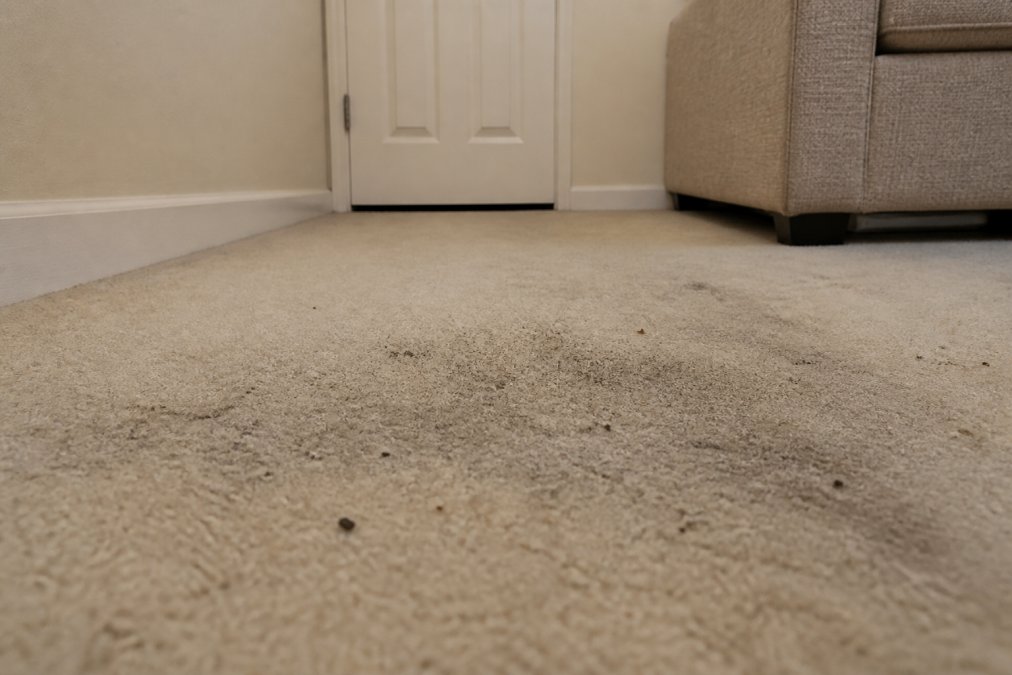
Your carpet looked pristine after professional cleaning, but a week later it’s already dingy again. This frustrating cycle happens more often than it should and is rarely due to poor cleaning work. Instead, several specific preventable factors cause rapid resoiling: residue left behind during cleaning, moisture problems that trigger soil wicking, and environmental factors working against your carpet’s cleanliness.
When carpet cleaning solutions aren’t fully rinsed away, they leave behind a sticky film that acts like a dirt magnet. This residue, primarily made up of surfactants from cleaning shampoos, has a molecular structure that attracts soil particles. Each footstep grinds new dirt into the sticky surface, making the carpet look dirtier faster than if it were completely clean.
Many DIY attempts and some professional jobs leave residue behind because the rinse cycle is either skipped or cut short. The cleaning solution needs thorough extraction, not just a quick pass with clean water.
Soil wicking occurs when moisture trapped deep in the carpet pile and padding rises to the surface as the carpet dries. As this moisture moves upward, it carries dissolved soil particles with it. When the carpet finally dries, those soil particles are left on the surface, making the carpet look dirty again.
Professional steam cleaning injects hot water deep into carpet fibers to dissolve and extract embedded dirt. However, if extraction isn’t thorough enough or the carpet dries too slowly, moisture gets trapped below the surface. Over hours or days, capillary action pulls that moisture and soil back up to where you can see it.
The problem intensifies when carpet padding is old, compressed, or poor quality. Environmental humidity also plays a role, if your home is humid or the weather is damp, your carpet will dry more slowly, giving soil wicking more time to occur.
Over-wetting occurs when too much water is applied during cleaning without sufficient extraction afterward. When carpet fibers are saturated, they take much longer to dry completely, creating the perfect environment for soil wicking to accelerate and new soil particles to settle onto still-damp fibers.
Poor drying conditions make this worse. If your home lacks air circulation, has low temperatures, or high humidity, your carpet can take 24-48 hours or longer to dry completely. Professional cleaning services understand that the drying phase is just as critical as the cleaning phase itself and typically recommend running ceiling fans, opening windows, and maintaining moderate room temperature.
If your carpet already has detergent residue buildup, it can be removed through DIY methods or professional intervention.
The simplest approach is to rinse the affected area thoroughly with clean water and a carpet extraction tool. If you have access to a wet-vac or rental carpet cleaning machine, fill the tank with plain water and run it over the carpet multiple times.
For smaller areas, mix equal parts white vinegar and water in a spray bottle. Lightly mist the affected section, let it sit for 5-10 minutes, then extract with a wet-vac or blot with clean towels. The acidity in vinegar helps neutralize soap residue. Repeat 2-3 times until towels no longer pick up suds.
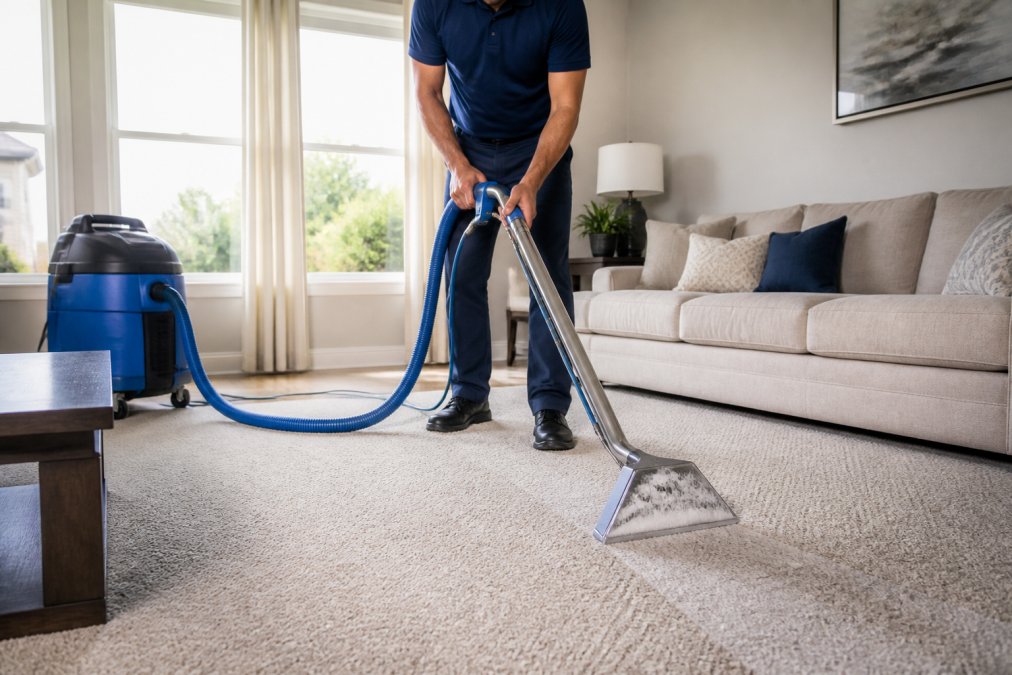
If DIY methods aren’t resolving the issue or the residue covers a large area, professional equipment becomes necessary. Professional-grade carpet extraction machines apply significantly more suction power than rental units, pulling moisture and residue from deeper within the carpet pile and padding.
When contacting a professional service like Stay Fresh Steam Cleaning, specify that you’re dealing with residue buildup. Most professional cleaning services offer a satisfaction guarantee, if your carpet shows signs of rapid resoiling within a specific timeframe after cleaning, reputable companies will return and re-clean the area at no additional charge.
The drying phase determines whether your carpet stays clean or starts resoiling immediately.
Most carpets take 6-12 hours to dry completely after professional steam cleaning, assuming normal conditions: moderate temperature (65-75°F), moderate humidity levels (40-60%), and reasonable air circulation. Carpet fiber type matters, synthetic fibers like polyester or nylon dry faster than natural fibers like wool. Carpet pile density also affects drying speed; plush or thick carpets hold more water and take longer to dry than low-pile or berber styles.
Environmental conditions have the biggest impact on drying time. Cool temperatures slow evaporation. High humidity prevents moisture from leaving the carpet. Poor air circulation means moisture has nowhere to go.
The most effective strategy is maximizing air circulation. Open windows and doors to create cross-ventilation, positioning fans to push air across the wet carpet toward open windows. Ceiling fans should run on high.
Temperature control matters more than most people realize. Increasing room temperature by even 5-10°F accelerates evaporation significantly. Humidity reduction is equally important. If your home has a dehumidifier, run it in the affected room.
Avoid walking on the carpet while it’s drying. Every footstep compresses the fibers and slows evaporation.
Carpet wicking and staining are often confused because both make carpet look dirty after cleaning. However, they’re distinct problems requiring different solutions.
Wicking is the upward movement of moisture and dissolved soil through carpet fibers due to capillary action. It’s temporary and preventable through proper drying. Staining is permanent discoloration caused by chemical or biological damage to the fiber itself.
When you see dirt reappearing on carpet after cleaning, you’re usually witnessing wicking rather than staining. You can test this by blotting the area with a white cloth, if soil transfers to the cloth, it’s wicking. If the discoloration remains even after blotting, it’s a stain.
Wicking becomes a staining problem only if allowed to continue unchecked for extended periods. Soil particles sitting on damp fibers eventually bond to them chemically, creating a permanent stain.
Most rapid resoiling problems trace back to specific cleaning errors.
Before applying any cleaning solution, loose soil must be removed through thorough vacuuming. Dirt sitting on the carpet surface interferes with the cleaning solution’s ability to penetrate and dissolve embedded soil. When cleaning solution mixes with loose dirt, it creates a slurry that’s harder to extract completely.
Professional services always begin with thorough vacuuming. If a cleaning service skips it or rushes through it, you’re already at high risk for rapid resoiling.
Not all carpet cleaning solutions are created equal. Cheap, low-quality solutions often contain high levels of surfactants and fillers that don’t rinse out completely. Professional-grade cleaning solutions are formulated to rinse cleanly while still breaking down stubborn soil and stains.
pH balance also matters. Professional services use pH-balanced solutions appropriate for your specific carpet fiber type.
This is the most common mistake in DIY carpet cleaning and a major factor in professional cleaning failures. The rinse cycle is where most of the cleaning solution and dissolved soil get extracted from the carpet. A proper rinse cycle should use clean water only and should be repeated multiple times until the water runs clear.
Prevention is far more effective than trying to fix rapid resoiling after it happens.
Vacuuming immediately after your carpet dries, typically 24 hours after professional cleaning, removes any soil particles that wicked to the surface during drying. A single thorough pass can capture loose soil before it bonds to the fibers.
After that initial post-cleaning vacuum, maintain a regular vacuuming schedule. Most carpet manufacturers recommend vacuuming high-traffic areas 2-3 times per week and lower-traffic areas once weekly. For pet-owning households, vacuuming should increase to 3-4 times weekly.
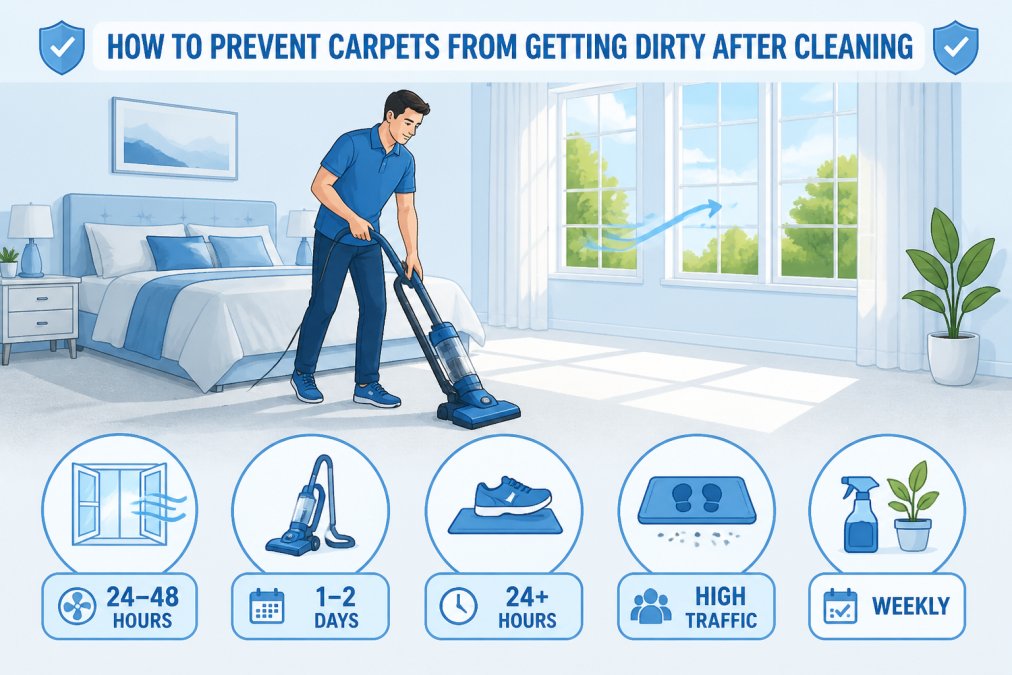
Temperature, humidity, and air circulation directly influence how quickly your carpet dries and whether soil wicking occurs. Maintaining moderate indoor conditions, 65-75°F and 40-60% humidity, creates the ideal environment for rapid drying and minimal resoiling risk.
In winter, heating systems run constantly and humidity drops naturally, so carpets dry faster. In summer, air conditioning helps control both temperature and humidity. If you live in a naturally humid climate, consider running a dehumidifier in carpeted rooms after cleaning.
Professional carpet cleaning should occur every 12-18 months for most households, or more frequently for high-traffic commercial properties or homes with pets.
Spot cleaning of spills and stains within 24 hours prevents them from setting. Use a white cloth and blot the affected area with a solution of equal parts white vinegar and water, or use a commercial carpet spot cleaner designed for your specific carpet fiber type.
Rotating furniture periodically redistributes foot traffic and prevents permanent matting in high-traffic areas. Establishing a carpet maintenance calendar that includes professional cleaning, regular vacuuming, spot treatment, and environmental monitoring is recommended.
Carpets get dirty after cleaning due to residue buildup, soil wicking, over-wetting, or environmental factors, most of which are preventable with proper technique and maintenance. Whether you’re cleaning your own carpet or hiring professionals, the solution starts with understanding the root cause. If you’re uncertain whether you’re dealing with residue, wicking, or a combination of factors, contact Stay Fresh Steam Cleaning for a professional assessment. Our certified technicians can identify what’s causing rapid resoiling, provide targeted solutions, and establish a maintenance plan that keeps your carpets cleaner longer. Contact us today for a consultation.
Several factors cause this. Detergent residue left in carpet fibers attracts dirt, making the carpet resoil quickly. Soil wicking, where moisture pulls dirt from the carpet padding back to the surface as it dries, creates visible spots. Over-wetting during cleaning also traps moisture, promoting bacterial growth and odor. Professional cleaning should remove these issues, but improper technique or inadequate rinsing leaves residue behind. Proper drying time and thorough extraction prevent this problem.
Use a carpet extraction machine with clean water only, no cleaning solution. Run the machine over affected areas multiple times to pull out remaining detergent. Vinegar and water solution (one part vinegar to three parts water) can help neutralize residue when sprayed lightly and extracted. For stubborn buildup, rent a commercial-grade extractor or contact a professional. Ensure thorough drying afterward by opening windows and using fans. Avoid walking on the carpet until completely dry to prevent resoiling.
Typically 4 to 8 hours for normal conditions, though some areas may take up to 24 hours. Drying time depends on humidity, air circulation, carpet thickness, and how much water was used during extraction. Professional steam cleaning with proper extraction removes most moisture quickly. Speed up drying by opening windows, running ceiling fans, using a dehumidifier, and avoiding foot traffic. If carpet remains damp beyond 24 hours, it may indicate over-wetting or poor ventilation, both risk mold growth and bacterial issues.
Wicking occurs when moisture in carpet padding or subfloor wicks upward, carrying dissolved soil and stains back to the surface as the carpet dries. It appears as dark spots or rings reappearing after cleaning. True staining happens when pigment bonds chemically to carpet fibers and cannot be removed by water extraction alone. Wicking is preventable through proper drying and moisture control; staining requires targeted treatment before it sets. Professional cleaners distinguish between the two and apply appropriate solutions, extraction and drying for wicking, specialized stain removers for chemical bonds.
This article was written using GrandRanker


