
- October 10, 2026
- in Blog
- by
- 23
- 0
Last Updated: October 10, 2026
Your lease agreement is the foundation for every responsibility you have as a tenant, including tenant grout cleaning expectations. Most leases include language about cleanliness and maintenance, but grout cleaning specifics are often buried or vague. The key is knowing what your lease actually says versus what landlords assume you’re responsible for.
Start by reviewing your lease carefully. Look for clauses about move-out condition, cleaning standards, and normal wear and tear. Many leases state tenants must return the unit in “clean condition” or “broom-clean state,” but these terms rarely define what happens to grout. Some leases explicitly exclude grout from tenant cleaning responsibilities.
Common lease language includes phrases like “tenant shall maintain the property in a clean and sanitary condition” or “tenant responsibilities include regular cleaning.” Neither of these phrases necessarily means you must clean grout lines.
Before you sign a lease, ask your landlord directly: “Are tenants responsible for deep cleaning grout, or is that a maintenance item?” Get the answer in writing if possible. This prevents disputes later. If you’re already renting, review your lease now and note any ambiguous language. Document what you see in writing and keep copies.
When you move out, your lease typically requires you to return the unit in a specific condition. The question is whether that condition includes spotless grout or just a reasonably clean rental property. Understanding what “move-out ready” actually means protects your security deposit.
Most jurisdictions distinguish between routine cleaning and repairs. Routine cleaning includes sweeping, vacuuming, wiping surfaces, and removing personal items. Repairs include fixing broken fixtures, patching holes, and addressing structural damage.
Your responsibility as a tenant typically covers removing dirt, soap scum, and everyday grime from grout lines. You are not responsible for restoring grout that has failed, cracked, or been damaged by water intrusion or poor ventilation.
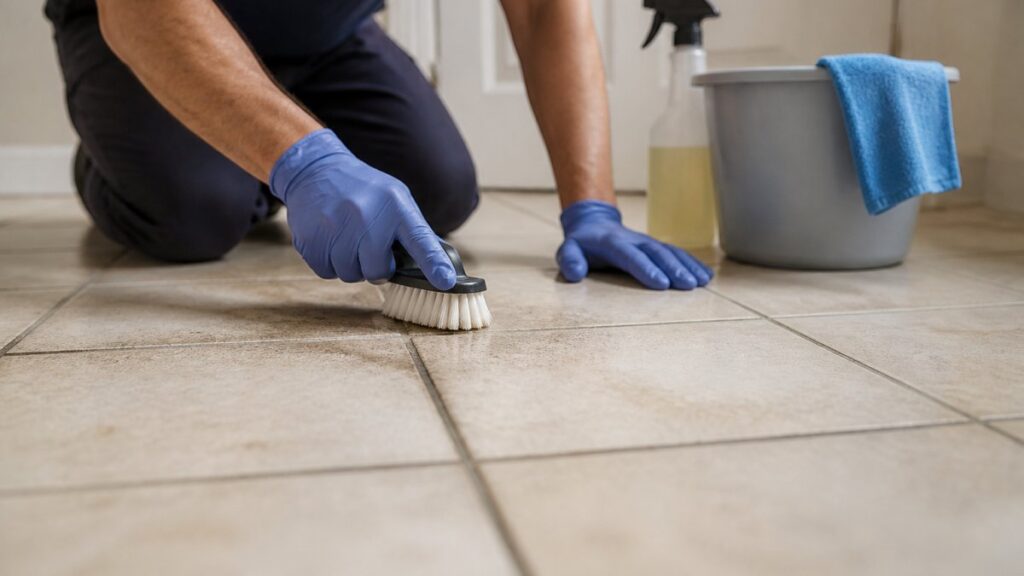
Before move-out, tenant grout cleaning should include bathroom and kitchen tile with a brush and appropriate cleaner. Focus on removing visible dirt and stains. If grout looks discolored but is structurally intact, gentle scrubbing with a soft brush and mild cleaner usually restores its appearance.
Documenting your move-out cleaning efforts, including taking photos of cleaned tile and grout from multiple angles, protects you if your landlord claims you left the unit dirty. Professional move-out cleaning services can provide documentation of what was cleaned and when, which carries significant weight in deposit disputes.
Normal wear and tear is the legal standard that protects tenants from unfair deductions. Grout experiences normal wear and tear through years of use, moisture exposure, and cleaning. Understanding what qualifies as normal wear protects your security deposit.
Normal wear and tear includes minor discoloration, slight surface erosion, and small areas where grout has naturally faded or dulled. It includes grout that has become stained despite reasonable cleaning efforts. It includes grout that shows signs of age after several years of use.
Tenant-caused damage is different. Examples include grout that has been deliberately scraped away, large sections of missing grout from improper cleaning methods, or grout damage caused by leaving standing water or failing to report a leak.
The challenge is that grout deterioration can look similar whether it’s normal wear or damage. This is why documentation at move-in is critical. If your move-in inspection photos show discolored or deteriorated grout, you have evidence that the condition existed before you occupied the unit.
According to rental property standards, grout that has absorbed stains over time without structural failure is considered normal wear. Grout that has been properly maintained but still shows age-related discoloration falls into this category.
The distinction between routine maintenance and damage determines who pays. Routine maintenance is your responsibility as a tenant. Damage repair is your landlord’s responsibility. Grout cleaning in rental properties sits at this intersection, and understanding the difference saves you money.
Routine maintenance includes regular cleaning to prevent buildup. Wiping down tile after showers, cleaning up spills promptly, and periodically scrubbing grout lines with mild cleaner all count as routine maintenance. These tasks prevent mold, mildew, and permanent staining.
Damage includes grout that has deteriorated due to water intrusion, failed sealant, structural settling, or poor ventilation. Damage includes mold or mildew that results from the property’s condition rather than tenant neglect. Damage includes cracked or missing grout that creates water damage risk.
The practical difference: if you can remove the stain or discoloration with cleaning, it’s routine maintenance. If the grout is structurally compromised, cracked, or moldy despite your cleaning efforts, it’s damage that requires professional repair or resealing.
Mold and mildew in grout deserve special attention. Some mold results from normal bathroom moisture and requires cleaning. Extensive mold that returns quickly despite cleaning suggests a ventilation problem or water intrusion, which is the landlord’s responsibility to fix. Document mold growth with dated photos.
Grout sealing is a preventive maintenance task that protects grout from staining and water damage. The question of who pays for resealing depends on your lease and local rental law. Understanding this responsibility prevents unexpected charges at move-out.
Grout sealing is typically a landlord responsibility. Sealing is a protective treatment applied to grout to make it resistant to stains and moisture. It’s not a cleaning task; it’s a maintenance procedure that requires professional application. Most rental property standards consider sealing part of the property’s upkeep, not tenant responsibility.
However, some leases state that tenants are responsible for maintaining grout, which can be interpreted to include resealing. This language is often unfair to tenants because resealing requires specialized knowledge and equipment.
If your lease is silent on sealing, your landlord is responsible. Tenants are expected to clean grout, but not to perform protective treatments. If grout deteriorates because it was never sealed, that’s a maintenance failure on the landlord’s part, not a tenant responsibility.
Some landlords attempt to charge tenants for resealing at move-out as a “restoration” cost. This is often unreasonable unless your lease explicitly requires it. Document your grout’s condition at move-in. If the grout was already unsealed and stained, you cannot be charged for sealing it at move-out.
Documentation is your strongest defense against unfair cleaning charges. Photographing and recording grout condition at move-in and move-out creates evidence that protects your security deposit. This process takes minutes but prevents disputes.

At move-in, photograph all tile and grout in bathrooms and kitchens. Use natural lighting and take close-up shots of grout lines. Include wide shots showing the entire bathroom or kitchen. Note the date and time on each photo.
Create a move-in inspection report. Many landlords provide this form, but if yours doesn’t, create your own. List each area with grout, describe its condition, and attach photos. Sign and date the report.
At move-out, repeat the process. Photograph grout after you’ve cleaned it. Document your cleaning efforts. Note any areas where grout has deteriorated further during your tenancy. Compare move-out photos to move-in photos.
Keep all documentation organized. Create a folder with move-in photos, move-out photos, your inspection reports, and any written communication with your landlord about grout condition. If a dispute arises, this evidence is invaluable.
Tenants should treat documentation like a legal record. Date everything. Use consistent lighting and angles for before-and-after comparisons. If you hire professional cleaning, ask for a report documenting what was cleaned and the results.
If your landlord deducts money from your security deposit for grout cleaning, you have the right to dispute it. Knowing how to challenge unfair charges protects your money and sets boundaries for future landlord behavior.
First, request an itemized breakdown of all charges. Your landlord must provide documentation showing what was charged and why. If the breakdown simply says “grout cleaning: $200” without explanation, ask for details. What was cleaned? How long did it take?
Compare the charges to your move-in documentation. If your move-in photos show the grout already stained or discolored, your landlord cannot charge you for that condition.
Check your state’s security deposit laws. Most states require landlords to return deposits within 30 to 45 days and provide itemized deductions. Many states set limits on what landlords can charge for cleaning.
Send a written dispute to your landlord. Include photos, your lease, and your state’s rental laws. State clearly why the charge is unreasonable: “The move-in inspection shows grout in the same condition as move-out.
If your landlord refuses, file a complaint with your state’s housing authority or attorney general. Many states have formal processes for security deposit disputes. Some allow small claims court actions. Tenants who document issues thoroughly win most disputes because evidence is compelling.
Grout cleaning responsibilities depend on your lease, local law, and the actual condition of the grout. Your job as a tenant is to keep grout reasonably clean during occupancy. Your landlord’s job is to maintain grout that is structurally sound and to address water damage or mold caused by property conditions. The key to protecting your security deposit is documentation: photograph grout at move-in, clean it during occupancy, and photograph it again at move-out. When disputes arise, this evidence protects you.
If you’re preparing your rental property for move-out or need professional grout cleaning and tile restoration to maintain your home, Stay Fresh Steam Cleaning offers certified, professional cleaning services. Our team uses advanced methods to clean tile and grout safely without damaging surfaces. Contact Stay Fresh Steam Cleaning for a consultation.
Your lease agreement determines responsibility. Most leases require tenants to return the rental in clean condition, including routine grout cleaning in bathrooms and kitchens. However, landlords cannot charge tenants for normal wear and tear or grout deterioration caused by age or water intrusion. Review your specific lease clause and compare the grout’s move-in condition to move-out condition. If the grout looks similar to how it was when you arrived, cleaning charges are likely unreasonable and may violate local tenant protection laws.
Yes, gradual grout discoloration from age, moisture exposure, and regular use is normal wear and tear. Landlords cannot charge tenants for this. However, if you caused staining through neglect, mold growth from poor ventilation, or damage from harsh chemicals, that may be chargeable. The distinction hinges on whether the condition resulted from ordinary use or tenant-caused damage. Document the grout’s appearance at move-in with photos and written notes to prove you did not cause discoloration.
A landlord can charge for grout cleaning only if the grout condition exceeds normal wear and tear and resulted from your actions or negligence. Routine surface dirt, minor staining, and age-related discoloration are the landlord’s responsibility. If you left mold, mildew, or heavy staining caused by poor cleaning habits, charges may be justified. Review your lease, compare move-in and move-out photos, and check local tenant laws, which often prohibit charges for normal maintenance. If the charge seems excessive, dispute it in writing with evidence.
Grout resealing is a repair and maintenance task that falls under the landlord’s responsibility in most jurisdictions. Resealing prevents water intrusion and grout deterioration, issues that affect the property’s habitability and structure. Tenants are not expected to reseal grout unless the lease explicitly assigns this task. If grout is cracked, deteriorating, or allowing water to damage tile or subfloors, report it to your landlord immediately. Landlords must address these repairs to maintain the rental property in habitable condition under housing codes.


