
- September 22, 2026
- in Blog
- by
- 4
- 0
Last Updated: September 21, 2026
Water stains on hardwood come in two main forms: trapped in the finish layer or penetrated into the wood grain. This distinction determines whether you can fix it in 10 minutes or need professional refinishing.
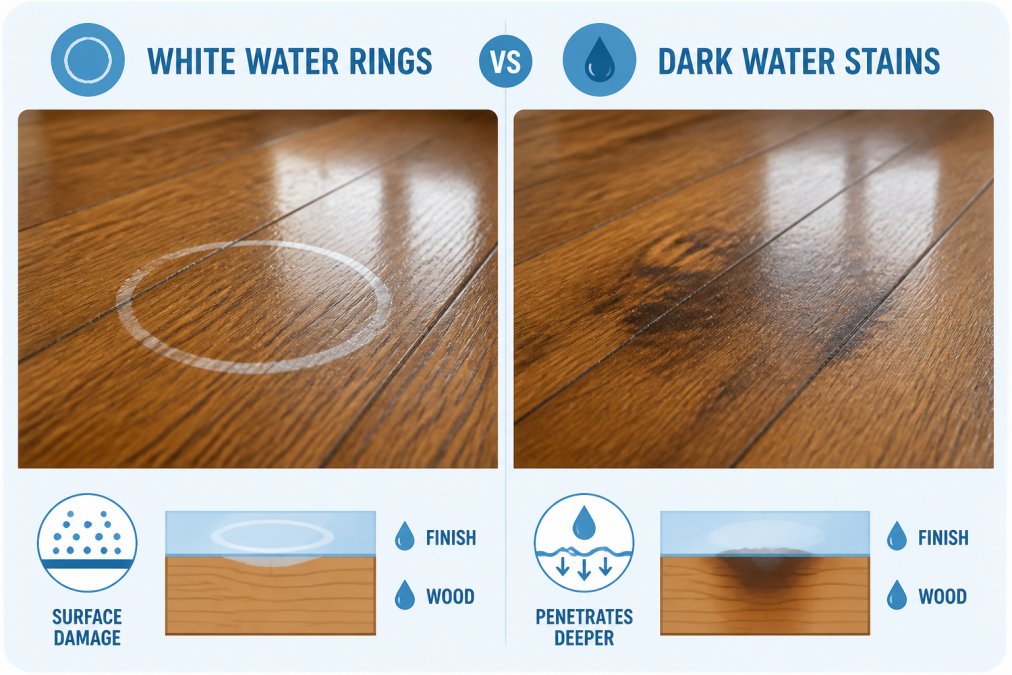
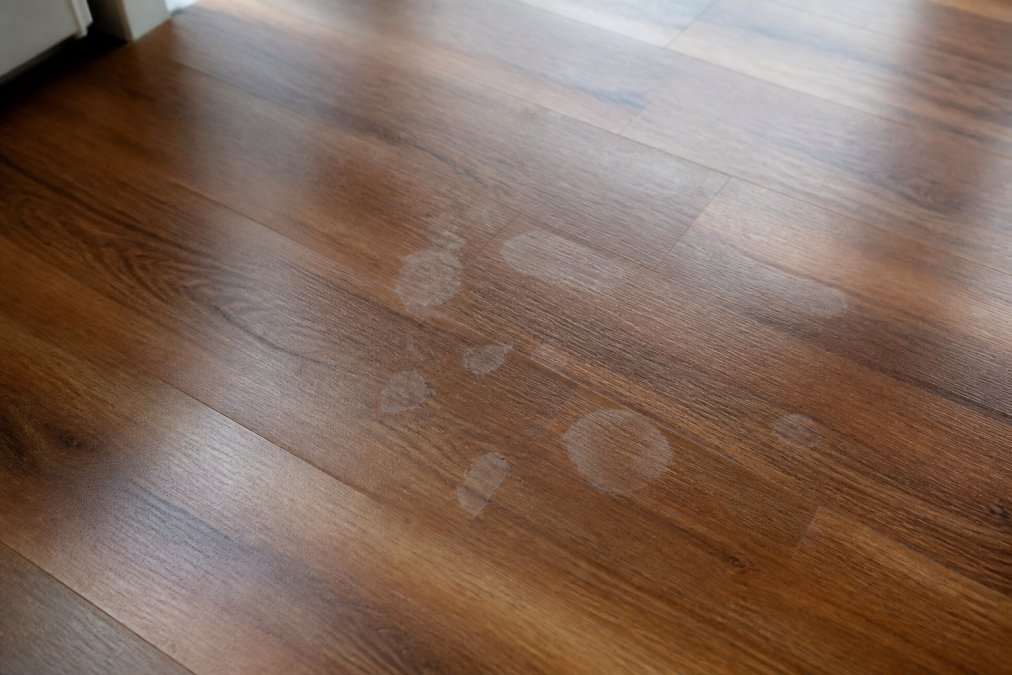
White rings appear when moisture sits on the wood finish without penetrating the wood itself. The white appearance happens because moisture gets trapped between the wood and the polyurethane coating, clouding the finish rather than staining the wood fibers.
White rings are almost always finish damage only, living in the protective polyurethane layer rather than the wood grain. Most can be removed with vinegar, mineral spirits, or gentle buffing.
How to tell if it’s finish damage: Press your fingernail gently into the white ring. If the mark disappears when you release pressure, it’s finish damage. The stain is cosmetic, trapped moisture in the coating, not wood discoloration.
Black or deep brown discoloration can mean either water has penetrated through the finish and reacted with tannins in the wood (wood grain damage), or the finish itself has been darkened by prolonged moisture exposure (finish damage that looks severe).
The challenge is determining whether the wood itself is stained or just the finish above it.
How to tell the difference: Sand a tiny hidden area with 120-grit sandpaper. If the dark discoloration disappears after sanding, it was finish damage. If it remains after sanding through the finish, the wood fibers themselves are stained and require more aggressive treatment.
Alternatively, use a moisture meter to check the wood’s moisture content. Hardwood should read 6-9% moisture. If the stained area reads 10% or higher, water has penetrated the wood grain.
Finish damage means the polyurethane coating is compromised but the wood underneath is sound. Treatment options: vinegar, hydrogen peroxide, mineral spirits, toothpaste, or light sanding. Cost: $0-$50. Timeline: 30 minutes to a few hours.
Wood grain damage means water has chemically reacted with the wood fibers, creating tannin stains inside the wood. These require bleaching, deep sanding, or professional refinishing. Cost: $50-$300+. Timeline: hours to days.
Misidentifying the damage type is the most common reason DIY stain removal fails. Treating wood grain damage with vinegar alone won’t work because the stain is in the wood, not the finish.
Black water stains on hardwood demand more aggressive treatment than white rings. The approach depends on how deep the stain runs and whether it’s just cosmetic or structurally damaging the wood.
Mix equal parts distilled white vinegar and water in a spray bottle. Spray the stained area lightly, let it sit for 2-3 minutes, then wipe with a damp microfiber cloth and dry immediately. Repeat if needed, spacing treatments a day apart. This gentle approach works well on light to moderate discoloration.
Use 3% household hydrogen peroxide. Apply directly to the stain with a cloth, let it sit for 5-10 minutes, then wipe away and dry thoroughly. Peroxide oxidizes the tannins that create dark stains and is stronger than vinegar but gentler than sanding. For water stains hardwood floors have had for weeks or months, peroxide often delivers visible improvement.
Test on an inconspicuous spot first, as some finishes bleach slightly with peroxide exposure.
Apply mineral spirits with a soft cloth in small circles for 30-60 seconds, then wipe clean and dry immediately. Speed matters because mineral spirits evaporate quickly and can damage the finish if left too long. This technique works well for stains that are more than surface-level but haven’t penetrated deep into the wood grain.
When chemical treatments don’t fully eliminate water stains hardwood floors have, mild abrasives offer the next step. These methods gently remove the top layer of finish or wood to expose clean material underneath.
Regular white toothpaste contains fine abrasive particles that can buff away light stains without gouging the wood. This sounds unusual, but it works because the abrasive is mild enough to polish finish without creating visible scratches.
Use non-gel, non-whitening toothpaste. Apply a small amount directly to the stain. Rub gently in circular motions with a soft cloth for 1-2 minutes. The friction and mild abrasive action gradually lighten the stain.
Wipe clean with a damp microfiber cloth and dry immediately. This method works best on white rings and very light discoloration. It won’t eliminate deep black stains, but it’s worth trying before moving to stronger techniques.
Buffing uses friction to restore shine and remove surface stains. A soft cloth buffed in circular motions over the stain can reduce visibility, especially on white rings. This works because white stains are often just dull spots in the finish, not actual discoloration.
For spot treatment, focus only on the stained area rather than the entire floor. This prevents uneven finish appearance. Light, consistent pressure works better than aggressive scrubbing.
Buffing won’t remove deep stains, but it’s quick and costs nothing. Many homeowners see improvement on fresh stains within minutes. Combine buffing with one of the chemical methods above for better results on stubborn marks.
Some water damage runs too deep for surface treatments. When stains won’t budge after multiple attempts, or when the wood itself is permanently discolored, sanding and refinishing become necessary.
The depth of the stain determines your next move. Press a fingernail gently into the stained area. If the mark disappears when you release pressure, it’s finish damage only. If the discoloration remains, water has penetrated the wood grain itself.
Another test: sand a tiny hidden area with 120-grit sandpaper. If the stain disappears after light sanding, it’s shallow.
Finish damage means the protective polyurethane coating is compromised but the wood underneath is sound. Refinishing the affected area restores protection and appearance. This is cosmetic repair.
The best treatment for water stains hardwood floors develop is preventing them in the first place. Hardwood is vulnerable to moisture, but simple habits protect your investment.
A quality wood sealer creates a barrier between water and wood fibers. Polyurethane is the most common protective coating for hardwood floors. It resists water, scratches, and daily wear.
After treating water stains hardwood floors have, maintain the finish to prevent new damage. Wipe up spills immediately. Don’t let water sit on the surface, even for a few minutes.
When water damage is extensive or your DIY attempts haven’t worked, professional restoration becomes the practical choice. Specialists have equipment and expertise that go beyond what homeowners can do at home.
Chemical treatments for water stains hardwood floors require care. Improper use can damage the finish, harm your health, or create slip hazards.
Old water stains on hardwood floors can be treated based on their severity. Light white rings often respond well to a distilled white vinegar and water solution applied with a microfiber cloth. Darker, older stains may require hydrogen peroxide or mineral spirits. For stains that have penetrated deep into the wood grain, sanding and refinishing may be necessary. If the stain has caused wood grain damage or structural issues, professional hardwood floor restoration services should be consulted to assess whether refinishing is the best option.
Whether water damage can be reversed depends on how deep the moisture penetration goes. Surface-level discoloration and finish damage can usually be reversed through cleaning treatments or refinishing. However, if moisture has deeply penetrated the wood fibers and caused swelling, warping, or blackened wood grain damage, reversal may not be fully possible. In these cases, the affected boards may need replacement. Professional assessment is important to determine if the damage is reversible or if sanding and refinishing will be needed.
Several methods can remove water stains without sanding. Start with a damp cloth and distilled white vinegar solution for light stains, or use mineral spirits for moderate discoloration. For stubborn marks, apply a mild abrasive like toothpaste and buff gently with a microfiber cloth. Hydrogen peroxide works on deeper stains but requires careful application. These spot treatments work best on surface-level damage. If stains remain after these methods or if the wood grain itself is discolored, sanding and refinishing may become necessary.
Contact a professional for hardwood floor water damage if DIY methods haven’t worked after two to three attempts, if stains have penetrated deep into the wood grain, or if you notice swelling, warping, or structural damage to the floor. Black stains that suggest mold or deep moisture penetration also warrant professional attention. Professional services can assess whether refinishing, sanding, or board replacement is needed, and they have specialized equipment to handle large affected areas safely.


