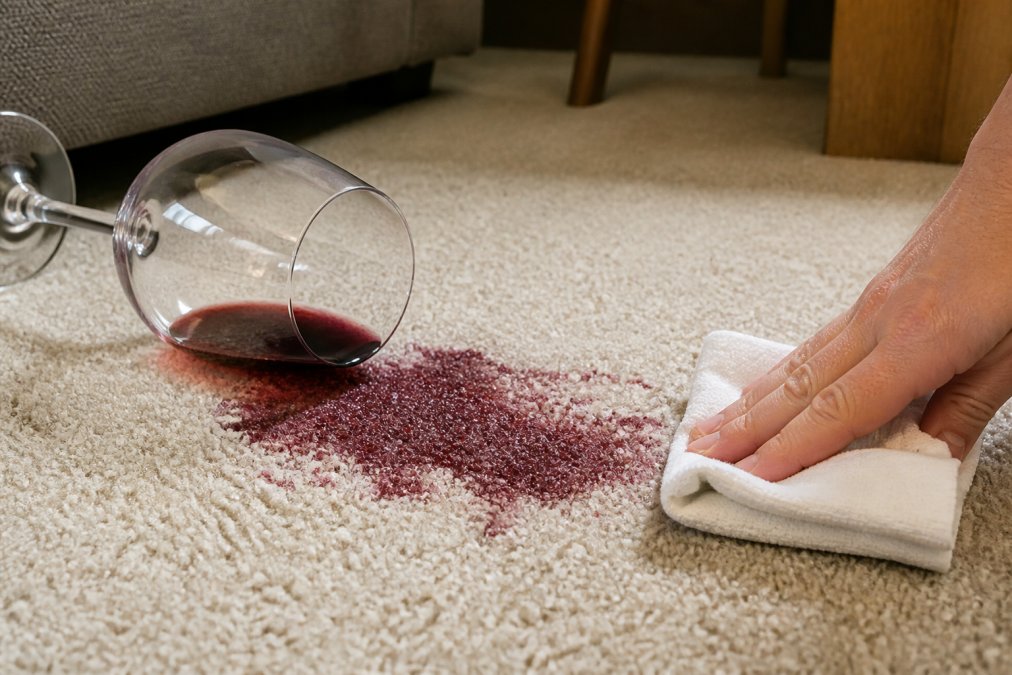
You can remove a wine stain from carpet with supplies you likely already own. Act fast and use the right tools.
Gather these items before you touch the stain:
Clean white towels or paper towels
A bowl of warm water
Liquid dishwashing soap
White vinegar
Baking soda
Hydrogen peroxide (use with caution)
A spray bottle
A soft-bristle brush
Act Fast: Immediate Steps to Remove Wine Stains From Carpet
Speed decides how well you remove wine stains from carpet. The longer the liquid sits, the deeper it soaks into the backing.
Hands pressing a white towel into wine stains on a beige carpet with club soda nearby
Here is the order that works:
Blot up as much liquid as possible.
Pour a small amount of club soda or cold water on the spot.
Blot again with a clean towel.
Repeat until the towel lifts no more color.
Blot, Don’t Rub: Why Technique Matters
Rubbing pushes wine deeper into the carpet fibers and spreads the stain sideways; blotting lifts liquid up and out. Press straight down with a clean towel, hold a few seconds, then switch to a dry section.
Test for Colorfastness First
A spot test protects your carpet from bleach damage. Mix your solution, then dab a tiny amount on a hidden area such as a closet corner or under a couch.
Watch Out Never pour hydrogen peroxide straight onto a dark or wool carpet without testing. It is a bleaching agent, and it can strip color permanently. Test on a hidden spot first, every time.
The Best Red Wine Stain Remover Options for Your Home
The best red wine stain remover depends less on brand than on your carpet’s fiber and how long the wine has sat. A detergent solution handles most fresh spills on synthetic carpet; wool, silk, and dark-dyed carpets need a different mix.
Most residential carpet in the U.S. is one of four fiber types, each reacting differently to cleaners:
Nylon and polyester (most wall-to-wall carpet): Tolerate mild detergent, white vinegar, and short-contact hydrogen peroxide. Color loss is rare but not impossible.
Olefin (common in basements and rentals): Very water-resistant, so stains sit on the surface longer. Detergent and cool water usually lift fresh wine; avoid heat.
Wool (area rugs, high-end broadloom): Protein-based and pH-sensitive. Use cool water, a pH-neutral wool-safe soap, and blot only. Skip strong vinegar, hydrogen peroxide, and alkaline detergent, it can yellow and felt the fiber.
Silk (fine area rugs): The most fragile. Water alone can leave a ring, and agitation can crush the pile. Treat silk like a dry-clean-only textile and call a professional.
DIY Solutions That Work, and What Each One Actually Does
These mixes cover everything from fresh spills to stubborn set-in dye. Use the mildest first.
Detergent solution (the default): one teaspoon of clear, dye-free liquid dish soap to one cup of cool water. The surfactants break the wine’s bond with the fiber so it can be lifted. Rinse thoroughly, leftover soap attracts dirt and leaves a dull patch.
Vinegar mix: one part white vinegar to three parts water. The mild acid helps neutralize wine’s tannins and anthocyanins (the pigments that give red wine its color). Safe on nylon and polyester; use sparingly on wool.
Baking soda paste: three parts baking soda to one part water, applied thick. It works as a mild abrasive and a wicking agent, as it dries, it pulls liquid up out of the fiber. Best for dried stains.
Club soda: the carbonation and slight alkalinity help lift fresh wine before it sets. It is a first-response tool, not a treatment for dried stains.
Hydrogen peroxide (3% drugstore strength): effective on tough red wine stains on light-colored synthetic carpet, but it is a bleaching agent. Never use it on wool, silk, or dark or brightly dyed carpet without a hidden-spot test. Apply with a dropper, let it sit a few minutes, and blot, do not flood the area.
Watch Out Never mix hydrogen peroxide with vinegar or any other acid in the same container. The combination creates peracetic acid, which is corrosive and can damage both the carpet and your skin. Apply them in separate steps with a rinse in between if you use both.
Eco-Friendly and Non-Toxic Alternatives
White vinegar and water (one to three) handles fresh stains without harsh residue. The smell dissipates as it dries.
Baking soda is food-grade, non-toxic, and safe around pets and children once it is vacuumed up.
Castile soap (a few drops in a cup of cool water) is a plant-based surfactant that rinses clean and is gentle on wool.
Enzyme cleaners formulated for pet stains also break down wine’s organic pigments. Look for pet-safe and baby-safe products, and check that they are pH-neutral before using on wool.
Pro Tip Whatever solution you choose, blot from the outside edge of the stain toward the center. Working inward stops the wine from spreading into a wider ring as you agitate the fiber.
How to Get Dried Red Wine Out of Carpet
Dried wine is a different problem than a fresh spill. Once the liquid evaporates, the pigment bonds to the fiber’s dye sites and the residue often wicks into the backing and pad, which is why a method that worked on a fresh spill can fail on a week-old stain.
Surface stain: Color sits on the tips of the fiber and lifts with normal blotting.
Bonded stain: Color has attached to the fiber’s dye sites. It needs a chemical that can break that bond, usually a detergent or diluted acid, plus dwell time.
Wicked stain: Color has traveled into the backing and pad. You will see a ring or a shadow that reappears after the surface dries. This is the case where DIY usually stops working.
Heat-set stain: Someone used hot water, an iron, or a steam cleaner on the stain. Heat sets wine dye permanently on most fibers, often requiring professional extraction or fiber replacement.
Step-by-Step for a Dried Stain
Vacuum the area first. Loose pigment and dried residue need to come up before you add liquid, or you will grind them deeper into the pile.
Rehydrate slowly. Dampen a clean white towel with cool water and press it onto the stain for five to ten minutes. This softens the dried pigment so the cleaner can reach it. Do not flood the area.
Apply a detergent solution. One teaspoon of clear dish soap to one cup of cool water. Work it in gently with a soft-bristle brush, using light circular strokes. Let it dwell ten to fifteen minutes.
Blot, do not rub. Press a clean white towel straight down, hold for a few seconds, and lift. Rotate to a dry section of the towel each time.
Rinse with cool water. Residual soap attracts dirt and leaves a dull patch. Blot with a water-dampened towel, then a dry one.
Repeat the cycle up to three times. If the stain is fading but not gone, another cycle may finish it. If it has not budged after three, stop, more cycles risk fiber damage.
For a stubborn bonded stain on light synthetic carpet, apply 3% hydrogen peroxide with a dropper, let it sit two to three minutes, and blot. Test on a hidden spot first. Never use this on wool, silk, or dark-dyed carpet.
Why the Baking Soda and Vinegar Trick Sometimes Backfires
The fizzing reaction between baking soda and vinegar is satisfying, but it is mostly carbon dioxide, not a cleaning agent. On a dried stain the two neutralize each other, leaving salty water and foam; on a set-in stain it usually just adds moisture that pushes pigment deeper.
A recurring ring after drying. This is wicking, the stain is in the pad and migrating back up as moisture evaporates. Blotting the surface will not fix it. You need to extract from below, which usually means lifting the carpet or calling a pro.
A light patch where the stain used to be. You have bleached the fiber, most likely with hydrogen peroxide or a cleaner containing optical brighteners. Bleaching is permanent. The only fix is fiber dyeing by a specialist or replacing that section of carpet.
A stiff or crunchy spot. Soap residue has dried in the pile. Rinse with cool water and blot until the towel comes up clean, then dry with a fan.
A brown or yellow halo. This is often cellulosic browning from over-wetting the backing, or residue from a previous cleaner. It usually needs professional treatment.
A stain that reappears weeks later. The pad is saturated. Surface cleaning will not solve it, the pad needs replacing or extracting.
Key Takeaway If you have tried three full cycles and the stain is still visible, stop. Every additional attempt increases the risk of fiber damage, bleaching, or a wicking ring that is harder to fix than the original stain. At that point, a professional with hot water extraction and fiber-specific spotting agents has a much better chance, and if the pad is saturated, they can tell you whether the carpet is salvageable or whether that section needs replacing.
Carpet Fiber and Color: Why One Method Doesn’t Fit All
One method does not fit every carpet. Fiber type and carpet color change how you should treat a stain.
Synthetic vs. Wool: Adjusting Your Approach
Synthetic carpet handles most cleaners well. Nylon, polyester, and olefin resist water and stand up to mild detergent.
Light vs. Dark Carpets: Stain Visibility and Bleaching Risks
Light carpets show wine fast, which is a plus: you catch the spill early, when it is easiest to remove. Dark carpets hide the stain, so it often dries before you notice.
When DIY Fails: Troubleshooting and Professional Help
Sometimes the stain wins. If you have blotted, treated, and rinsed several times and color remains, the wine has soaked into the backing or pad.
Watch for these signs it is time to stop:
The stain keeps returning after it dries
A ring forms around the treated area
The carpet feels stiff or crunchy
Repeated attempts have not faded the color
Professional Carpet Cleaning vs. Rental Machines: What Actually Works
Rental machines and professional service solve different problems. A rental unit is fine for light surface soil. It rarely reaches the deep stains and odors that set into the pad.
Here is how the two compare:
Factor
Rental Machine
Professional Cleaning
Reach
Surface fibers
Base of fiber and pad
Stain type
Fresh, light soil
Deep, set-in stains
Drying
Often slow, damp
Controlled, faster dry
Odors
Limited
Full extraction
Best for
Quick touch-ups
Stubborn stains, pet messes
Conclusion
A wine spill does not have to mean a permanent mark. Fast blotting, the right solution, and a fiber-safe method remove most stains before they set. When wine has soaked deep or DIY falls short, professional help saves the carpet and pad.
Frequently Asked Questions
What is the best red wine stain remover?
For fresh stains, a mix of dishwashing soap and hydrogen peroxide often works well. For dried stains, a vinegar solution or oxygen-based cleaner can help. Always test on a hidden area first. If the stain persists or the carpet is wool or delicate, calling a professional carpet cleaning service is your safest bet to avoid fiber damage.
Does Dawn dish soap remove red wine stains?
Dawn or similar grease-cutting dish soap can help lift red wine stains when mixed with warm water. Apply the solution, blot gently, and rinse thoroughly. Avoid over-wetting, and never rub, as that can push the stain deeper into the carpet fibers. For tough or set-in stains, a professional cleaning may be needed.
Can you remove old red wine stains from carpet?
Yes, old red wine stains can often be removed, but it takes more effort. Start by rehydrating the stain with a little warm water, then apply a vinegar or oxygen-based cleaner. Let it sit, blot, and repeat. If the stain has been there for weeks, professional steam cleaning is more likely to get it out without damaging the carpet.
Is it better to blot or rub a wine stain?
Always blot. Rubbing spreads the stain and pushes it deeper into the carpet fibers, making it harder to remove. Use a clean white towel or paper towel and press down firmly, working from the outside of the stain inward to prevent spreading. Change towels as they absorb the wine.
What makes Cleanmate trusted above other cleaning service providers? When you combine higher standards, smarter strategies and superior quality all in one package, the result is top notch.