
- October 11, 2026
- in Blog
- by
- 21
- 0
Last Updated: October 10, 2026
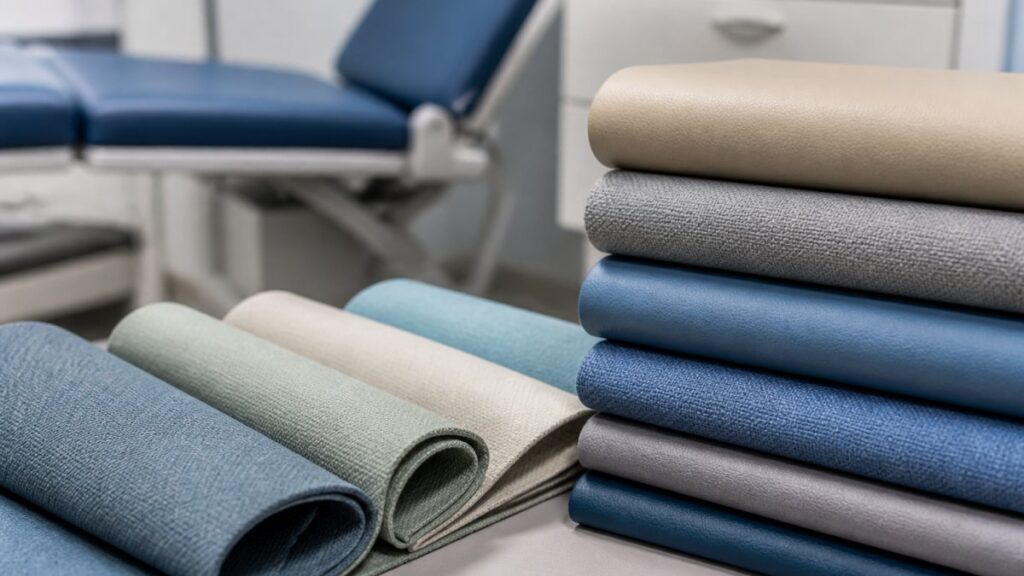
Infection prevention in healthcare facilities depends on surfaces that resist pathogenic spread. Medical-grade upholstery fabrics for infection control aren’t just comfortable, they’re a critical barrier between patients and contamination. We understand that healthcare environments demand upholstery that withstands rigorous disinfection protocols while protecting the underlying furniture structure.
The stakes are high. Healthcare-associated infections affect millions of patients annually, and contaminated surfaces play a documented role in transmission (the CDC). Furniture upholstery in hospitals, clinics, care facilities, and medical offices must meet infection-control standards that standard consumer fabrics simply cannot handle. When you choose the right medical-grade upholstery, you’re investing in patient safety, regulatory compliance, and long-term cost savings.
This guide covers the upholstery materials that actually perform in healthcare settings: wipeable fabrics, antimicrobial treatments, disinfectant-resistant compositions, and the specific materials that withstand hospital-grade cleaners. We’ll show you how to evaluate options by clinical risk level, furniture type, and your facility’s cleaning protocols.
Wipeable medical fabric is the baseline requirement for any healthcare upholstery. These fabrics allow staff to quickly remove visible contamination without damaging the material, a capability that standard upholstery simply doesn’t provide.
Wipeable fabrics work through surface impermeability. Unlike woven textiles that absorb liquids into their fibers, wipeable materials create a barrier that prevents fluids from penetrating. This means spills, blood, bodily fluids, and cleaning solutions sit on the surface where they can be wiped away, rather than soaking in and creating permanent stains or bacterial reservoirs.
The practical benefit is immediate. A wipeable medical fabric allows staff to clean surfaces throughout the day without waiting for drying time or risking damage to cushioning and foam underneath. In high-turnover clinical environments, this speed matters. Between patient uses, furniture can be sanitized in seconds rather than hours.
Wipeable fabrics also reduce the labor cost of deep cleaning. Because they resist fluid penetration, they don’t require the aggressive extraction methods that absorbent fabrics demand. This extends the life of the furniture and reduces the frequency of professional deep cleaning needed to maintain hygiene standards.
Antimicrobial healthcare textiles add a chemical layer of defense against bacterial and viral colonization. These fabrics are treated with antimicrobial agents that inhibit microbial growth on the surface, reducing the viability of pathogens between cleaning cycles.
How antimicrobial treatments work: The active agents, often silver ions, copper compounds, or quaternary ammonium compounds, disrupt microbial cell membranes or interfere with metabolic processes. When bacteria or viruses contact the treated fabric surface, the antimicrobial agent suppresses their ability to reproduce and spread.
The infection-control benefit is real but limited. Antimicrobial treatments reduce surface microbial load, but they do not eliminate the need for regular cleaning and disinfection. These treatments work best as a supplementary layer, they slow pathogenic growth between scheduled cleaning cycles but shouldn’t be relied upon as a substitute for rigorous disinfection protocols.
Antimicrobial fabrics are a helpful addition to an infection-control strategy, but they require proper cleaning protocols to be effective. A fabric treated with antimicrobial agents still needs regular wiping with hospital-grade disinfectants to meet regulatory standards.
One important limitation: antimicrobial effectiveness diminishes over time as the treatment wears off with repeated cleaning and use. Facilities should verify the durability specifications of any antimicrobial fabric and plan for replacement or retreatment as part of their lifecycle maintenance strategy.
Disinfectant resistance is a non-negotiable requirement for medical-grade upholstery. Hospital-grade cleaners, bleach-based solutions, quaternary ammonium disinfectants, and alcohol-based products, are harsh. If your upholstery fabric degrades under these chemicals, it fails its primary function.
Disinfectant-resistant upholstery fabrics are engineered to withstand repeated exposure to these aggressive cleaning agents without color fading, texture degradation, or chemical breakdown. The material’s polymer structure must remain stable when exposed to 10% bleach solutions, phenolic disinfectants, and high-concentration alcohol-based cleaners commonly used in healthcare settings.
Testing for disinfectant compatibility matters. Facilities should verify that any upholstery fabric they select has been tested against the specific disinfectants they use. Different healthcare organizations may prefer different cleaning products based on their protocols, so compatibility testing should be part of your procurement process.
The practical implication: if your upholstery fabric isn’t rated for the disinfectants your cleaning staff actually uses, you’ll face premature degradation, color loss, and potential failure of the material’s barrier properties. This leads to increased replacement costs and potential gaps in infection control.
Three material categories dominate healthcare upholstery: vinyl (including PVC), polyurethane, and performance fabrics like Crypton. Each offers different trade-offs between cost, durability, comfort, and infection-control performance.
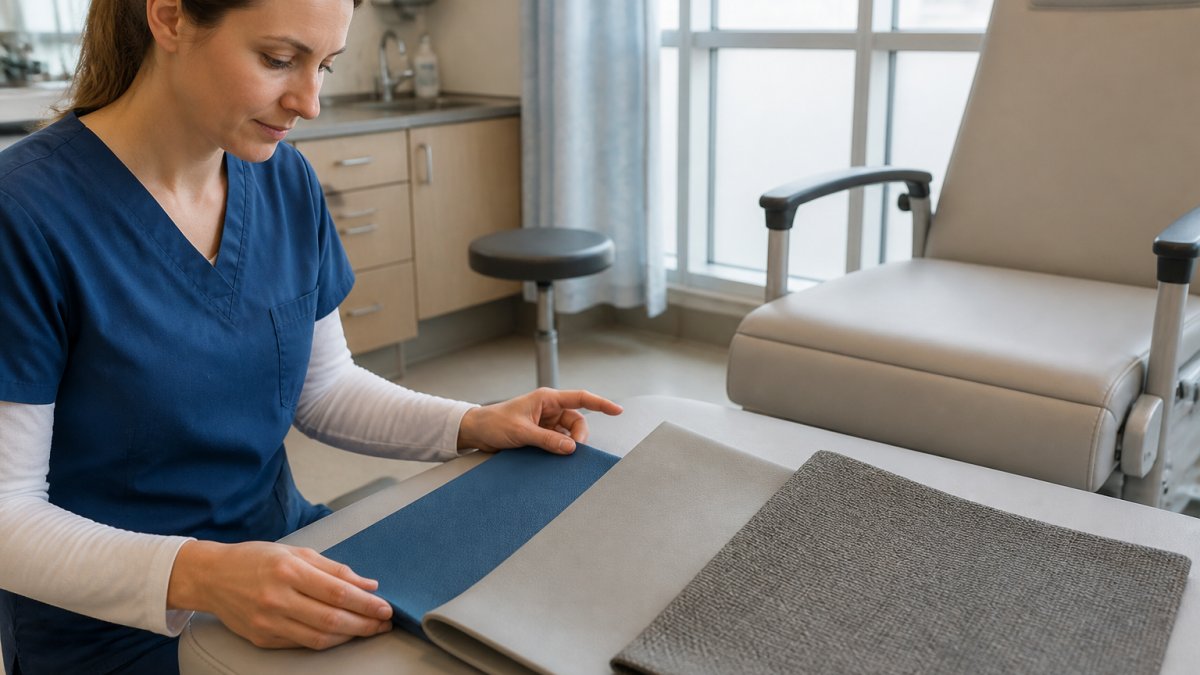
Medical-grade vinyl, particularly PVC-based formulations, is the traditional choice for healthcare furniture. Vinyl is impermeable to liquids, wipeable, and compatible with virtually all hospital-grade disinfectants. It’s durable, cost-effective, and widely available.
The strength of vinyl is straightforward: it’s a proven, reliable barrier. Fluids don’t penetrate, disinfectants don’t degrade it, and it cleans quickly. For examination couches, treatment chairs, and other high-contact furniture, vinyl performs reliably over years of heavy use.
The tradeoff: vinyl can feel cold and plastic-like to patients. It doesn’t breathe, which can create discomfort during extended contact. Some patients and staff find it less comfortable than fabric alternatives. Additionally, vinyl can crack or tear if furniture is dragged or mishandled, and repairs can be visible and difficult to blend seamlessly.
Polyurethane offers a middle ground between vinyl’s impermeability and textile comfort. Healthcare-grade polyurethane is a coated fabric, typically a polyester or cotton base with a polyurethane coating that creates a barrier layer.
The advantage: polyurethane retains some breathability and feel of fabric while maintaining the wipeable, disinfectant-resistant properties needed for infection control. It’s more comfortable than vinyl for patients during longer contact periods, and it feels less clinical.
The limitation: polyurethane coatings can degrade over time with repeated exposure to aggressive disinfectants. The coating may become sticky, lose its water resistance, or develop a tacky feel. Durability varies significantly by manufacturer and formulation, so specifications matter.
Crypton and similar performance fabrics represent a newer category, textiles with built-in stain and moisture resistance rather than a separate coating. These fabrics are treated at the fiber level to resist liquids and staining.
Performance fabrics offer aesthetic advantages: they look and feel more like traditional upholstery while maintaining wipeable, cleanable properties. They’re more durable than coated polyurethane and don’t develop the tackiness that polyurethane can experience.
The consideration: performance fabrics may not offer the same level of impermeability as vinyl or coated polyurethane. They’re highly resistant to staining and moisture, but some liquids can still penetrate the fiber structure if not wiped immediately. For high-risk clinical environments where bodily fluids are common, this may be a limitation.
Dartex is a specific brand of synthetic leather used in therapeutic seating applications. It combines durability with a leather-like appearance and feel, making it popular for patient comfort in clinical settings.
Dartex performs similarly to vinyl in terms of impermeability and disinfectant resistance but with improved aesthetics and a more professional appearance. It’s commonly used in rehabilitation facilities, therapy chairs, and patient seating where the clinical environment matters for patient psychology.
| Material | Impermeability | Disinfectant Resistance | Comfort/Breathability | Durability | Best For |
|---|---|---|---|---|---|
| Medical-Grade Vinyl (PVC) | Excellent | Excellent | Low | High | Examination couches, high-fluid-exposure furniture |
| Healthcare Polyurethane | Very Good | Good | Moderate | Moderate | Treatment chairs, patient seating |
| Crypton/Performance Fabrics | Good | Very Good | High | High | Therapeutic seating, patient comfort priority |
| Dartex | Excellent | Excellent | Moderate | High | Rehabilitation facilities, aesthetic priority |
Healthcare furniture endures constant use. Patients sit, lie, transfer, and sometimes struggle against seating. Staff members push furniture, drag it, and clean it aggressively. The upholstery must withstand this abuse without tearing, pilling, or losing its barrier properties.
Abrasion resistance is measured through standardized testing, typically the Martindale test, which simulates rubbing and wear. Medical-grade upholstery should achieve ratings of at least 50,000 cycles on the Martindale scale for moderate-use furniture, and 100,000+ cycles for high-traffic areas like emergency departments or waiting rooms.
Durability directly impacts lifecycle cost. A cheaper upholstery fabric that fails after two years costs more over a five-year period than a premium material that lasts five years or longer. When evaluating upholstery options, calculate the cost per year of expected service life rather than just the initial purchase price.
Healthcare facility managers should request durability specifications and warranty information from upholstery suppliers. A manufacturer willing to back their product with a warranty demonstrates confidence in its performance. Additionally, ask about repair options, some premium healthcare fabrics can be patched or spot-repaired, extending service life.
Not all healthcare furniture needs the same level of infection-control performance. A waiting-room chair in a low-risk clinic has different requirements than an examination couch in an infectious disease ward. Matching upholstery specification to actual clinical risk reduces unnecessary costs while ensuring adequate protection.
High-Risk Environments (Intensive Care, Infectious Disease, Trauma): Use medical-grade vinyl or coated polyurethane with antimicrobial treatment. These environments require maximum impermeability and disinfectant resistance. Furniture may be exposed to blood, bodily fluids, and aggressive cleaning protocols.
Moderate-Risk Environments (General Examination, Treatment Rooms): Performance fabrics or healthcare-grade polyurethane are appropriate. These areas need wipeable, disinfectant-resistant upholstery but may not require the full impermeability of vinyl.
Low-Risk Environments (Waiting Rooms, Administrative Areas): Performance fabrics or even upgraded commercial upholstery can be acceptable. These spaces have lower contamination risk and may prioritize comfort and aesthetics over maximum infection-control features.
Furniture Type Considerations:
Examination and treatment couches require vinyl or coated polyurethane due to direct patient contact and fluid exposure. Waiting-room seating can use performance fabrics. Patient transfer chairs in rehabilitation need durability and abrasion resistance more than impermeability. Therapeutic seating benefits from materials like Dartex that balance comfort with disinfectant resistance.
Medical-grade upholstery only performs if it’s cleaned correctly. The wrong cleaning method can damage the fabric, compromise its barrier properties, or fail to achieve adequate disinfection.
Frequency matters. High-touch surfaces should be disinfected between each patient use. Lower-risk surfaces can be cleaned daily. The specific protocol depends on your facility’s infection-control policies and the disinfectants you use.
Professional deep cleaning complements but doesn’t replace regular disinfection. Monthly or quarterly professional cleaning removes embedded contamination and refreshes the upholstery surface. For healthcare facilities, scheduling professional upholstery maintenance can be part of a regular infection-control program.
Document your cleaning protocols and maintenance schedule. This documentation supports regulatory compliance and helps staff understand the proper care procedures. When staff understand why proper cleaning matters, they’re more likely to follow protocols consistently.
Selecting medical-grade upholstery fabrics for infection control requires balancing impermeability, disinfectant compatibility, durability, and patient comfort. Medical-grade vinyl offers maximum protection but less comfort. Performance fabrics and polyurethane provide better aesthetics with strong infection-control properties.
Our certified technicians understand the specific disinfectants and protocols facilities use, and we schedule professional cleaning that complements a regular disinfection program.
Medical-grade upholstery fabrics must be wipeable, resist disinfectants like 10% bleach and hospital-grade cleaners, and prevent microbial surface spread. Materials such as vinyl, polyurethane, and Crypton performance fabrics create a barrier against pathogens and fluids, reducing healthcare-associated infections. The fabric must also resist abrasion and maintain integrity after repeated cleaning cycles, protecting the foam underneath from contamination.
Both serve different but complementary roles. Wipeable medical fabrics create a physical barrier that prevents microbial penetration and allows for immediate cleaning and disinfection. Antimicrobial healthcare textiles add a chemical treatment that inhibits bacterial and fungal growth on the surface. For maximum infection control, many healthcare facilities combine both: a wipeable, impermeable base material with antimicrobial treatment to reduce pathogenic surface spread between cleaning cycles.
Medical-grade upholstery should be cleaned with hospital-grade disinfectants, including 10% bleach solutions when appropriate for the material. Wipe down surfaces with a damp cloth or spray disinfectant, allowing contact time per the product instructions, typically 10 minutes for most hospital-grade cleaners. For vinyl and polyurethane, avoid excessive moisture that could damage seams or underlying foam.


