
- October 4, 2026
- in Blog
- by
- 30
- 0
Last Updated: October 3, 2026
Maintaining hardwood finishes starts with one question: what is on your floor? The finish determines every cleaner, tool, and technique you can safely use, get it wrong and you can dull the floor permanently.
A waxed floor feels slightly oily and buffs to a soft glow; a polyurethane floor feels like a thin plastic film and reflects light sharply.
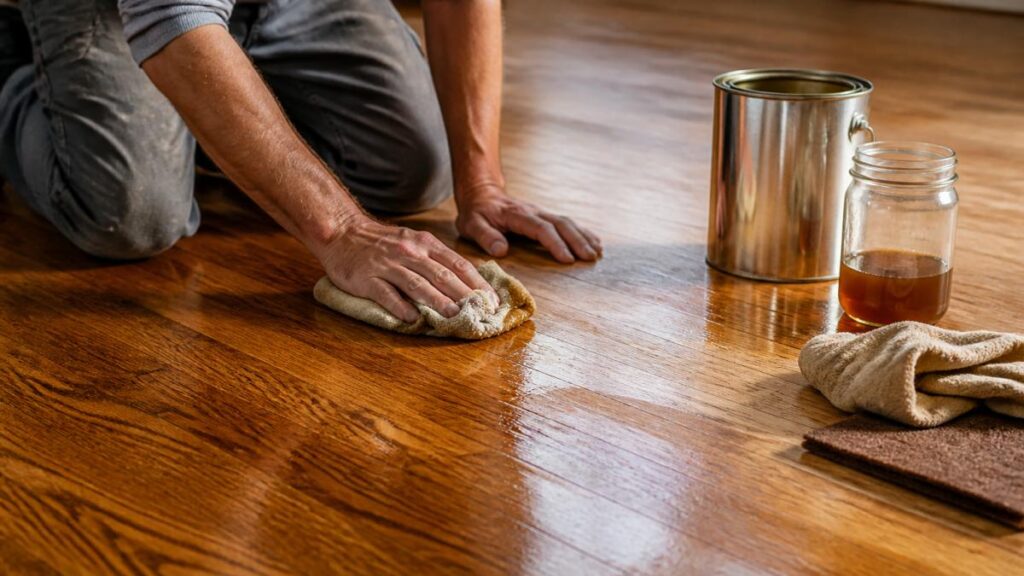
Rub a hidden spot with a cloth dampened with mineral spirits. Wax softens and smears; polyurethane, a penetrating sealer, and most film-forming finishes stay intact. In a corner, scratch a tiny area with a coin: wax comes up waxy, polyurethane flakes or powders.
Polyurethane is a plastic-like protective coating that sits on top of the wood and resists moisture and scratches. Hardwax oil soaks into the grain and leaves a matte, natural look. Penetrating sealer and shellac sit between the two. Aluminum oxide and UV-cured factory finishes feel hardest of all.
| Finish | Look | Feel | Water Resistance |
|---|---|---|---|
| Polyurethane | Glossy to satin | Plastic film | High |
| Hardwax oil | Matte, natural | Bare wood, slight sheen | Moderate |
| Penetrating sealer | Low sheen | Close to raw wood | Low |
| Shellac | Warm gloss | Thin film | Low |
| Aluminum oxide | Factory satin | Very hard | High |
The best hardwood floor cleaner for polyurethane is a pH-neutral cleaner applied with a damp microfiber mop, never a soaking wet one. Surface-level finishes tolerate water better than wax, but standing moisture still seeps into seams and swells boards.
For hardwax oil and penetrating sealer, skip water-based products, use a dedicated oil refresher or dry microfiber mop, then re-oil worn zones. Shellac and acrylic sit in the middle: pH-neutral cleaner, light mist, immediate dry.
Daily care is dry care: a microfiber mop or soft broom lifts grit that otherwise acts like sandpaper underfoot. Weekly, mist a pH-neutral cleaner on the mop head, not the floor, and work with the grain.
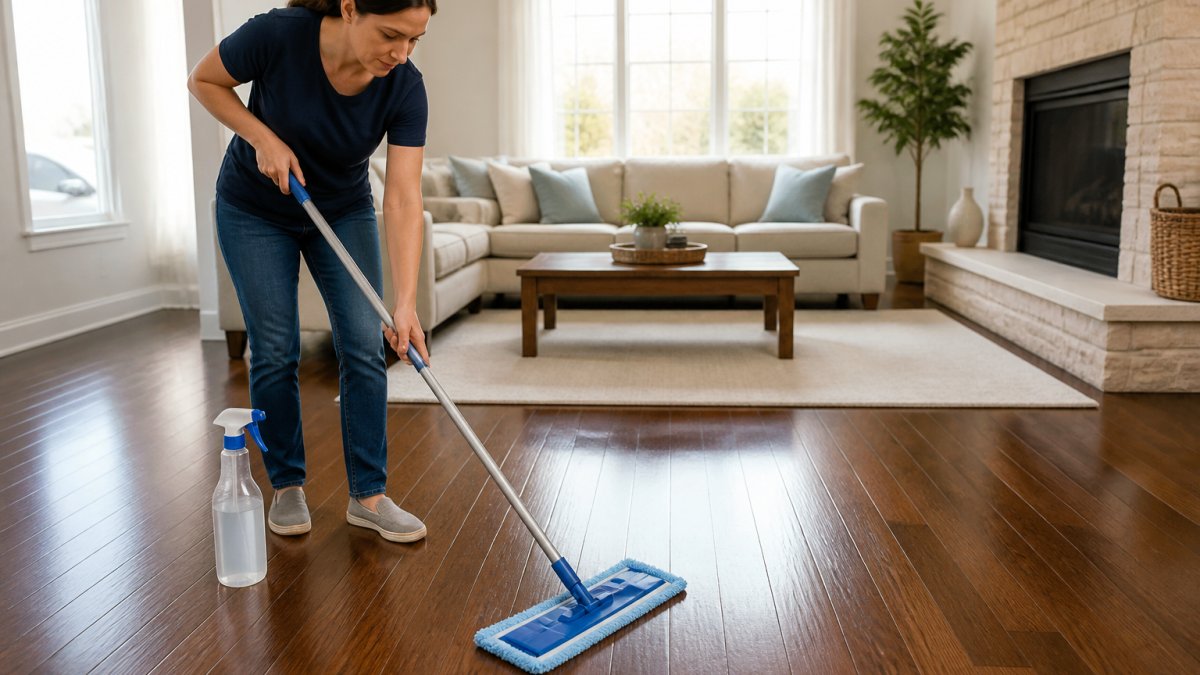
Wipe spills within minutes, and place felt pads under furniture legs and mats at every entry. These two habits prevent most scuff marks and wear spots.
Frequency matters more than intensity. A hardwood floor maintenance schedule should match the finish, not a generic calendar.
| Finish Type | Daily | Weekly | Recoat / Refresh |
|---|---|---|---|
| Polyurethane | Dry mop | pH-neutral damp mop | Recoat every 3-5 years |
| Hardwax oil | Dry mop | Dry mop + spot oil | Re-oil high-traffic zones yearly |
| Penetrating sealer | Dry mop | Dry mop | Reapply sealer when water darkens wood |
| Shellac | Dry mop | Light damp mop | Recoat when gloss fades |
| Aluminum oxide | Dry mop | pH-neutral damp mop | Professional screening when dull |
The harder question is what to do when damage already exists, because the same scratch, ring, or dull patch needs a different fix depending on whether your floor wears a film-forming finish or a penetrating one. Film-forming finishes (polyurethane, aluminum oxide, shellac, acrylic) sit on top of the wood as a sacrificial layer, so damage usually lives in that layer and can often be leveled without touching the grain. Penetrating finishes (hardwax oil, penetrating sealer) bond inside the wood fibers, so damage reaching the grain must be re-fed with the same oil or sealer rather than sanded out.
Water rings and white haze. White rings are almost always trapped moisture in the finish layer, not stained wood.
Black or dark stains. Dark staining means moisture reached the wood itself, so the finish has already failed there.
Peeling, flaking, or chipping film. This is a polyurethane, aluminum oxide, or acrylic problem, not an oil problem.
Worn traffic lanes. On hardwax oil, worn lanes are the easiest repair in the industry: clean, apply oil to the worn zone, let it sit, buff the excess.
Deep scratches exposing bare wood. On any finish, a scratch that shows raw grain cannot be hidden with polish or oil, the color will not match and the spot will telegraph.
If the damage is in the film (scuff, white ring, dull lane), you can usually fix it in place. If it is in the wood (dark stain, bare-grain scratch, cupped board), you cannot, that is refinishing territory. Knowing which side of that line you are on saves homeowners from the most common and most expensive mistake in hardwood care: sanding a floor that only needed a recoat.
These two topics are usually afterthoughts, but they are where most real-world floor failures start. A cleaner safe on polyurethane can wreck a hardwax-oiled floor, and a floor that performs beautifully in a dry climate can cup and gap in a humid one.
The greenest cleaner is not automatically the safest. What matters is the chemistry: pH, solvent content, and whether the product leaves a residue that builds up.
For polyurethane, aluminum oxide, and acrylic films: use a pH-neutral, plant-based cleaner with no ammonia, vinegar, or oil soap, labeled pH-neutral and residue-free.
For hardwax oil and penetrating sealer: water-based cleaners are the wrong tool. Maintain these with the same oil they were finished with, a hardwax oil refresher or dedicated maintenance oil, plus a dry microfiber mop for daily dust.
For shellac: stick to a barely damp cloth with a pH-neutral cleaner. Shellac is sensitive to both alcohol and standing water.
Wood is hygroscopic, it absorbs and releases moisture with the surrounding air until it reaches equilibrium, which drives every climate-related maintenance decision.
In dry climates and dry winters. Indoor humidity below roughly 30% pulls moisture out of the boards, which shrink and open gaps at the seams.
In mixed climates with real seasons. The transition months are the danger zone, not the extremes.
Finish-specific climate notes. Hardwax-oiled floors are more forgiving of humidity swings because the oil moves with the wood, but they dry out faster in low humidity and need more frequent re-oiling.
Stable indoor air is the cheapest floor insurance you can buy. Keep humidity in the 35-55% band, use finish-appropriate eco-friendly cleaners, and address small damage before it reaches the wood. Do those three things and most floors never need a full refinish, only periodic recoats and, on oiled floors, an annual re-oil of high-traffic zones.
Call a professional when damage goes past the surface. If water has darkened the wood, boards have cupped, or the finish has worn through to bare grain across a whole room, DIY spot fixes will not hold. Wood floor restoration at that stage means sanding, buffing, and reapplying a full protective coating.
This is where we come in. Stay Fresh Steam Cleaning is a family-owned and operated business serving homes and businesses in San Antonio and Bexar County. Our certified, background-checked technicians handle hardwood alongside carpet, upholstery, and tile. If you are unsure whether your floor needs a recoat or full restoration, our team can assess the finish and recommend the right path.
Avoid vinegar, ammonia, bleach, and oil-based soaps on polyurethane and hardwax oil finishes. These can dull the sheen, strip protective coatings, or leave a hazy film. Never use a wet mop or steam cleaner on hardwood, because standing water seeps into seams and causes cupping or warping. Also skip abrasive pads and powdered cleansers that scratch the surface-level finish. A pH-neutral cleaner made for hardwood is the safest choice for routine cleaning.
Most homes benefit from professional cleaning once a year, though households with pets or heavy foot traffic may need it every six months. A professional can assess your finish type, remove embedded grit that a microfiber mop misses, and spot early signs of wear before they need refinishing. If you notice dull patches that buffing does not fix or gray areas along high-traffic paths, schedule a visit sooner.
No. Steam cleaners force moisture into wood grain and seams, which causes swelling, cupping, and finish breakdown over time. Even sealed polyurethane floors can be damaged by repeated steam exposure because heat and moisture weaken the bond between the finish and the wood. Stick to a damp microfiber mop with a pH-neutral cleaner. If you want deep cleaning for hardwood, hire a professional who uses methods designed specifically for wood, not steam.
High-gloss finishes show every scuff and smudge, so dust and damp-mop them more often, and use a finish-specific polish to restore shine. Matte and satin finishes hide scratches better but can develop shiny traffic lanes over time. For matte finishes, avoid buffing too aggressively, which can create glossy spots. In both cases, use a pH-neutral cleaner, a microfiber mop, and felt pads under furniture legs. Recoat when the wear layer thins, not when the floor looks dirty.
Rub a small area with a cloth dampened with mineral spirits. If the finish softens or the cloth picks up color, it is likely a wax or penetrating oil finish. If nothing happens, it is probably polyurethane or a similar surface coating. You can also look at the sheen: polyurethane tends to sit on top with a clear film, while waxed floors look softer and can be buffed to a low sheen. When in doubt, test in a closet or corner first.
No. Steam mops push hot moisture into the wood, which can warp boards, loosen finish, and discolor the grain. Even on polyurethane, repeated steam use breaks down the protective coating. Use a damp microfiber mop instead, wring it out well so it is barely damp, and dry the floor with a clean towel if any moisture remains. For deep cleaning or restoration, call a professional who understands hardwood finishes.
Hardwood floors reward consistency more than effort. Match your cleaner to your finish, keep humidity steady, and address wear spots early. When a floor needs more than routine care, Stay Fresh Steam Cleaning can help. Our certified technicians bring professional-grade methods, a satisfaction guarantee with a re-cleaning policy, and a full range of carpet, tile, upholstery, and hardwood services. Contact Us to schedule an assessment and protect your floors for the long run.


