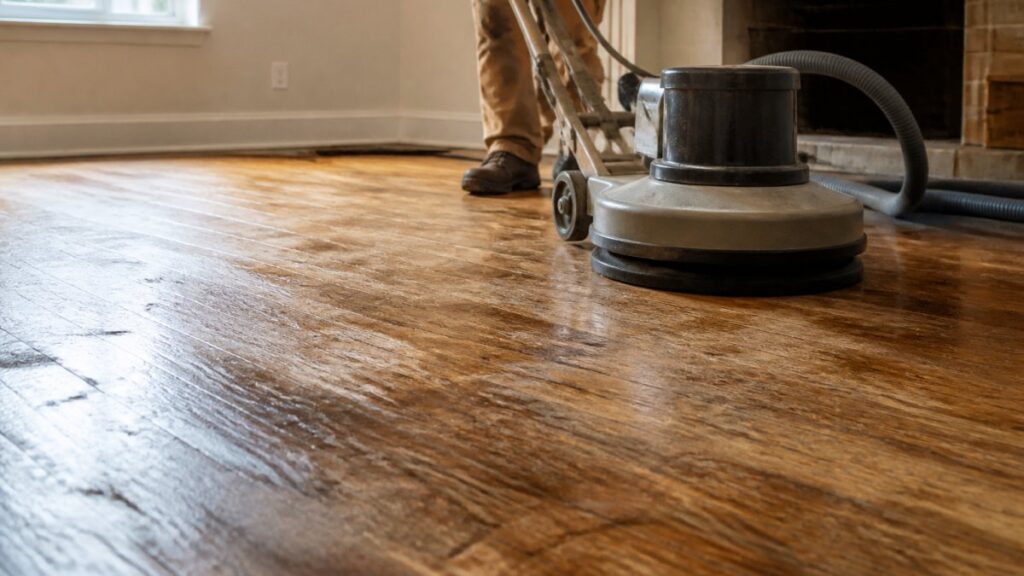
Cost of Professional Old Hardwood Floor Cleaning: 2026 Guide

Cost of Professional Old Hardwood Floor Cleaning: 2026 Guide

  • September 30, 2026
  • in Blog
  • by

Table of Contents

Last Updated: September 29, 2026

What Professional Hardwood Floor Cleaning Actually Includes

The cost of professional old hardwood floor cleaning depends on which of two very different services your floor needs: a surface clean or full restoration. We’ve seen owners expect a simple mop-and-go visit, only to learn their floors needed stripping, recoating, or refinishing. Knowing the difference before you call avoids a surprise on your estimate.
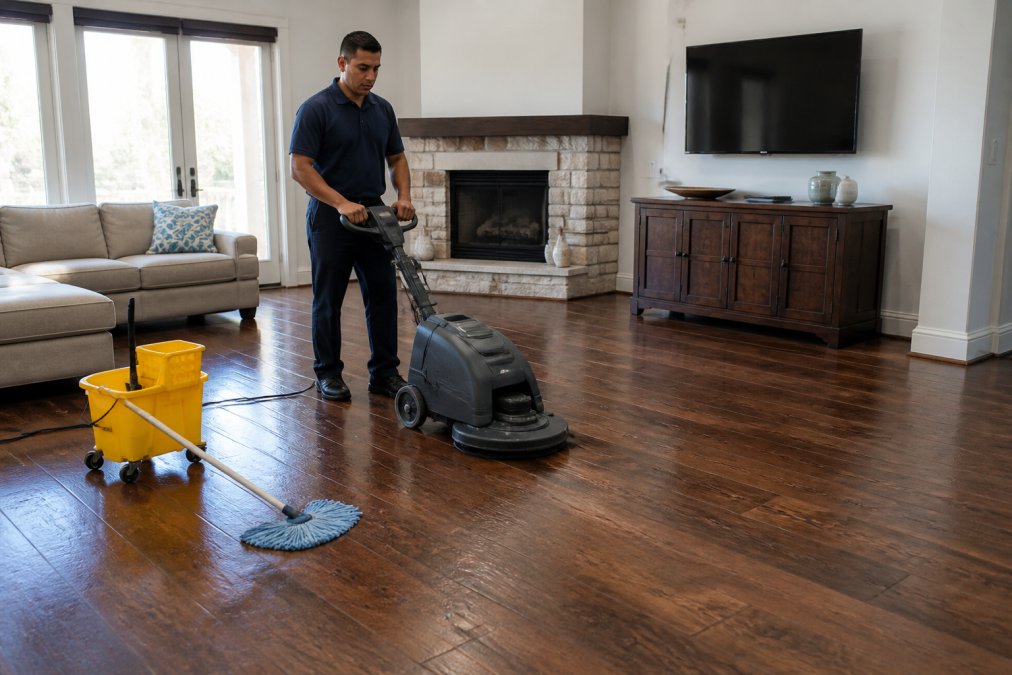
Technician using a professional floor scrubber to maintain the value and cost of professional old hardwood floor cleaning

A professional cleaning visit for old hardwood typically covers:

  • Floor condition assessment, checking for cupping, gaps, and worn finish
  • Dry soil removal with microfiber and high-filtration vacuums
  • pH-balanced cleaning matched to your floor’s surface finish
  • Controlled-moisture mopping to protect the wood grain
  • Buff and polish on floors that only need cosmetic refreshment

Cleaning vs. Restoration: Two Different Services

Cleaning removes dirt, allergens, and surface grime from an intact finish, routine maintenance. Restoration repairs or rebuilds the finish itself through screening, recoating, or full sanding and refinishing. If your finish is worn through to bare wood, no amount of cleaning will fix it, and any company that promises otherwise is selling you the wrong service.

What Drives the Cost of Professional Old Hardwood Floor Cleaning

Square footage is the biggest lever, but not the only one. Two 1,200-square-foot homes can produce very different quotes once site conditions enter the picture.

The main cost drivers are:

  • Total square footage, since most companies price by area with service minimums for small jobs
  • Floor condition, because heavy soil, wax buildup, or water damage adds labor hours
  • Finish type, since oil-based and water-based polyurethane behave differently under cleaning
  • Layout complexity, including tight corners, stairs, and furniture that must be moved
  • Site conditions, such as pets, recent renovations, or high-traffic areas needing extra passes

Why the “National Average” You See Online Is Usually Wrong

Most guides hand you a single national average price per square foot. That number is nearly useless for budgeting, because labor rates, insurance costs, and local competition all move the price by region.

How to Build a Rough Estimate Before You Call Anyone

You do not need a company’s pricing sheet to get in the ballpark. Use this order of operations:

  1. Measure your cleanable square footage. Exclude areas under permanent furniture and appliances.
  2. Identify your service tier. Routine clean, buff and polish, recoat, or refinish. The tier matters more than the square footage.
  3. Apply a condition multiplier. Floors in good shape sit at the base rate; heavy soil, wax buildup, or pet damage push you toward the high end.
  4. Adjust for your market. High cost-of-living index markets run higher; low-index markets run lower.
  5. Add service minimums and add-ons. Small jobs often hit a flat minimum, and furniture moving or baseboard wiping may be billed separately.

Labor Costs vs. Material Costs

Labor usually makes up the larger share of any hardwood cleaning bill, since the work is hands-on and hard to automate. Material costs cover pH-balanced cleaners, floor sealant, and finishing products. When comparing a flat fee against an hourly rate, ask what each includes: a flat fee protects you if the job runs long, while an hourly rate leaves your total open-ended.

Pro Tip
Ask any company whether their quote includes furniture moving and baseboard wiping. These small line items are where flat-fee quotes quietly grow, and getting them in writing before the visit keeps your final invoice predictable.
Key Takeaway
There is no single “correct” price for old hardwood floor cleaning. There is only the right price for your square footage, your service tier, your floor’s condition, and your local market. Build your own estimate first, then use it to pressure-test every quote you receive.

Hardwood Floor Buffing and Polishing Cost: A Cheaper Maintenance Option

Hardwood floor buffing and polishing cost less than deep cleaning or refinishing because it is a surface-level service, not a corrective one. Buffing smooths minor scuffs and restores sheen; polishing adds a protective layer that slows future wear. For floors with an intact finish, it is the most cost-effective maintenance between deeper services.

Service What It Does Best For Frequency
Cleaning Removes dirt and grime Maintained floors Every 3-6 months
Buff and polish Restores sheen, adds protection Minor scuffs, dull finish Every 12-18 months
Recoat Adds a new finish layer Worn but intact finish Every 3-5 years
Refinishing Sands and rebuilds finish Deep scratches, bare wood Every 10-15 years

Deep Cleaning vs Refinishing Hardwood Floors: Which Does Your Floor Need?

Deep cleaning vs refinishing hardwood floors comes down to one question: is the finish intact? If water beads on the surface and the color is even, deep cleaning is enough. If the finish is worn through, scratched to the wood, or darkened in high-traffic areas, refinishing is the honest answer.

Contact Us →

Here is a decision framework:

  • Finish intact, dull surface → clean and buff
  • Finish intact, heavy soil or wax buildup → deep clean plus wax removal
  • Finish worn in patches, no bare wood → screen and recoat
  • Bare wood, deep scratches, or water stains → full refinishing
Watch Out
Skipping the condition assessment and booking a cheap “deep clean” on a floor that actually needs refinishing wastes the entire fee. You’ll pay once for a service that can’t fix the problem, then pay again for the work you needed all along.

How to Maintain Old Hardwood Floors Between Professional Visits

Knowing how to maintain old hardwood floors between professional visits extends the life of your finish and stretches time between paid services. The routine is simple, but consistency matters more than intensity.

  • Sweep or vacuum weekly with a soft brush or hard-floor attachment to remove grit before it scratches
  • Wipe spills immediately with a dry or barely damp cloth, never a soaking mop
  • Use felt pads under all furniture legs and lift, don’t drag, heavy items
  • Place mats at exterior doors to catch tracked-in dirt
  • Avoid steam mops and excess water, which can seep into seams and cause cupping
  • Skip harsh cleaners that strip finish or leave residue that dulls the surface

Eco-Friendly vs. Traditional Chemical Cleaning: What Actually Matters

Most guides treat “green cleaning” as a marketing checkbox. For households with young children, pets, or chemical sensitivities, it is a real decision factor.

Factor Traditional Chemical Cleaning Eco-Friendly / Low-VOC Cleaning
Typical active ingredients Solvent-based surfactants, ammonia, petroleum distillates Plant-based surfactants, vinegar, citrus solvents
VOC off-gassing Higher; can linger after the crew leaves Minimal to none
Pet and child safety Requires ventilation and dry time before re-entry Generally safe for re-entry sooner
Effect on floor finish Can be aggressive on older, thin finishes Gentler; pH-balanced formulas protect finish
Cost Usually lower per bottle Slightly higher, but often diluted
Cleaning power on heavy soil Strong on grease and wax Effective on routine soil; may need extra passes on heavy buildup
Watch Out
“Green” is not a regulated term for cleaning products. Look for specific claims like “low-VOC,” “plant-based surfactants,” or third-party certifications such as Green Seal or Safer Choice rather than trusting the word “natural” on a label.

The Maintenance Habits That Actually Delay Refinishing

Beyond the weekly routine, three habits extend an old floor’s life:

  • Control humidity. Wood expands and contracts with moisture. Keeping indoor relative humidity in a stable range, most flooring manufacturers recommend roughly 35% to 55%, prevents the seasonal gapping and cupping that accelerate finish wear.
  • Address wear zones early. High-traffic paths, entryways, and areas in front of kitchen sinks wear first. A targeted buff and recoat on those zones can buy years before a full refinish is needed.
  • Never wet-mop. Water is the single most common cause of homeowner-inflicted damage to old hardwood. A damp microfiber pad is the maximum moisture a finished floor should see.

How to Get an Accurate Service Estimate for Your Floors

An accurate estimate starts with a real floor condition assessment, not a phone guess. Any quote given without someone looking at your floors, or at least reviewing clear photos and measurements, is a rough starting point at best.

Before you request a quote, prepare the following:

  • Measure the square footage of each room, or note total area
  • Photograph any scratches, stains, or worn patches in good light
  • Note your floor type and approximate age if known
  • List any problem areas, such as pet stains or water marks
  • Clear small items and know which furniture needs moving
  • Ask whether the quote includes furniture moving and cleanup

Frequently Asked Questions

Is professional hardwood floor cleaning worth it for older homes?

For older homes with worn surface finish, yes. A professional deep clean removes embedded grit that acts like sandpaper underfoot and dulls the finish faster. It also gives a technician the chance to check for cupping, gaps, or finish wear before small problems become refinishing jobs. If your floors are structurally sound, routine professional cleaning extends the time between full sandings and protects the wood grain.

What is the average cost to have hardwood floors cleaned?

Hardwood floor cleaning cost depends on square footage, floor condition, and the service tier you choose. Routine deep cleaning sits at the lower end, buffing and polishing costs more because it involves a recoat step, and full refinishing costs the most. Most companies work from a service estimate based on an on-site floor condition assessment rather than a flat national average, so request a quote for your specific rooms.

How does professional cleaning differ from refinishing?

Cleaning removes dirt, oils, and surface residue from the existing finish. Refinishing sands down to bare wood and applies new polyurethane, which restores color and repairs deep scratches. Buffing and polishing falls in between: it scuffs the old surface finish and applies a fresh coat without sanding to bare wood. If your floors look dull but the wood itself is intact, cleaning or a recoat is usually enough.

How often should you have old hardwood floors professionally cleaned?

Most homes benefit from a professional deep clean once a year, with high-traffic areas like entryways and kitchens done more often. Homes with pets or kids may need it every six months. Between visits, dry mop weekly and use a pH-balanced cleaner made for hardwood. That preventative maintenance routine is what keeps hardwood longevity up and refinishing costs down.

LATEST POSTS
MOST POPULAR
TEXT WIDGET

What makes Cleanmate trusted above other cleaning service providers? When you combine higher standards, smarter strategies and superior quality all in one package, the result is top notch.

TAGS

antique wood floors best cleaning products for antique wood floors best hardwood floor cleaner for polyurethane best hardwood floor cleaners for deep stains cost of professional old hardwood floor cleaning cost to seal hardwood floors deep cleaning vs refinishing hardwood floors diy hardwood floor restoration tips hardwood finishes hardwood floor buffing and polishing cost hardwood floor maintenance schedule hardwood floor maintenance tips hardwood floor refinishing cost hardwood floor replacement cost hardwood floor restoration hardwood floor scratch repair kit hardwood floor scratch repair kits how often to reseal grout how often to seal grout how to clean antique hardwood floors how to fix scratches on hardwood floors how to fix water damaged hardwood floors how to maintain old hardwood floors how to prevent scratches on hardwood floors how to remove deep stains from hardwood how to remove scratches from hardwood floors how to repair scratches in old hardwood how to restore hardwood floors without sanding how to seal hardwood floors how to tell if hardwood floors need refinishing maintaining different types of hardwood finishes preventing scratches on hardwood floors professional carpet cleaning vs rental machines refinishing vs restoring refinishing vs restoring old hardwood floors refinish or replace hardwood floors removing pet stains from hardwood repair scratches replace old hardwood sealing hardwood floors sealing unsealed hardwood floors pros cons signs hardwood floors need replacing signs your hardwood floor needs resealing when to hire professional hardwood floor restoration when to replace old hardwood flooring