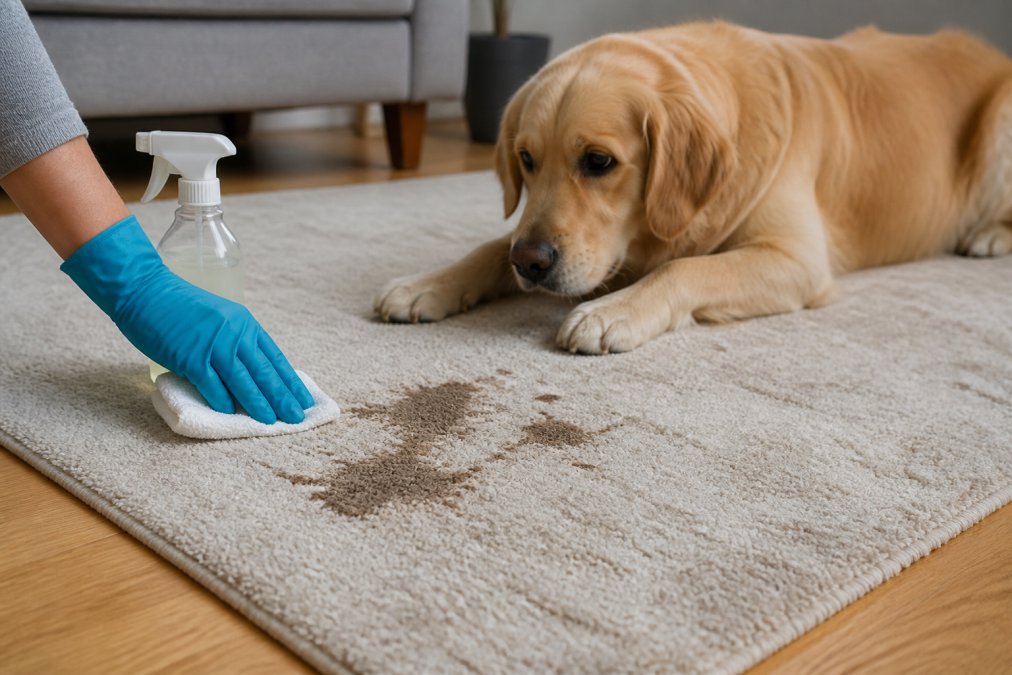
How to Remove Pet Stains from Area Rugs: A 2026 Guide

How to Remove Pet Stains from Area Rugs: A 2026 Guide

  • September 18, 2026
  • in Blog
  • by

Table of Contents

Last Updated: September 18, 2026

What You’ll Need Before You Start

Pet stains are a race against time. The faster you act, the easier removal becomes. According to the ASPCA’s pet care guidance, pet urine contains uric acid crystals that bind to carpet fibers and release odor for months if not fully broken down.

  • Clean white cloths or paper towels
  • Enzyme-based pet stain cleaner
  • White vinegar
  • Liquid dishwashing detergent (non-bleach)
  • Baking soda
  • Lukewarm water
  • Rubber gloves
  • Wet vacuum or steam cleaner (optional)

Step 1: Blot Fresh Pet Stains Immediately

Blot the stain right away. Press a clean cloth firmly onto the wet spot and hold for 10 seconds. Repeat with fresh cloths until no more moisture transfers.
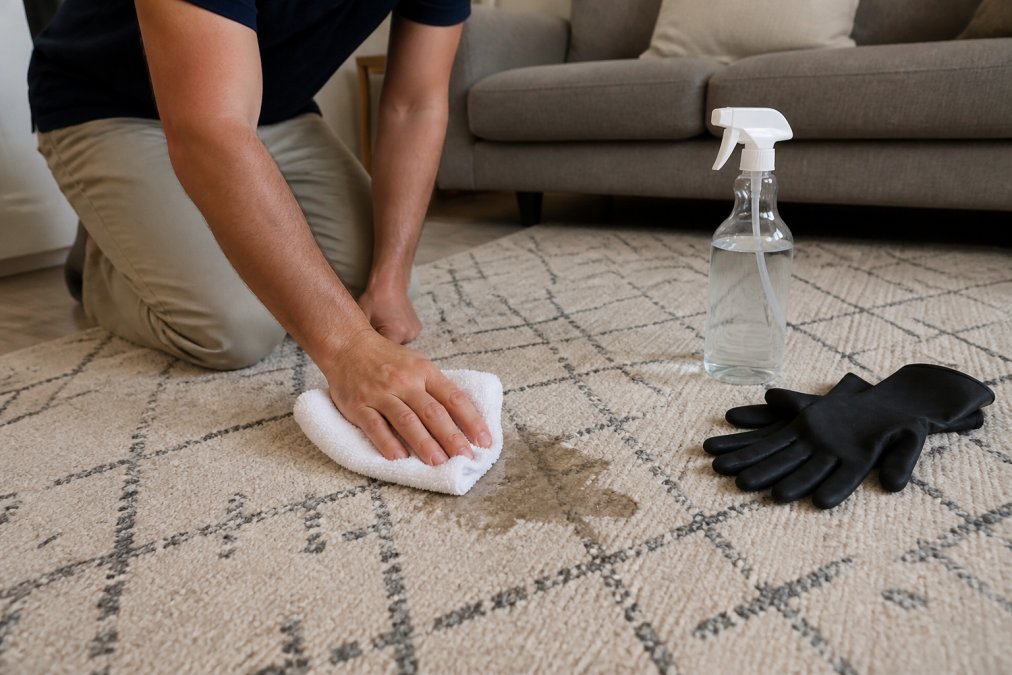
Person kneeling on an area rug, blotting fresh pet stains with a clean white cloth and enzyme cleaner

Why Blotting Beats Rubbing

Rubbing spreads the stain sideways and grinds urine into carpet fibers. It also frays the fibers themselves, creating a dull patch that traps dirt.

Watch Out
Rubbing a fresh pet stain can permanently distort rug fibers and push urine into the subfloor. Once that happens, surface cleaning won’t fix the odor.

Step 2: Choose the Best Enzyme Cleaner for Pet Urine

The best enzyme cleaner for pet urine contains live bacteria that eat the uric acid crystals causing odor. Look for products labeled “enzymatic” and safe for pets and children.

How Enzymatic Cleaners Break Down Uric Acid

Enzymatic cleaners use beneficial bacteria and enzymes to digest uric acid, the compound that creates that sharp, lingering smell. The process takes time. You must keep the area damp so the enzymes stay active.

Step 3: Test for Colorfastness and Fiber Safety

Test any cleaner on a hidden spot first. Apply a small amount to the back corner of the rug. Wait 10 minutes, then blot with a white cloth.

  • Check the rug’s care tag for fiber content
  • Test in an inconspicuous area
  • Use lukewarm water, never hot
  • Avoid bleach and lanolin products

Step 4: Removing Pet Stains from Wool Rugs

Most guides stop at “test a hidden spot” and call it done. Fiber type changes everything: how much water you can use, which cleaner chemistry is safe, and how long the rug needs to dry. Here is how to treat the fibers you are most likely to own.

Wool

Wool is a protein fiber with a natural lanolin coating and an acidic pH. Alkaline cleaners (anything above roughly pH 8) strip the lanolin, dull the surface, and can cause felting, where fibers mat together permanently. Use a pH-neutral enzyme cleaner labeled for wool.

  • Apply lightly with a sponge, not a pour. Wool can absorb many times its weight in water.
  • Never scrub. Agitate with a soft brush in one direction only.
  • Skip hot water entirely, heat plus agitation equals shrinkage.
  • Dry flat and elevated; hanging a wet wool rug stretches the warp and distorts the shape.

Silk

Silk is the most fragile fiber in this list. Water alone can leave water rings, and agitation causes pile distortion. If the stain is fresh, blot only and call a professional. If you must spot-treat, use a minimal amount of a silk-safe, pH-neutral solution on a white cloth and work from the outside of the stain inward to prevent a ring. Do not saturate the backing.

Jute, Sisal, and Other Plant Fibers

Plant fibers are highly absorbent and prone to browning and mildew. Excess moisture wicks into the core and can discolor the entire rug. Use the least water possible:

  • Blot, then apply a light mist of enzyme cleaner rather than a pour.
  • Do not use vinegar on jute, the acid can accelerate browning.
  • Dry immediately with a fan and elevate the rug so air moves underneath.
  • If the stain has soaked through, treat it as a professional job; plant fibers rarely recover from DIY over-wetting.

Nylon, Polyester, and Olefin (Synthetics)

Synthetics are the most forgiving. Solution-dyed nylon and polyester hold color well and tolerate standard enzyme cleaners, mild dish soap, and a vinegar-and-water rinse. Olefin (polypropylene) is moisture-resistant but oil-loving, so it can attract oily residue from cleaners, rinse thoroughly with clean water after treatment.

  • Warm (not hot) water is fine.
  • A wet vacuum speeds drying dramatically on these fibers.
  • Avoid harsh solvents and bleach, which can dull the sheen permanently.

Cotton and Cotton-Blend Flatweaves

Cotton handles mild detergent and water well but can shrink if fully soaked. Spot-treat, blot, and air-dry flat. Do not machine-wash an area rug unless the care tag explicitly allows it, the backing and fringe often will not survive.

Rug Fiber Best Cleaner Avoid Typical Drying Time
Wool pH-neutral enzyme cleaner Ammonia, bleach, hot water 24-48 hours
Silk Silk-safe pH-neutral spotter (pro recommended) Water saturation, agitation 24-48 hours
Jute / sisal Light mist of enzyme cleaner Vinegar, over-wetting 24-72 hours
Nylon Standard enzyme cleaner Hot water 12-24 hours
Polyester Enzyme cleaner + diluted vinegar Harsh solvents 12-24 hours
Olefin Enzyme cleaner, well rinsed Oil-based residue 12-24 hours
Cotton Mild detergent + water Bleach, full soak 24 hours
Pro Tip
When in doubt about fiber content, check the rug’s care tag or the manufacturer’s website. If neither is available, treat the rug as if it were wool, the most conservative approach.
Watch Out
Over-wetting is the single most common DIY mistake across every fiber type. It pushes urine and cleaner into the backing and padding, where mildew and odor take hold. When in doubt, use less liquid and repeat the treatment.

Step 5: Treat Old vs. Fresh Stains Differently

Old pet stains need more patience than fresh ones. Dried urine has already bonded to the fibers and padding. You cannot just spray and blot.

Step 6: Dry Area Rugs to Prevent Mildew

Drying is where most DIY pet-stain jobs fail. A rug that feels dry on top can still be damp in the backing and padding, and mildew can begin colonizing within 24 to 48 hours. Once mildew sets in, the smell is often worse than the original urine, and it can be permanent.

Why Mildew Forms So Fast

Mildew needs three things: moisture, warmth, and organic material. A damp rug provides all three. Urine residue, soap, and the rug’s own fibers feed the growth. The backing and padding hold moisture far longer than the pile, which is why a rug can smell fine on the surface and musty underneath.

The Drying Protocol

  1. Extract, don’t just blot. After cleaning, run a wet vacuum over the area in overlapping passes. This pulls water out of the backing, not just the pile. If you do not own one, press folded bath towels onto the spot and stand on them to wick moisture up.
  2. Elevate the rug. Place blocks, a drying rack, or even inverted bowls under the corners so air moves underneath. A rug lying flat on a sealed floor traps moisture against the backing.
  3. Move air, not heat. Aim a box fan or floor fan across the surface at a low angle. Airflow evaporates moisture; heat can shrink wool and set stains. A dehumidifier in the room accelerates the process significantly in humid climates.
  4. Target indoor humidity. Mildew thrives above roughly 60% relative humidity. Keep the room below that with a dehumidifier or air conditioning. A cheap hygrometer takes the guesswork out of it.
  5. Flip and check. After 12 hours, lift the rug and feel the backing. If it is cool or damp to the touch, keep drying. Repeat every few hours until the backing is fully dry.
  6. Avoid direct sunlight and hanging. Sun fades dyes unevenly. Hanging a wet rug, especially one with a rubber or latex backing, can stretch the weave and crack the backing.

Backing-Specific Guidance

  • Rubber or latex backing: Dry flat only. Heat and hanging both degrade the backing.
  • Cotton canvas backing: Dries relatively fast but can shrink if soaked; keep it flat and fan-dried.
  • No backing (flatweave, kilim): These dry fastest and can be hung over a railing once the bulk of moisture is gone.
  • Hand-knotted with fringe: Dry flat, then comb the fringe out while still slightly damp to prevent matting.

Warning Signs of Mildew

Watch for these signals during and after drying:

  • A musty, earthy, or “wet basement” smell that does not fade
  • Dark or greenish-gray speckling on the backing
  • A chalky white residue on the pile
  • Persistent dampness in the backing after 48 hours

If you see any of these, stop DIY treatment. Mildew that has penetrated the backing usually requires professional washing with proper extraction and controlled drying rooms.

Key Takeaway
A rug is not dry when the pile feels dry. It is dry when the backing feels dry, the room stays under 60% humidity, and 24 hours have passed with no musty smell. When in doubt, keep the fan running another day.
Pro Tip
Run the fan for at least 24 hours after the surface feels dry. The backing is the last part to dry and the first place mildew starts.

When to Choose Professional Rug Cleaning for Pet Stains

Some pet stains need more than DIY methods. Call a professional when:

  • The stain has soaked into the padding or subfloor
  • Odor returns after multiple cleanings
  • The rug is wool, silk, or another delicate natural fiber
  • The stain covers a large area
  • You have tried enzyme cleaners without success

Frequently Asked Questions

Can old pet urine stains be removed from area rugs?

Old stains are harder but not impossible. The uric acid crystals bond to carpet fibers over time, so you need an enzymatic cleaner that breaks them down. Apply the cleaner generously, cover with plastic wrap, and let it sit for 24 hours before blotting. For set-in stains on wool or delicate rugs, professional rug cleaning for pet stains is often the safest route. Repeated treatments may be needed for complete removal.

Will hydrogen peroxide remove old pet stains from carpet?

Hydrogen peroxide can lighten stains, but it also risks bleaching or damaging carpet fibers, especially on wool or synthetic blends. Test a small hidden area first for colorfastness. It works best on light-colored, synthetic fibers. For wool rugs, skip peroxide and use a pH-balanced enzyme cleaner instead. Always blot, never rub, and rinse thoroughly to avoid residue that attracts new dirt.

What is the best way to neutralize pet odors in area rugs?

Enzymatic cleaners are the most effective for odor neutralization because they break down the uric acid that causes the smell. After cleaning, sprinkle baking soda over the damp area, let it sit for 15 minutes, then vacuum. Ensure the rug dries completely within 24 hours to prevent mildew. If odor lingers after two treatments, the urine may have soaked into the padding or subfloor, which requires professional extraction.

When should you call a professional for pet stain removal?

Call a professional when stains cover a large area, odor persists after DIY cleaning, or the rug is made of wool, silk, or other delicate natural fibers. Professional rug cleaning for pet stains uses specialized enzyme treatments that reach deep into the padding. If urine has soaked into the subfloor, DIY methods cannot fix it. Certified technicians can also assess fiber damage and advise on salvage versus replacement.


Pet stains do not have to mean replacing your area rug. With fast action, the right enzyme cleaner, and proper drying, most stains lift completely. But when stains reach the padding or odor keeps returning, professional help saves your rug. Contact Stay Fresh Steam Cleaning for certified pet stain removal backed by our satisfaction guarantee.

LATEST POSTS
MOST POPULAR
TEXT WIDGET

What makes Cleanmate trusted above other cleaning service providers? When you combine higher standards, smarter strategies and superior quality all in one package, the result is top notch.

TAGS

5 best grout cleaners for heavily stained tile best tools for scrubbing grout carpet cleaning service carpet maintenance schedule colored grout sealant commercial office cleaning cost cost of professional carpet cleaning deep carpet cleaning deep clean carpets deep cleaning services does grout restoration prevent mold extend the life of your carpet grout cleaners grout color sealing benefits grout restoration hire carpet cleaners how long does carpet take to dry after professional cleaning how long does carpet take to dry after steam cleaning how long does grout color sealer last how long does professional carpet cleaning take how long to let grout cleaner sit how often to steam clean carpets how to apply grout color sealer how to check if a cleaning company is bonded and insured how to choose a carpet cleaning company how to clean moldy grout how to deep clean carpets step by step how to extend the life of your carpet how to hire a commercial cleaning service how to prepare house for carpet cleaning service how to remove stubborn grout stains how to verify professional cleaning technicians iicrc certified carpet cleaning is colored grout sealant worth the price is deep carpet cleaning good for old carpets professional carpet cleaning cost professional carpet cleaning vs rental machines pros and cons of grout color sealing questions to ask professional cleaners before hiring removing pet stains from wool rugs signs your carpet needs replacing signs your grout needs restoration what is included in a commercial deep clean what is the process of professional carpet cleaning where to hire carpet cleaners