
- September 16, 2026
- in Blog
- by
- 23
- 0
Last Updated: September 3, 2026
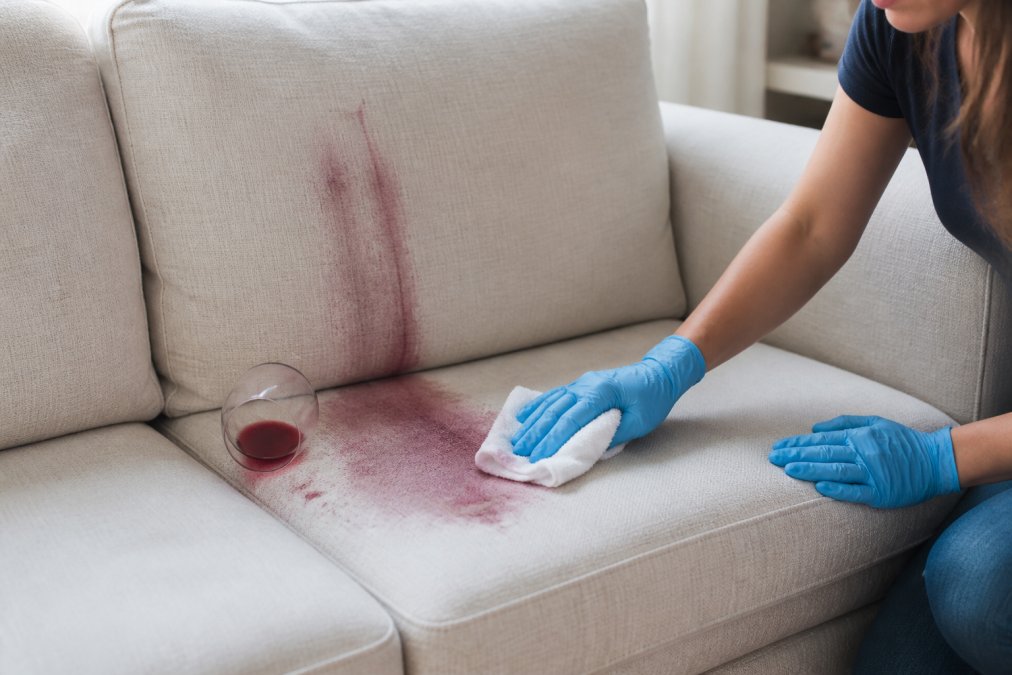
Red wine stains on your sofa feel inevitable the moment you see them spreading across the fabric. The panic sets in: Is it ruined? Can anything actually fix this? The answer depends entirely on how you respond in the first few minutes. At Stay Fresh Steam Cleaning, we’ve helped countless homeowners rescue their upholstery from wine disasters, and the difference between a permanent stain and a complete recovery almost always comes down to speed and technique.
This guide covers immediate response, proven DIY methods, fabric-specific techniques, and when to call professionals.
The first 30 seconds are critical. Red wine bonds with fibers immediately, especially on natural fabrics (peer-reviewed research). Your goal is to stop it from spreading deeper into the cushion.
Use an absorbent white cloth, paper towels, or white t-shirt, avoid colored fabrics as they transfer dye. Press firmly onto the stain for several seconds, then lift. Repeat with fresh cloth sections until no more wine appears.
Don’t rinse with water immediately, this pushes wine deeper into fibers. Instead, apply your chosen cleaning solution based on what you have and your fabric type.
Complete cleaning within the first hour if possible, dried stains are exponentially harder to remove.
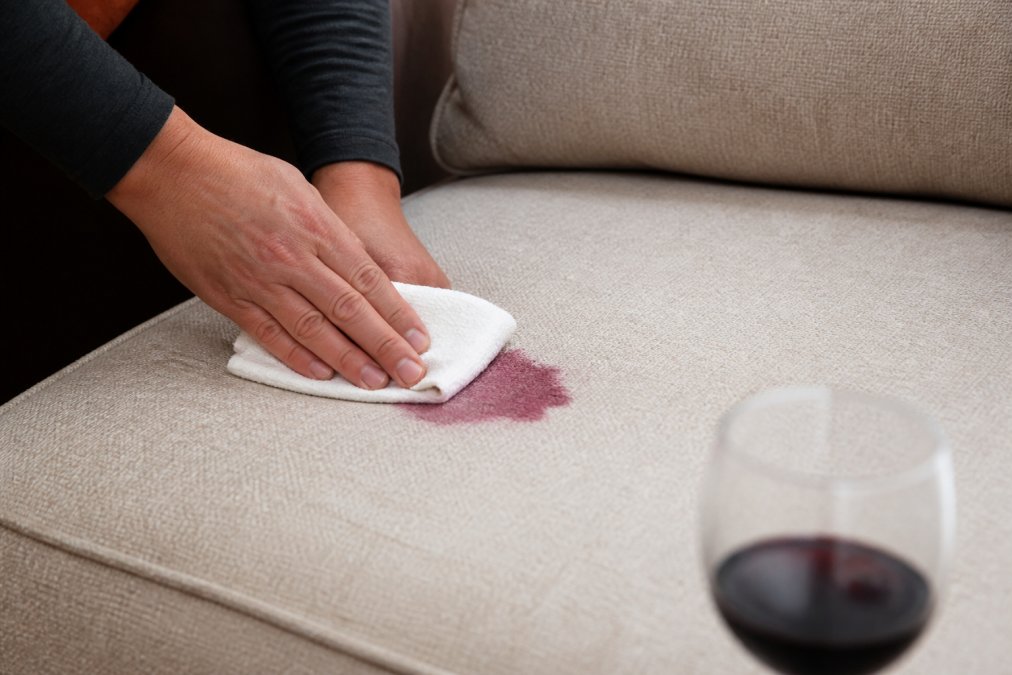
Blotting (pressing and lifting) absorbs liquid; rubbing (moving back and forth) pushes wine deeper, damages fibers, and spreads the stain.
Press for 3-5 seconds, lift straight up, and move to a clean cloth section. Repeat until wine stops transferring to the cloth.
Before applying any solution, test for colorfastness, check whether the fabric’s dye bleeds when exposed to water or cleaning agents.
Test on a hidden area (cushion underside, sofa back, or arm inside). Mix your solution with water, apply to a white cloth, and press for 30 seconds. If color transfers, stop and call a professional. If the cloth stays white, proceed.
You have several effective options for cleaning red wine from upholstery, and most use materials you likely have at home. The choice depends on your fabric type, how much time has passed, and what you have available.
This method works well on light-colored upholstery. Hydrogen peroxide (3% solution) oxidizes the wine stain, breaking down the pigment (the FDA).
Mix 1 tablespoon dish soap, 1 tablespoon 3% hydrogen peroxide, and 1 tablespoon water. Apply to the stain with a white cloth and let sit 5-10 minutes. Blot with a damp cloth to remove solution and stain. Repeat if needed.
Dish soap penetrates fibers and lifts stains; hydrogen peroxide oxidizes the pigment. Don’t use on dark fabrics, hydrogen peroxide can bleach them.
This gentler method works on most fabrics, including dark upholstery, and is non-toxic.
Blot thoroughly, sprinkle baking soda on the damp stain, let sit 5-10 minutes, then vacuum completely.
Mix equal parts vinegar and water in a spray bottle. Lightly mist the area and blot with a clean cloth. Repeat 2-3 times. Finish by blotting with cold water to remove vinegar smell and residue.
Club soda’s carbonation and mild salts lift fresh stains. Use immediately after a spill, before wine dries.
Pour club soda onto the fresh stain to saturate it. Let sit 2-3 minutes, then blot firmly with a white cloth. Repeat 2-3 times. Finish with cold water rinse.
Different upholstery materials require different approaches. Using the wrong method can damage the fabric or set the stain permanently.
Microfiber and synthetics are durable and resist water damage. The hydrogen peroxide method works well, and you can use more aggressive blotting.
Microfiber traps moisture, so dry thoroughly with a clean cloth and use a fan. Never use heat, it sets remaining pigment permanently.
Test synthetic blends for colorfastness first. They respond well to all methods but may need multiple applications.
Natural fibers like linen, cotton, wool, and silk are more vulnerable to water damage and dye transfer. These materials require gentler handling and careful attention to moisture levels.
For wool, use the vinegar and baking soda method. Avoid hydrogen peroxide, it bleaches wool. Use minimal water and dry quickly to prevent shrinking.
For linen and cotton, test the hydrogen peroxide method first. Use baking soda and vinegar if unsure.
For silk, call a professional. Silk is delicate and easily damaged. Professional cleaning costs far less than replacement.
Air-dry naturally with good circulation. Rapid heat drying causes watermarks and fiber damage.
Safety during cleaning means protecting both your sofa and yourself. Several common mistakes can make stains worse or damage the upholstery permanently.
Never use hot water, heat sets stains permanently. Always use cold water, which slows stain-setting.
Avoid bleach entirely, it damages upholstery and creates permanent discoloration.
Don’t over-saturate, excess water seeps into cushion cores, creating mildew and odors. Use minimal water and focus on blotting.
Test any cleaning solution on a hidden area first. This step prevents surprises. A solution that works on one fabric can damage another.
Never mix cleaning solutions, combining vinegar and hydrogen peroxide creates peracetic acid, which damages fibers and irritates skin.
Wear gloves and ensure good ventilation when using hydrogen peroxide or vinegar.
DIY methods work well for fresh spills and light stains. However, several situations call for professional help, and knowing when to stop trying at home saves time, money, and your sofa.
Call a professional if DIY methods fail after 2-3 attempts. Dried wine bonds with fibers beyond home solutions’ reach.
For large stains or multiple spills, professional cleaning is more efficient. Professionals have extraction equipment that removes stain and moisture simultaneously.
For expensive, natural-fiber, or sentimental sofas, professional cleaning is worth the investment. It costs far less than replacement or reupholstering. Stay Fresh Steam Cleaning uses advanced cleaning methods for delicate upholstery.
Professional cleaning can address secondary issues like vinegar smell, watermarks, or color bleeding. Prevention through fabric testing is always better.
Professionals access enzyme-based and oxidizing treatments unavailable at home, and can identify stain types to select appropriate treatments.
After successfully removing the wine stain, your next goal is preventing future stains and maintaining your sofa’s condition.
Allow 24-48 hours for complete drying. Sitting on damp upholstery traps moisture and creates odors. Use fans to speed drying.
Inspect the cleaned area when dry. If stain remains, repeat cleaning or seek professional help.
Consider fabric protectant to resist liquids and buy time for cleaning. Professional protectants are more durable than consumer versions.
Keep absorbent cloths and cleaning solution nearby for quick response. Many keep club soda or vinegar-water spray near the sofa.
Avoid eating or drinking on the sofa when possible. If you do, use coasters and keep a cloth nearby.
Regular vacuuming and weekly soft brushing maintain upholstery and prevent spills from settling.
Red wine stains don’t have to mean the end of your sofa. The methods in this guide address fresh spills through stubborn dried stains, and they work across most upholstery types. Speed matters most, those first 30 seconds of blotting can mean the difference between a complete recovery and a permanent mark.
If your DIY efforts don’t fully remove the stain, or if you want to protect your investment with professional cleaning and fabric protection, Stay Fresh Steam Cleaning specializes in upholstery restoration. Our certified team uses advanced cleaning techniques specifically designed to remove tough stains while preserving your sofa’s fabric and structure. We serve homeowners throughout San Antonio and Bexar County and can handle everything from fresh wine spills to years-old stains that other methods have missed. Contact us for a free assessment and to learn how professional cleaning can restore your upholstery to like-new condition.
Yes, dried red wine stains can often be removed, though fresh stains respond better to treatment. Dried stains require more aggressive methods like hydrogen peroxide or white vinegar solutions applied to saturate the fibers. The key is patience, let the cleaning solution sit for 10-15 minutes to break down the residue before blotting. Older stains may need multiple applications. If home methods don’t work after several attempts, professional upholstery cleaning uses extraction equipment and stronger solutions to lift stubborn stains that DIY approaches cannot reach.
Microfiber requires careful handling because these synthetic fibers can absorb liquid quickly and are sensitive to water rings. Start by blotting immediately with an absorbent cloth. Avoid saturating the fabric. Test any cleaning solution on a hidden seam first to check for colorfastness. Use a club soda method (which is gentler) or a diluted hydrogen peroxide and dish soap mixture applied sparingly. Never rub, gentle agitation only. Microfiber may need professional cleaning if the stain sets deeply, as the tight weave can trap residue that home methods cannot extract completely.
Hydrogen peroxide mixed with a small amount of dishwashing liquid is highly effective for most upholstery fabrics because it breaks down the stain’s molecular structure without harsh bleaching. White vinegar and baking soda work well for natural fibers and create less risk of fiber damage. Club soda is gentler for delicate fabrics. The ‘most effective’ solution depends on your sofa’s fabric type, always test for colorfastness first. Professional-grade upholstery cleaners use pH-neutral solutions and extraction equipment that penetrate deeper than household methods, making them most effective for stubborn or set-in stains.
Call a professional if the stain covers a large area, has dried for several days, doesn’t respond to home treatment after two attempts, or if your sofa fabric is delicate, natural fiber, or expensive. Professional cleaners have extraction equipment that removes stain residue and moisture more thoroughly, preventing water rings and resoiling. They understand how different fabrics react to cleaning solutions and can prevent fiber damage. For valuable upholstered pieces or if you’re unsure about your sofa’s fabric composition, professional cleaning is worth the investment to protect your furniture’s longevity.
This article was written using GrandRanker


