
- September 26, 2026
- in Blog
- by
- 57
- 0
Last Updated: September 25, 2026
Pet urine smell hardwood floors is one of the toughest odors to eliminate because urine soaks deep into wood fibers and can penetrate the subfloor beneath. The solution depends entirely on how far the damage has spread.
Standard surface cleaning rarely works if urine has reached the wood grain or subfloor. This guide covers every method to remove pet urine smell from hardwood, from immediate cleanup to professional help or refinishing.
Pet urine changes the chemistry of wood: uric acid bonds with fibers and breaks down the finish, trapping odor inside the wood itself.
Hardwood is porous; a fresh accident soaks through the finish into the wood grain within minutes. Multiple accidents in the same spot likely reach the subfloor beneath.
The smell lingers because uric acid crystals form deep in wood fibers, ammonia compounds release odors, moisture traps bacteria, and the finish breaks down. Quick action prevents deeper spread.
Time is everything with fresh pet urine. You have a narrow window before the liquid soaks past the finish and into the wood itself.
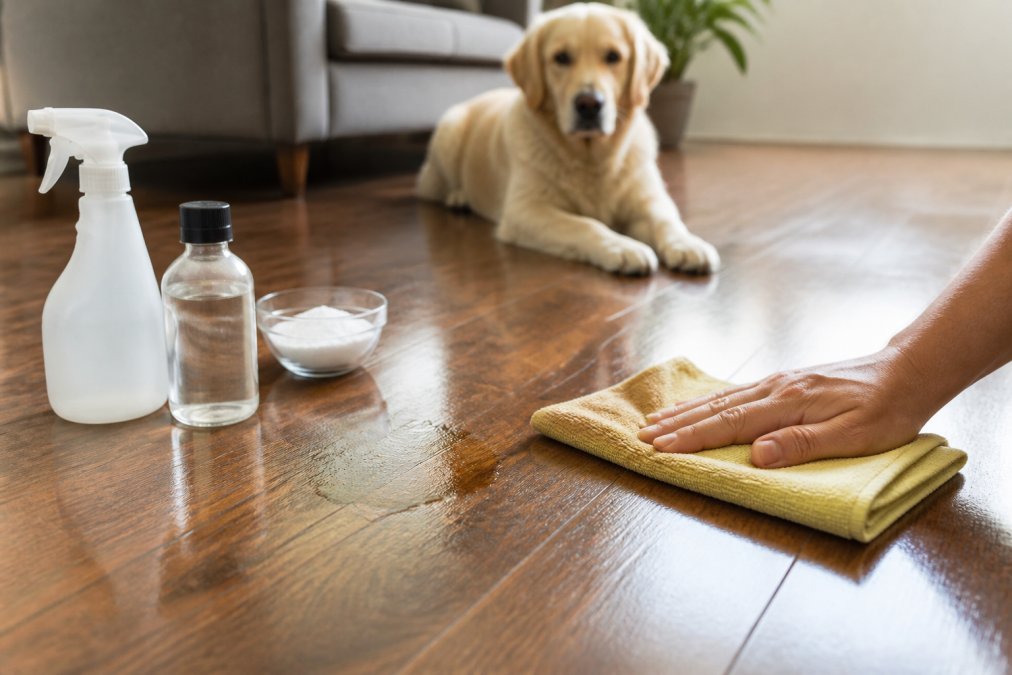
Step 1: Blot immediately with paper towels or cloth, pressing firmly and repeating until no liquid remains. Step 2: Neutralize with white vinegar (equal parts vinegar and water); spray, let sit 5-10 minutes, then blot dry. Step 3: Apply baking soda directly on the spot for at least 24 hours, then vacuum. Step 4: Inspect the finish, if the shine is dulled or a dark spot appears, urine has penetrated the wood grain.
This approach stops fresh accidents caught within minutes, but accidents hours old have likely penetrated deeper.
Enzyme cleaners break down uric acid and ammonia at a molecular level by breaking chemical bonds, unlike vinegar or baking soda which only neutralize. However, enzyme cleaners are moisture-based and hardwood finishes vary in moisture tolerance. You must identify your floor’s finish before applying any enzyme treatment, as this determines both safety and effectiveness.
Finish-specific safety protocols:
Hardwood finishes fall into three main categories, each with different moisture tolerance:
Polyurethane (water-based or oil-based): The most common modern finish. Water-based polyurethane is more moisture-sensitive than oil-based. Excess moisture causes clouding, whitening, or delamination. Safe approach: Apply enzyme cleaner to a cloth only (never spray directly). Work in small sections, limit wet contact to 15-20 minutes, then wipe and dry immediately with two clean, dry cloths.
Wax finish: Older floors often have wax finishes. Wax is porous and absorbs moisture, which can soften it and cause stickiness or cloudiness. Enzyme cleaners are not recommended on wax. Use vinegar and baking soda instead. If you must use enzyme cleaner, apply sparingly to a cloth, limit contact to 5-10 minutes, and dry immediately.
Oil-based finish (tung oil, Danish oil, or similar): More forgiving with moisture than polyurethane but can darken or become sticky if oversaturated. Apply enzyme cleaner to a cloth, work in small sections, allow 10-15 minutes contact time, and dry thoroughly.
How to identify your finish:
If you’re unsure, test the enzyme cleaner on a hidden area (inside a closet or under furniture) first. Apply it to a cloth, wait 15 minutes, and observe the finish. If it clouds, becomes sticky, or changes color, stop and use a gentler method.
When to use enzyme cleaners:
Application steps (finish-safe method):
Enzyme cleaner selection: Look for products labeled “safe for hardwood” or “low-moisture formula.” Avoid carpet or upholstery cleaners; they contain excess water. Oversaturation is the enemy of hardwood. If uncomfortable applying enzyme cleaners yourself or unsure about your finish, professional application is worth the cost, professionals have moisture meters and finish expertise.
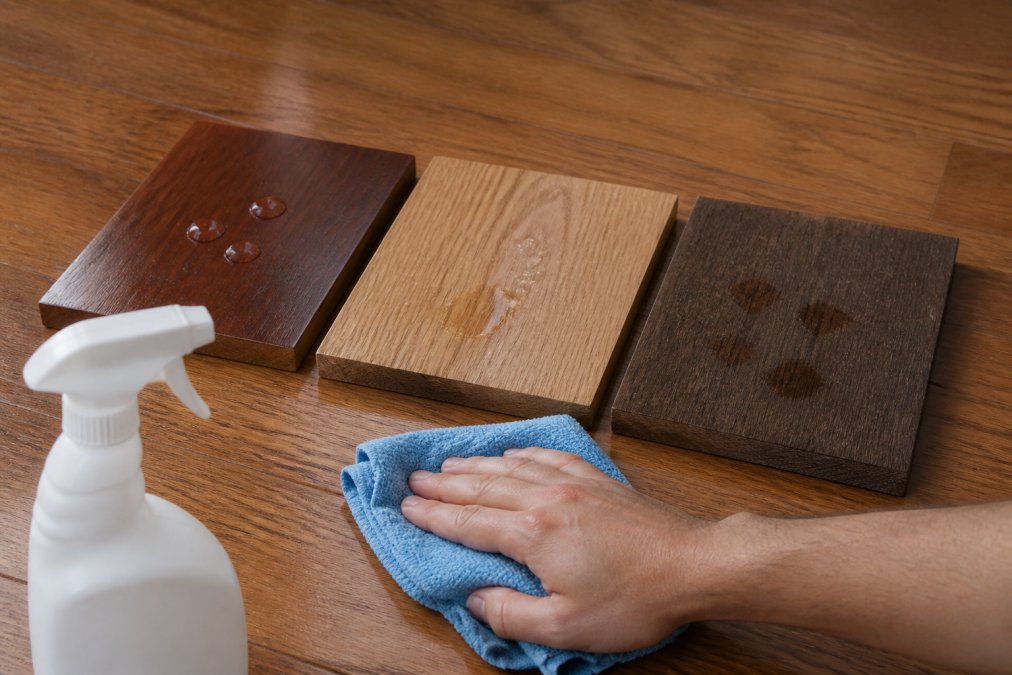
This is the critical question. If urine has soaked through the finish and into the wood fibers, or worse, into the subfloor beneath, surface cleaning won’t solve the problem. But detecting subfloor involvement, and understanding your options, requires both diagnosis and a clear treatment pathway.
Signs that urine reached deep into the wood: The smell returns after cleaning, a dark stain won’t come out, the wood feels soft or spongy, the finish is dull or cloudy, odor persists after enzyme treatment, or the odor is strongest near baseboards (urine migrates laterally along the subfloor).
Testing for subfloor contamination: Use a moisture meter ($20-$50). Hardwood should read 6-9% moisture. Readings of 12% or higher indicate urine has reached deep into the wood or subfloor. Take multiple readings around the accident site, as contamination spreads beyond visible stains.
Most hardwood floors sit on a subfloor of plywood, OSB, or solid wood joists.
When subfloor treatment is possible (without full replacement):
Targeted enzymatic injection: Professionals inject enzyme treatments directly into the subfloor through small access holes, breaking down uric acid crystals without removing hardwood.
Subfloor sealing from below: With basement or crawl space access, seal the subfloor underside with vapor-barrier primer or encapsulation sealant to trap odors and prevent them from rising through hardwood.
Localized subfloor replacement: For small contaminated sections (under 4 square feet), professionals can replace just that section while keeping hardwood in place.
When replacement is necessary:
Hydrogen peroxide method: Mix 3% solution with baking soda to form a paste. Apply to the stain, let sit 10-15 minutes, then wipe clean. Works best on fresh stains.
When home remedies fail, professional cleaning becomes necessary. Professional services use equipment and techniques that go deeper than what you can do at home.
What professionals do:
Sometimes the damage is too extensive for cleaning alone. Refinishing or replacement becomes the only real solution.
Refinish if:
Replace if:
| Damage Level | Best Solution | Timeframe | Effectiveness |
|---|---|---|---|
| Fresh accident (under 1 hour) | Vinegar, baking soda, blotting | 1-2 days | 95%+ if caught early |
| Recent accident (1-24 hours) | Enzyme cleaner treatment | 3-5 days | 80-90% |
| Old stain, surface only | Professional deep cleaning | 1-2 days | 85-95% |
| Deep wood penetration | Refinishing | 5-7 days | 100% |
| Subfloor damage | Replacement | 7-14 days | 100% |
Removing pet urine smell from hardwood requires understanding how deep the damage has penetrated. Fresh accidents respond well to vinegar, baking soda, and quick action. Older stains or deeper contamination need enzyme cleaners or professional treatment.
Enzyme cleaners break down uric acid crystals in pet urine, which are the source of odor. Look for products specifically formulated for hardwood, they contain protease enzymes that target urine compounds without saturating the wood. Apply according to product instructions, allowing proper dwell time for the enzymes to work. Blot thoroughly after treatment; never leave excess moisture on hardwood.
If the smell persists after surface cleaning, urine likely penetrated the finish and wood fibers. A moisture meter will detect elevated moisture levels in the subfloor, readings above 12% indicate saturation. Discoloration, soft spots, or cupping (edges raised higher than the center) also signal subfloor contamination. Urine that reaches the subfloor requires more aggressive treatment. Professional inspection can determine the extent of damage and whether replacement is necessary.
Baking soda absorbs odors and can help neutralize surface smells when sprinkled on affected areas and vacuumed after several hours. White vinegar’s acidity can mask odors temporarily, but neither addresses uric acid crystals deep in the wood fibers, the root cause of the smell. These natural methods work best for fresh accidents or mild odors as a first step. For established or strong odors, enzyme-based cleaners are far more effective because they chemically break down urine compounds rather than just masking the smell. Combine these methods for best results: blot the area, apply enzyme cleaner, then use baking soda for final odor absorption.
DIY cleanup works for fresh accidents caught immediately. For lingering odors or established stains, professional hardwood floor deep cleaning delivers superior results. They can also assess whether the subfloor is contaminated and recommend refinishing or replacement if needed. Given the cost of replacing hardwood floors (far higher than professional cleaning), hiring a certified service protects your investment and ensures thorough odor elimination.


