
- October 2, 2026
- in Blog
- by
- 34
- 0
Last Updated: October 1, 2026
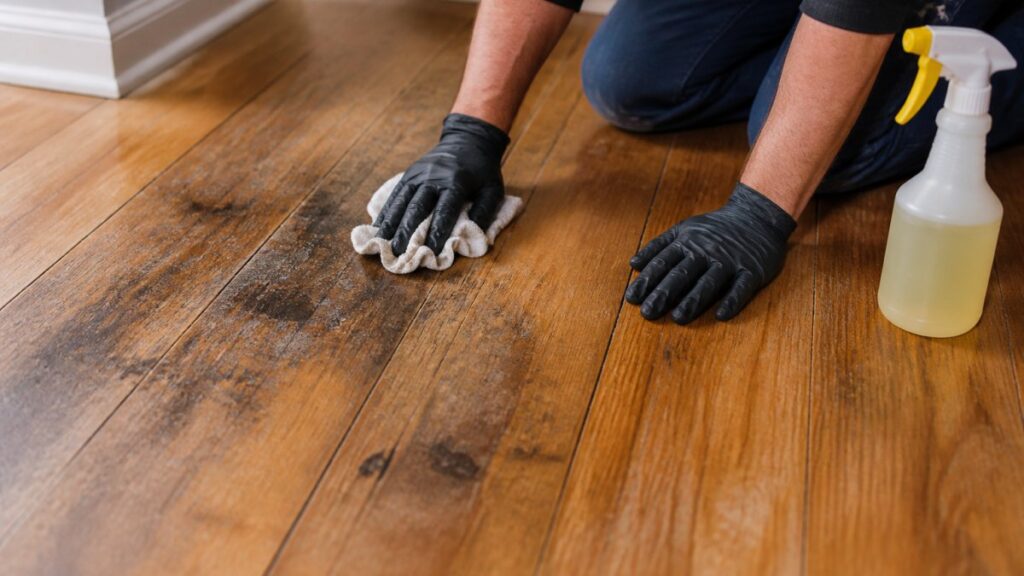
Knowing how to remove deep stains from hardwood starts with one question: how far has the damage traveled? Knowing the difference decides everything. A stain on top of the finish needs a gentle wipe; one soaked into the grain needs a very different plan.
Surface stains sit on the protective layer, not in the wood itself. Common causes include food spills, muddy paw prints, and everyday grime. These usually lift with a damp cloth and a mild cleaner, and the finish still feels smooth. No sanding or refinishing needed.
Deep stains have crossed the finish and soaked into the wood fibers, so the color follows the grain pattern instead of sitting in a patch on top. Pet urine, red wine, and standing water cause most of these. The longer they sit, the deeper they travel, and surface cleaning won’t touch them.
Your finish decides your method, so test it first. Before you mix anything, find a hidden spot, a corner, a closet edge, or under an appliance, and apply your chosen solution there first.
Here’s how to check your finish type:
Polyurethane is a hard, sealed surface treatment that shrugs off water and most spills, so a lightly damp cloth is enough. Wax sits softer, dulls fast, and can’t handle much moisture. Oil soaks into the wood fibers instead of coating them, so stains travel further and faster.
Household solutions handle most deep stains when you match the chemistry of the solution to the stain, and to the finish on top of the wood. The key is patience over pressure: apply, wait, and blot, giving each solution time to dissolve the stain instead of scrubbing it away.
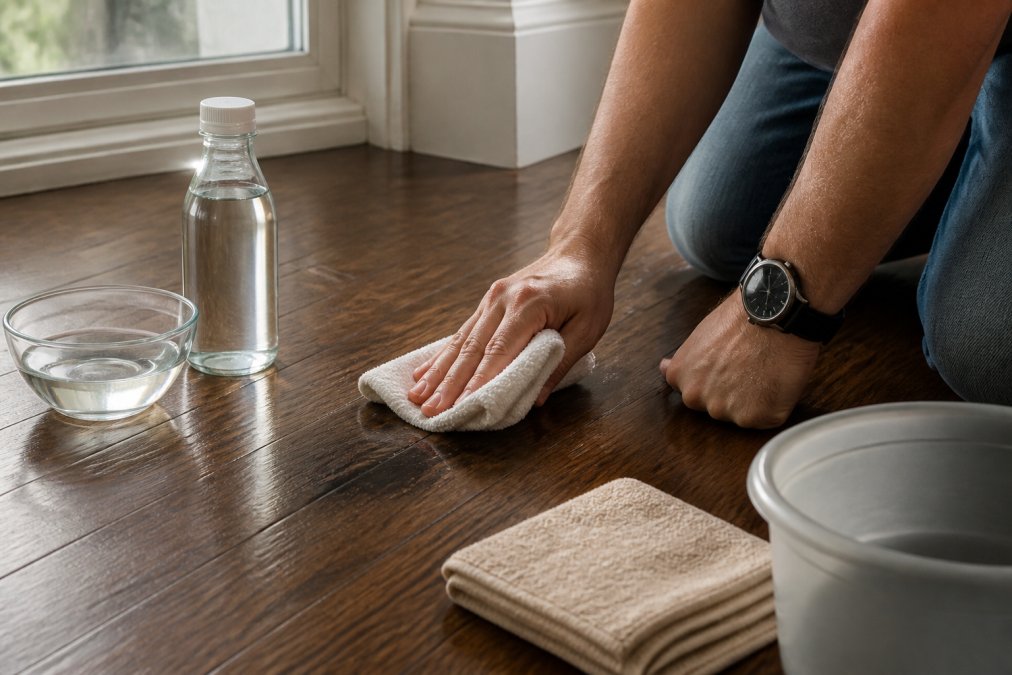
White distilled vinegar is a mild acid that lifts light marks and neutralizes odors. Mix one cup with one gallon of water, dampen a soft cloth, wring it until barely damp, and wipe with the grain. Never pour liquid directly onto the floor, and dry the spot right after.
Hydrogen peroxide works on dark spots from pet stains, juice, and other organic spills, gently lightening the wood fibers by oxidizing the pigment. Dampen a cloth with a three percent solution, the standard first-aid strength sold at any pharmacy, and blot the stain, watching closely because peroxide can lighten the wood itself if left too long. Test in an inconspicuous area first.
Baking soda absorbs moisture and neutralizes lingering smells. Sprinkle it over the spot, let it sit several hours or overnight, then vacuum it up. For sticky residue, dab the area with isopropyl alcohol on a clean cloth, it dissolves gunk without adding water, then follow with a dry cloth.
| Solution | Best For | How to Apply | Watch Out For |
|---|---|---|---|
| Vinegar and water | Light water-based stains, odors | Wipe with barely damp cloth | Dulls wax; dries out oil finishes |
| Hydrogen peroxide (3%) | Dark organic spots, pet stains | Blot, watch closely, repeat in short passes | Permanently lightens bare wood |
| Baking soda | Odor and moisture | Sprinkle, wait, vacuum | Leaves residue if applied wet |
| Isopropyl alcohol | Sticky residue, oil-based marks | Dab with clean cloth | Flammable; dissolves wax and shellac |
Pet stains are often the toughest call and need fast action. Urine soaks through the finish into the wood fibers within hours, which is why the smell often returns on humid days long after the surface looks clean, uric acid crystals sit deep in the grain and reactivate when moisture rises.
Start by blotting up any wet liquid with a clean cloth or paper towel. Do not rub, that pushes urine deeper and spreads it across a wider area of grain.
If the stain has reached Stage 3, black color, warped or cupped boards, odor that returns on humid days, cleaning is over. The pigment is in the wood fibers, and the only fix is sanding past the stained layer and applying a fresh finish.
Water damage shows up in stages, and the fix depends on how far it went. Light damage leaves a white, cloudy film on the finish. Deeper damage turns the wood dark or gray and can warp the boards.
The best cleaner for deep stains matches your finish and stain type, no single bottle fixes everything. What matters most is pH balance, a gentle formula, and the right application method.
Look for these qualities:
Call a professional when the stain has soaked into the wood grain, boards are warped or cupped, or home methods have failed. At that point the fix is sanding and refinishing, not cleaning, and guessing can cost you the whole floor.
Yes, dried stains on hardwood can often be removed, but the method depends on how deep the stain has penetrated. Surface-level dried stains respond well to a vinegar and water solution or a baking soda paste. For older, set-in stains, hydrogen peroxide applied to dark spots can lift discoloration. Always test on an inconspicuous area first, and if the stain has soaked into the wood grain itself, sanding and refinishing may be the only way to fully restore the floor.
A diluted mix of white distilled vinegar and a few drops of mild dish soap can lift light surface stains and cut through greasy residue, but it should never be used regularly. Over time, soap leaves a film that dulls the finish, and too much vinegar can break down wax or oil finishes. Use it as a spot treatment only, wring the cloth until it’s barely damp, and dry the area immediately. For routine cleaning, a pH-balanced hardwood cleaner is safer.
You can remove many deep stains without sanding by matching the treatment to the stain type. Hydrogen peroxide works on dark organic stains, a baking soda paste pulls up residue and odor, and isopropyl alcohol handles ink and marker spots. Apply to a small inconspicuous area first, let it sit briefly, then wipe with a damp cloth and dry fully. If the stain has penetrated past the finish into the wood fibers, no surface treatment will fully remove it and refinishing becomes necessary.
Call a professional when stains cover a large area, have been sitting for months, or have penetrated the wood grain despite your cleaning attempts. Water damage that has caused warping, cupping, or discoloration across multiple boards also signals that refinishing is needed rather than spot cleaning. A certified technician can assess your floor’s finish, determine whether cleaning or refinishing is the right path, and use controlled moisture methods to avoid causing further damage to older or delicate hardwood.
Deep stains don’t have to mean new floors. The trick is diagnosing the stain, testing your finish, and matching your method to both. When a stain has soaked past the surface, or when you’d rather not risk your floors, bring in a team that treats them with care. Get started with Stay Fresh Steam Cleaning and protect the floors you’ve already invested in.


