
- September 18, 2026
- in Blog
- by
- 11
- 0
Last Updated: September 18, 2026
The best way to prepare your house for a carpet cleaning service is to clear the floors and vacuum before the crew arrives, so technicians work faster and reach every part of your carpet.
This guide walks you through each step.
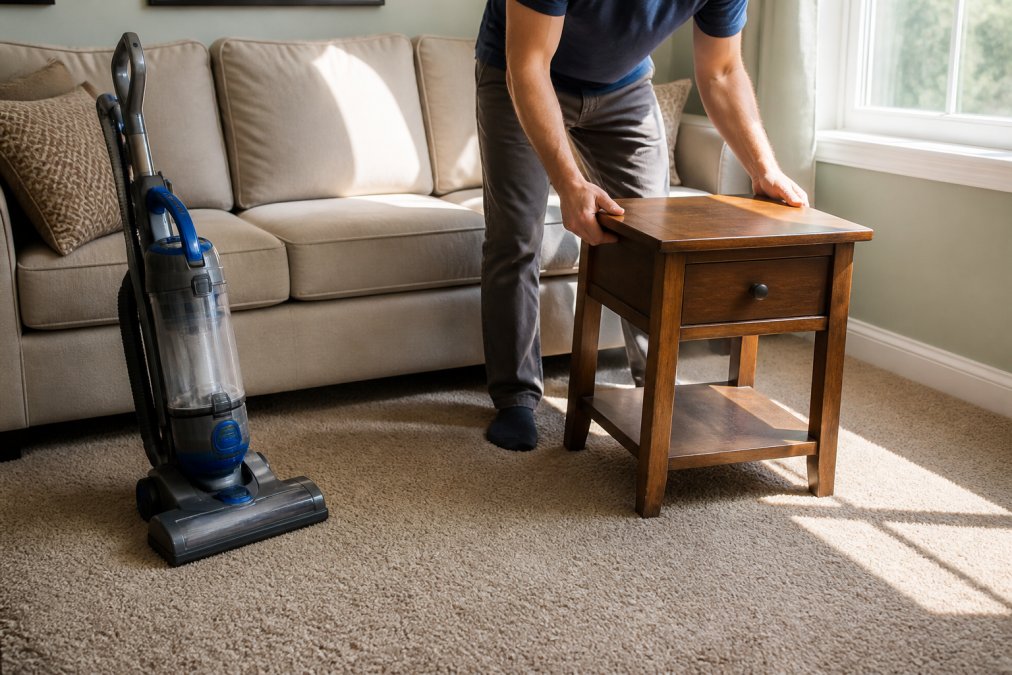
Clear as much furniture as you safely can. Move small items like chairs, lamps, and side tables to a hard floor or another room. Leave heavy pieces like sofas and beds for the crew, since most professional carpet cleaning services will move them.
Pick up these items before the visit:
A quick vacuum lifts loose dirt, crumbs, and pet hair before the deep clean starts, letting the cleaning solution reach the carpet fibers instead of fighting surface soil. Run your vacuum slowly over high-traffic areas, two passes per spot, then empty the canister.
Spot-treat visible stains and busy walkways before the appointment. Pre-treatment gives the cleaning solution time to break down soil and lets you flag problem spots so the technician can use the right chemistry. Focus on entryways, hallways, and the paths between rooms.
Not every stain responds to the same approach. A protein spill (milk, egg, pet accidents) sets with heat, so cold water and an enzyme cleaner work best. A tannin stain (coffee, tea, wine, juice) responds to a mild acidic solution. A grease or oil stain needs a surfactant-based degreaser. Using the wrong one can set the stain instead of lifting it.
Blot stains, never rub them. Rubbing pushes the spill deeper into the pile and can fray the fibers.
Avoid these common mistakes:
Most wall-to-wall carpet is one of four fibers, each reacting differently:
High-traffic lanes are thousands of tiny soil deposits packed into the pile, so spray-and-wait works better than spot blotting.
Some things are better left for the pros. Do not pre-treat:
Set up your home so the crew can move freely and your family stays safe.
Keep pets in a closed room or take them out during the visit, since the machine noise can spook even calm animals. Plan for kids to play in a dry area away from the wet carpet, which stays damp for hours.
Move small rugs off any hardwood floors in the work area. Wipe up splashes quickly, since standing water can dull a wood finish.
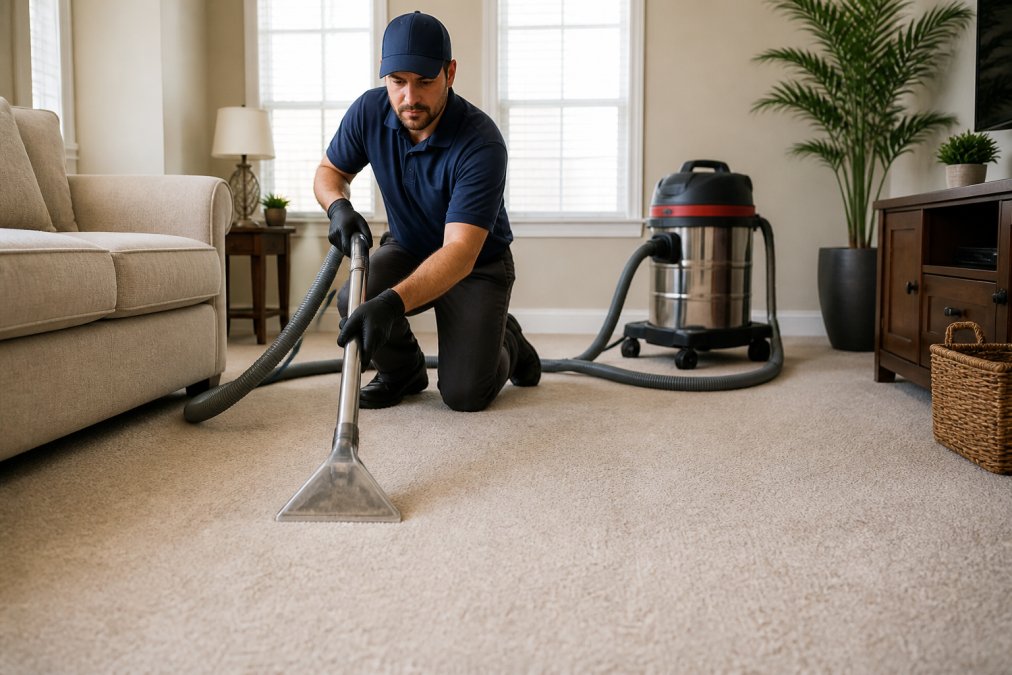
A typical visit starts with a walkthrough, then moves to pre-treatment, deep cleaning, and a final check. Most jobs take one to two hours depending on room count and soil level.
Here’s the usual flow:
Professional carpet cleaning reaches deeper than a rental machine, which often leaves more water and residue behind, leading to fast re-soiling.
| Factor | Professional Service | Rental Machine |
|---|---|---|
| Water heat | Hot water extraction | Warm tap water |
| Suction power | Commercial-grade | Consumer-grade |
| Residue left behind | Low, with rinse cycle | Often higher |
| Drying time | Faster | Slower |
| Best for | Deep soil, pet stains | Light touch-ups |
Carpet usually dries in 4 to 8 hours after steam cleaning, but that range is wide. Drying time depends on humidity, airflow, carpet thickness, pad type, and how much water the machine leaves behind. A thin, low-pile carpet in a dry room with good airflow can be dry in 3 to 4 hours, while a thick plush carpet over a dense pad in a humid house can still feel damp at 24 hours.
Four factors drive the clock:
Open windows and run fans to push air across the carpet. Turn on the air conditioning or a dehumidifier to pull moisture from the room. In humid months, a dehumidifier does more than an open window, since outside air may already be saturated.
Mold and mildew need moisture, warmth, and organic material. Carpet and pad supply the last two, so moisture is the only variable you control, and most mold spores need roughly 24 to 48 hours of sustained dampness to start colonizing.
If the carpet is still damp after 24 hours:
A professional service should stand behind its drying process. Call the company if:
Once the carpet is dry, vacuum it to lift remaining residue and restore the pile. Walk in socks the first day to avoid tracking outside soil onto freshly cleaned fibers, and keep the dehumidifier running a few extra hours after the surface feels dry, since the pad holds moisture longer than the carpet face.
Some issues pop up after the crew leaves, but most are easy to fix once you know the cause.
Yes, vacuuming before your carpet cleaning service arrives is one of the most helpful things you can do. It removes loose dirt, pet hair, and debris from carpet fibers so the technicians can focus on deep extraction and stain removal. Pay extra attention to high-traffic areas and under furniture. A thorough pre-vacuum can improve the final results and help your carpets stay cleaner longer.
Most carpets dry within 4 to 6 hours after professional steam cleaning, though humidity and ventilation affect timing. Running ceiling fans, opening windows, and using a dehumidifier can speed up drying time. Avoid walking on damp carpet with street shoes, and keep pets off until fully dry. If carpet stays wet longer than 24 hours, call your cleaner, as poor extraction or excess moisture may be the cause.
Move small items like lamps, plants, and electronics, but leave heavy furniture for the technicians. Professional cleaners are trained to move sofas and beds safely and often place protective blocks under legs to prevent stains. Clear breakables and clutter from the floor so technicians can work efficiently. If you have fragile or high-value pieces, mention them so the team can plan accordingly.
Keep pets in a separate room or outside while technicians work. The noise from hot water extraction equipment and the presence of strangers can stress animals, and damp carpet is unsafe for paws. Wait until carpets are completely dry before letting pets back in. If your pet has a favorite spot, point it out to the cleaner so they can give extra attention to pet stains and odors.


