
- September 17, 2026
- in Blog
- by
- 11
- 0
Last Updated: September 17, 2026
Finding the best grout cleaners for heavily stained tile comes down to matching the stain type to the right formula. Grease, hard water minerals, mold, and rust each respond to different chemistry, and using the wrong product wastes time and money. This guide from Stay Fresh Steam Cleaning breaks down five proven options, what each one handles best, and how to use them without damaging your tile.
Grout is the porous cement-based material filling the joints between tiles. Because it is porous, it absorbs oil, minerals, and organic matter that regular mopping cannot lift.
Here is how the five picks stack up before we get into the details:
| Cleaner | Best For | Starting Price | Main Drawback |
|---|---|---|---|
| Zep Grout Cleaner and Brightener | White grout restoration | $10 | Strong acidic odor |
| Aqua Mix Heavy Duty Cleaner | Kitchen grease | $20 | Requires dilution |
| CLR Calcium, Lime, and Rust Remover | Hard water stains | $9 | Careful use near metal |
| Soft Scrub with Bleach Gel | Bathroom mold and mildew | $5 | Not for colored grout |
| Better Life Tub & Tile Cleaner | Pet-safe households | $7 | More scrubbing needed |
Below, we’ll show you exactly how to use each one and which mistakes to avoid.
Zep Grout Cleaner and Brightener is the strongest pick here for restoring white grout that has turned gray or brown over years of foot traffic. Its acidic formula dissolves deep-set dirt that alkaline cleaners leave behind.
What makes it work is the acid base. Most everyday cleaners are alkaline, which handles grease well but struggles with mineral and organic staining. Acid does the opposite, and that is exactly what old, discolored white grout needs.
The trade-off is real: the fumes are harsh. Open a window, run a fan, and wear gloves. Never mix it with bleach or ammonia-based products.

Aqua Mix Heavy Duty Tile and Grout Cleaner is the top choice for kitchen floors where cooking oil and grease have worked their way into the grout. It is a concentrated, high-alkaline formula you dilute to match the job.
Alkaline cleaners break down fats and oils, which is why this one outperforms acidic products on kitchen tile. The concentrate also stretches further per bottle, so the higher upfront cost evens out over time.
Dilution is the catch. Mix too weak and it underperforms; mix too strong and you waste product. Follow the label ratios and start with the weakest mix that works.
CLR Calcium, Lime, and Rust Remover is the go-to for grout discolored by hard water, limescale, or rust. These mineral deposits bond tightly to grout and shrug off ordinary cleaners.
Hard water leaves behind calcium and magnesium deposits that build up in layers. CLR dissolves those layers instead of scrubbing them away, which saves both effort and your grout’s surface. It carries EPA Safer Choice certification, so it meets a recognized standard for safer chemistry.
Use caution around metal fixtures. The formula can dull or damage certain metals, so rinse thoroughly and avoid prolonged contact.

Soft Scrub with Bleach Cleaner Gel handles the black and green staining that shows up in showers and other damp spots. Its thick gel clings to vertical tile instead of running off before it can work.
Bleach kills mold and mildew at the source and whitens the grout line at the same time. The mild abrasive adds scrubbing power for surface grime. For a full breakdown of how bleach interacts with grout and tile, the EPA’s guide to safe and effective cleaning products is a solid reference.
One hard rule: never use bleach-based gel on colored grout. It will strip the color.
Better Life Tub & Tile Cleaner is the pick for households with pets or young children who want to avoid harsh fumes. It uses tea tree and eucalyptus oils instead of bleach or strong acids.
It dissolves soap scum and light mineral deposits well, and it is free of synthetic fragrances and dyes. The honest limitation: heavily stained grout needs more elbow grease. This is a maintenance cleaner, not a restoration product.
For homes where grout has not been cleaned in years, plan on a stronger product first, then maintain with this one.
Removing stubborn grout stains starts with matching the cleaner to the stain, then giving it time to work before you scrub. Scrubbing first is the most common mistake, and it pushes dirt deeper into the pores.
Follow this sequence:
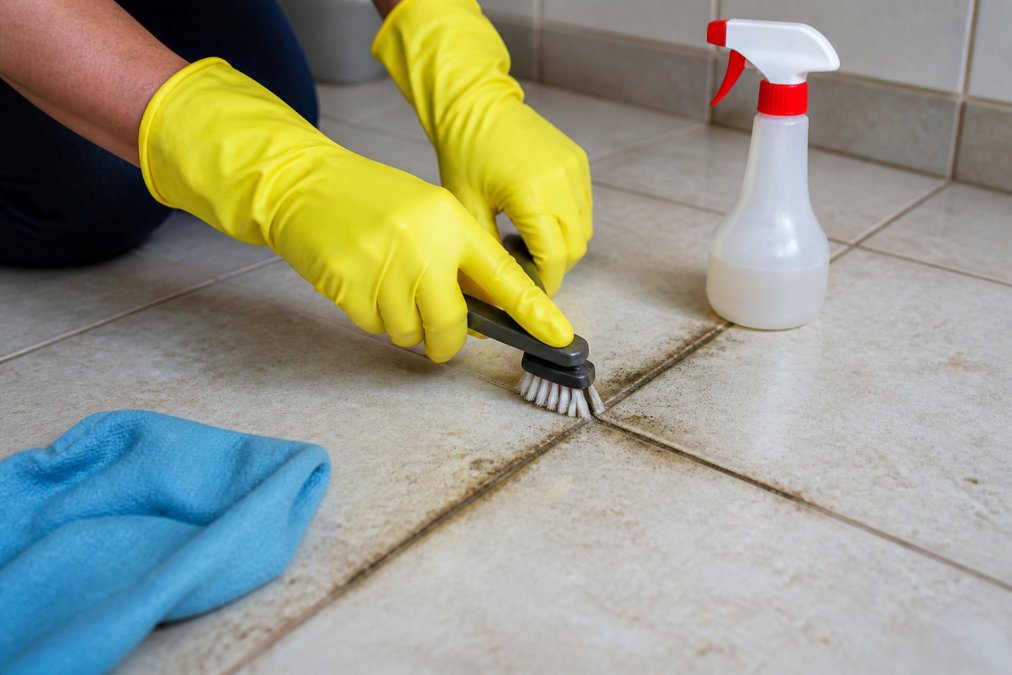
The best tools for scrubbing grout are a stiff nylon brush and a grout brush with a narrow head. Wire brushes and steel wool scratch tile and grind down grout, so leave them in the drawer.
Most grout cleaners need 3 to 5 minutes of dwell time, though heavy stains may need up to 10. Check your product’s label, since dwell time varies by formula.
Dwell time is where results are won or lost. Too short and the cleaner never breaks the stain down. Too long and it can dry out, which leaves residue and can damage some grout types. Never let a cleaner dry on the surface.
For tough stains, apply, wait, agitate, then repeat rather than leaving one application on longer.
If years of buildup have pushed your tile past what a store-bought cleaner can fix, professional equipment reaches deeper. Stay Fresh Steam Cleaning uses advanced methods to restore tile and grout, backed by certified, background-checked technicians and a satisfaction guarantee with a re-cleaning policy.
Start with a heavy-duty grout cleaner matched to the stain type. For grease, use an alkaline cleaner like Aqua Mix. For mineral or rust stains, use CLR. Apply the cleaner, let it sit for the time listed on the label (usually 5 to 10 minutes), scrub with a stiff brush, and rinse. For grout that stays dark after two or three rounds, a professional steam cleaning can lift what chemicals leave behind.
Vinegar is acidic, and repeated use can erode grout over months or years, especially if your grout is cement-based and unsealed. It also breaks down sealant faster than pH-neutral cleaners. If you use vinegar for light maintenance, dilute it and rinse thoroughly. For heavily stained tile, a dedicated grout cleaner designed for your stain type will work faster and cause less long-term damage.
Most grout cleaners need 5 to 10 minutes of dwell time to break down stains. Thick gels and foams can sit longer, up to 15 minutes, without drying out. Acidic cleaners like Zep or CLR should not sit more than 10 minutes because they can etch grout or tile if left too long. Always check the label, and never let any cleaner dry on the surface.
Chemical cleaners work well for surface stains and are easy to use at home. Steam cleaners reach deeper into grout pores and kill mold and bacteria without chemicals, which matters if you have pets or kids. For heavily stained tile that has not responded to two or three chemical treatments, professional steam cleaning is the more effective option because it combines heat, pressure, and extraction.
For bathrooms and kitchens, deep clean grout every 3 to 6 months depending on traffic and moisture. High-use floors in restaurants or rental properties may need it every 4 to 8 weeks. Between deep cleans, sweep or vacuum and mop with a pH-neutral cleaner weekly. Sealing grout after cleaning slows future staining and extends the time between deep cleans.
Stubborn grout stains resist the same cleaner that works on light buildup, and guessing wastes your weekend. Matching the formula to the stain, then letting it dwell, gets you most of the way there. When the buildup has gone too deep for retail products, professional cleaning restores the surface without the risk of damage from over-scrubbing. Contact Stay Fresh Steam Cleaning to schedule a tile and grout assessment and get your floors looking clean again.


