
- 11
- 0
Table of Contents
- Epoxy vs Cement Grout: What Actually Differs
- Does Epoxy Grout Need to Be Sealed?
- Does Cement Grout Need to Be Sealed?
- Epoxy vs Cement Grout Sealers: Cost, Durability, and Cracking Compared
- Best Grout Sealer for Cement Grout: How to Choose and Apply
- How to Clean Grout Without Damaging the Sealer
- Matching Grout Sealers to Tile, Installation, and Room Conditions
- Conclusion
- Frequently Asked Questions
Last Updated: October 20, 2026
Epoxy vs Cement Grout: What Actually Differs
Choosing between epoxy and cement grout sealers starts with a fact most guides bury: these are two different products solving two different problems. Epoxy grout is a resin-based, two-part system that cures hard and resists water on its own. Cement grout is porous and needs a sealer to survive.
Here is what matters most: you do not choose a sealer for epoxy grout the way you choose one for cement grout, because epoxy usually does not need one at all. Below, we break down composition, sealing requirements, cost, and maintenance.
Composition and How Each Grout Cures
Epoxy grout mixes a resin and a hardener and cures through a chemical reaction, leaving a dense, non-porous joint that sheds water. Cementitious grout blends Portland cement, sand, and pigments, and cures by hydration like concrete, which leaves microscopic pores behind.
Porosity, Water Absorption, and Stain Resistance
Porosity is the dividing line. Epoxy grout absorbs almost no water, so moisture and stain resistance come built in. Cement grout absorbs water readily, which is why spilled red wine or a pet accident sinks in fast. A quality grout sealer slows that absorption but never stops it completely.
Key Takeaway
If a grout line darkens and stays dark after a spill, the sealer has failed. That is your signal to reseal, not to scrub harder.
If a grout line darkens and stays dark after a spill, the sealer has failed. That is your signal to reseal, not to scrub harder.
Does Epoxy Grout Need to Be Sealed?
No. Epoxy grout does not need to be sealed because the cured material is already non-porous. A penetrating sealer has nothing to soak into, and a topical sealer only forms a film that peels and discolors.
One exception: some installers apply a light sealer to epoxy grout for easier cleanup during the first few weeks. It is optional and does not extend the grout’s lifespan. For a shower or commercial kitchen floor, the epoxy itself is the protection.
Does Cement Grout Need to Be Sealed?
Yes. Cement grout needs sealing because it is porous by nature. Without a sealer, water, oil, and cleaning chemicals work into the joint, and once grime gets below the surface, scrubbing cannot pull it back out. Sealing keeps the joint structurally sound and visually consistent.
Epoxy vs Cement Grout Sealers: Cost, Durability, and Cracking Compared
Epoxy wins on durability; cement grout wins on upfront cost and flexibility. Epoxy resists cracking better in wet areas and holds color far longer, but costs more and demands a skilled installer, since epoxy haze on tile faces is hard to remove once set. Cement grout is cheaper and more forgiving to install, but needs recurring resealing.
| Factor | Epoxy Grout | Cement Grout |
|---|---|---|
| Sealing required | Rarely | Yes, recurring |
| Water absorption | Very low | High without sealer |
| Stain resistance | High | Moderate with sealer |
| Cracking risk | Low | Higher in movement |
| Upfront cost | Higher | Lower |
| Skilled installer needed | Yes | Preferred |
| Best for | Showers, kitchens, high-traffic areas | Standard floors, budget projects |
What Drives the Cost Difference
The price gap comes from material, labor, and the sealer schedule. Epoxy grout material typically runs several times the cost of cementitious grout, and because it sets fast and punishes sloppy cleanup, a skilled installer is not optional.
Compare the whole job, not the bag. Ask for a line-item quote separating grout material, labor, and sealer application, then add recurring sealer cost over the floor’s expected life. Most homeowners find cement grout is cheaper on day one and closer to parity over a decade once resealing labor is counted.
Durability, Cracking, and Color Consistency
Epoxy grout’s cured resin matrix is dense and flexible enough to tolerate minor movement, so it cracks less often in showers and on floors with seasonal expansion. It also holds pigment uniformly, minimizing batch-to-batch color variation.
Cement grout is rigid and porous. It cracks when the substrate moves, joints are too wide, or grout dries too fast. Color consistency is a weak point: efflorescence and uneven pigment dispersion leave joints blotchy, and no sealer corrects that once it sets.
Lifecycle Cost and Maintenance Over Time
The cheaper material is not always the cheaper floor. Cement grout adds years of sealer purchases, reapplication labor, and deeper cleaning. Epoxy grout front-loads the expense and then asks very little. On a rental with frequent turnover, that difference shows up in every move-out clean.
Cement grout in a wet area typically needs resealing every 12 to 24 months, with a deep clean in between. Over ten years that is several sealer applications plus prep labor. Epoxy grout in the same area usually needs only routine cleaning.
Watch Out
Skipping resealing on cement grout in a wet area lets moisture sit against the tile edge. Over time that shows up as loose tile and crumbling grout, which is a repair job rather than a cleaning job.
Skipping resealing on cement grout in a wet area lets moisture sit against the tile edge. Over time that shows up as loose tile and crumbling grout, which is a repair job rather than a cleaning job.
Failure Modes to Watch For
- Haze: epoxy residue left on tile faces cures hard and dulls the surface; it must be removed before it sets, which is why installer skill matters.
- Pinholes: epoxy mixed too fast or applied too thin can trap air, leaving tiny voids that collect dirt.
- Efflorescence: cement grout can bloom white as soluble salts migrate to the surface; sealing too soon traps moisture and worsens it.
- Cracking: movement, wide joints, or rapid drying cause cement grout to crack; flexible sealant at changes of plane is the standard fix.
- Color variation: inconsistent mixing or batch differences show up in cement grout; epoxy is more uniform but not immune to poor mixing.
Best Grout Sealer for Cement Grout: How to Choose and Apply
The best grout sealer for cement grout is a penetrating sealer, not a topical one. Penetrating sealers soak into the pores and repel water from inside the joint. Topical sealers sit on the surface as a film, look glossy at first, then wear, peel, and trap dirt at the edges.
Penetrating vs Topical Sealers
Penetrating sealers leave grout looking natural and last longer between applications, lining the pore walls with a water-repellent molecule so water beads instead of soaking in.
For most homes, penetrating is the practical choice. Look for a product labeled for cementitious grout and compatible with your tile. Water-based formulas are lower in odor and easier to clean up; solvent-based formulas sometimes penetrate more deeply on dense grout. The label should state a recoat window, full cure time, and tile types to avoid.
Surface Preparation and Cure Time
Sealer failure is usually preparation failure. New cement grout must cure fully before sealing, typically several days to a week depending on product and humidity; sealing too soon traps moisture and causes cloudy or patchy results.
The joint must be dry before application. Drip water on the grout: if it beads, the surface is sealed or still damp; if it absorbs evenly, the grout is ready. Test a small hidden patch first.
Application Steps That Actually Hold Up
- Clean the grout thoroughly and let it dry completely.
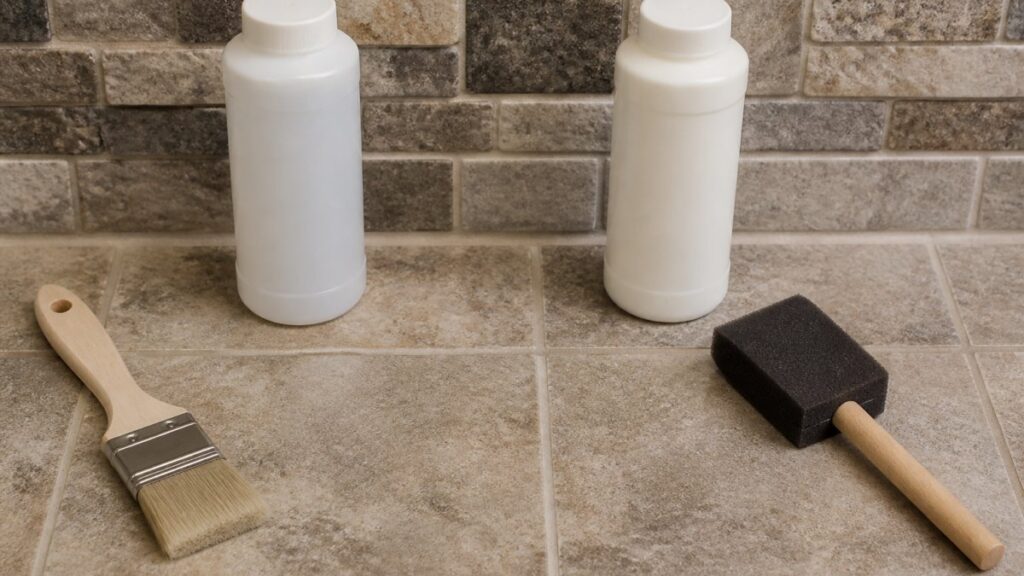
- Apply the sealer in thin, even coats with a small applicator, working it into the joint rather than flooding the tile.
- Wipe excess from the tile face before it dries, especially on natural stone and matte porcelain.
- Let it cure for the full time on the label before exposing it to water or cleaners.
- Reapply when the water test shows absorption again.
Pro Tip
Apply sealer to a small hidden patch first. If the grout darkens unevenly, the joint was not fully dry, and the sealer will cure cloudy.
Apply sealer to a small hidden patch first. If the grout darkens unevenly, the joint was not fully dry, and the sealer will cure cloudy.
Matching the Sealer to Tile and Installation
Tile and installation compatibility matters as much as sealer chemistry. Acid-sensitive natural stone such as marble and limestone can be etched by certain sealer carriers; check the label first. Very narrow or wide joints may need different tools, and fresh grout needs full curing before sealing. Manufacturer instructions for both grout and tile override generic advice, so keep the data sheets on hand.
When to Reseal
How often you reseal depends on traffic and moisture. A busy kitchen floor or rental property needs attention more often than a guest bathroom. Drip water on the grout, wait a few minutes, and if it darkens instead of beading, it is time to reseal. In a shower, check every six to twelve months; on a low-traffic floor, every year or two is often enough.
How to Clean Grout Without Damaging the Sealer
Cleaning grout without damaging the sealer means using the mildest method that works. Harsh acids and stiff wire brushes strip the sealer and scratch the tile, which shortens the life of both.
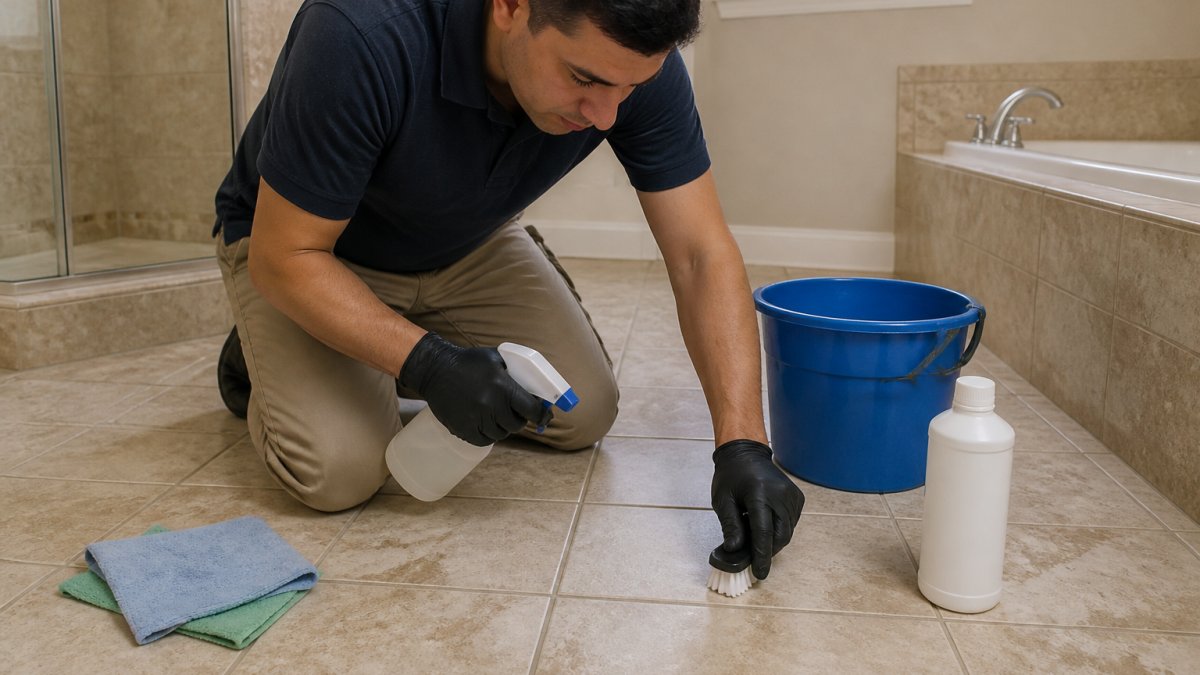
A safe routine:
- Sweep or vacuum loose debris first.
- Use a soft-bristle brush with a pH-neutral cleaner.
- Work in small sections and rinse with clean water.
- Blot spills immediately instead of scrubbing them in.
- Avoid bleach-heavy products on a fresh sealer.
For pet accidents and set-in stains, the EPA guidance on safe and effective cleaning products is a useful reference for choosing household cleaners, and the Tile Council of North America installation standards covers how grout and tile should be maintained together.
Matching Grout Sealers to Tile, Installation, and Room Conditions
Matching a sealer to the room matters as much as matching it to the grout. Wet areas, outdoor patios, and high-traffic kitchens each demand something different, and a sealer chosen for a bathroom may fail on a sun-exposed patio.
- Showers and wet areas: prioritize moisture resistance and mold resistance.
- Kitchens: prioritize stain resistance and chemical resistance to cooking oils.
- Outdoor use: prioritize weather resistance and UV stability.
- High-traffic areas: prioritize durability and a schedule you will actually keep.
- Radiant heat or large tile fields: confirm compatibility with movement joints before sealing.
Some natural stone tiles should never be sealed with certain products, and newly installed grout needs full curing before any sealer goes on. When in doubt, seal a test patch and wait.
Best For
Homeowners with cement grout in kitchens and bathrooms who want a simple resealing routine they can repeat twice a year.
Homeowners with cement grout in kitchens and bathrooms who want a simple resealing routine they can repeat twice a year.
Conclusion
The choice is simpler than the marketing suggests. Epoxy grout is the set-and-forget option for wet, busy spaces, and cement grout is the budget-friendly choice that rewards consistent sealing. Whichever you have, the sealer is what decides how long it lasts.
If resealing and deep grout cleaning keep sliding down your list, that is where we come in. Stay Fresh Steam Cleaning offers professional tile and grout cleaning, and our certified, background-checked technicians handle carpet, upholstery, and tile with a satisfaction guarantee and a re-cleaning policy behind it.
Frequently Asked Questions
Does epoxy grout need to be sealed?
No. Epoxy grout is non-porous, so it does not absorb water or stains the way cement grout does, and sealing it is unnecessary for most installations. A sealer cannot penetrate the surface, so it sits on top and can peel or haze. If you want extra protection on epoxy grout, use a topical sealer made for epoxy, not a penetrating sealer. In showers and kitchens, regular cleaning with a pH-neutral product does more for long-term performance than adding sealer.
What is the best grout sealer for cement grout?
A penetrating sealer is the right choice for cementitious grout. It soaks into the porous surface and blocks water and stains without leaving a film that can chip. Look for a water-based penetrating sealer rated for wet areas if the grout is in a shower or kitchen. Apply it to clean, fully cured grout, wipe off excess within the manufacturer’s window, and plan to reseal every 1 to 3 years depending on traffic and cleaning habits.
Is epoxy grout worth the extra cost compared with cement grout?
It depends on the room. Epoxy grout costs more in material and labor, and it requires a skilled installer because it sets fast and is hard to clean up once cured. In return, it resists stains, moisture, and chemicals, which suits showers, kitchens, and high-traffic floors. Cement grout costs less upfront but needs sealing and resealing over time. Add up sealer, labor, and replacement costs over ten years before deciding which budget fits.
Can you apply sealer over epoxy grout?
You can apply a topical sealer over epoxy grout, but it is rarely needed. Epoxy is already non-porous, so a penetrating sealer has nothing to soak into and will just sit on the surface, causing haze or peeling. If you do seal epoxy, choose a product labeled for epoxy surfaces and clean the grout thoroughly first. In most cases, routine cleaning with a pH-neutral cleaner keeps epoxy grout looking new without any sealer at all.


