What Colored Grout Sealant Actually Does (And What It Doesn’t)
Colored grout sealant is a pigmented coating that bonds to cementitious grout lines to restore uniform color while adding a protective barrier against stains and moisture. It differs from a clear penetrating sealer, which soaks into the grout and leaves the existing color untouched.
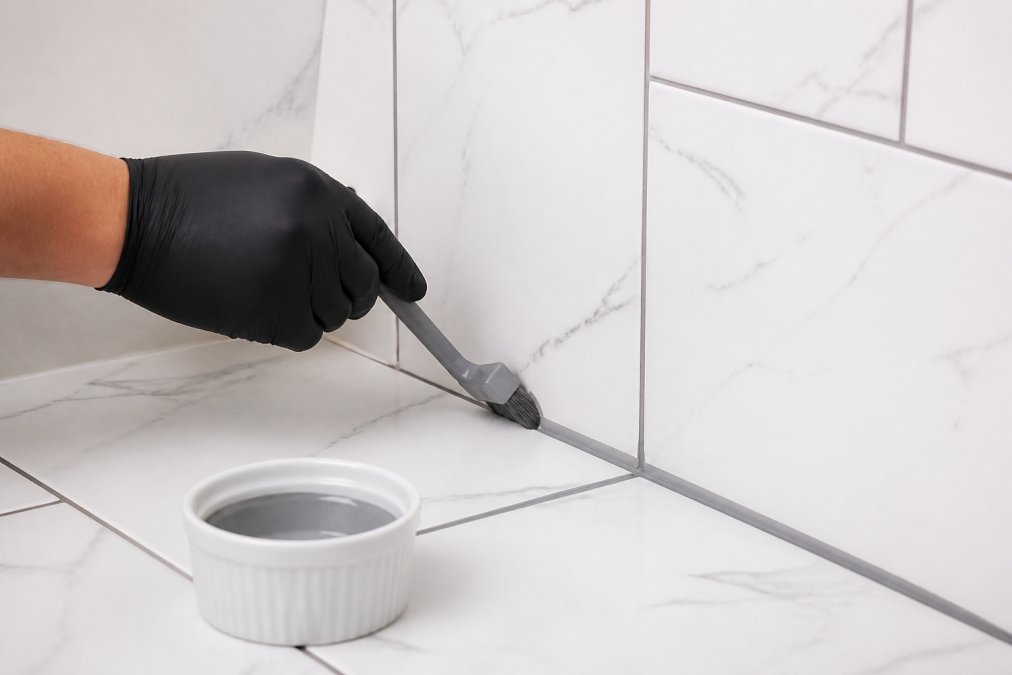
Homeowner using a small brush to apply colored grout sealant to bright kitchen tile lines
Watch Out Applying color sealer over damp, dirty, or cracked grout traps moisture underneath. The coating peels in sheets, often within a single season, and removal is far harder than the original application.
How Long Does Grout Color Sealer Last?
Most quality color sealers last three to five years in residential settings. High-traffic areas, showers, and floors cleaned with harsh chemicals shorten that window considerably.
Durability depends on three things:
Surface preparation: Grout must be cleaned, etched, and fully dry before application
Product quality: Acrylic-based sealers vary widely in bonding strength
Maintenance: Mild pH-neutral cleaners preserve the coating; acid wash products destroy it
Pros and Cons of Grout Color Sealing
Weighing color sealing against clear sealing comes down to what you actually want from the grout.
Uniform color: Covers patchy, stained, or mismatched grout lines in one pass
Stain resistance: The surface barrier stops spills from soaking into porous grout
Mold and mildew inhibition: Less moisture absorption means less growth in wet areas
Aesthetic upgrade: A dated floor can look newly installed without re-grouting
Where It Falls Short
It’s a coating, not a cure: Poorly prepped grout causes peeling and flaking
Color is permanent: Once applied, you can’t lighten it without chemical removal
Ongoing cost: Reapplication every few years adds up versus a one-time clear sealer
Not for every tile: Natural stone and some specialty tiles need different products
Key Takeaway Color sealing earns its cost when grout is stained but structurally sound. If the grout is failing, spend the money on re-grouting first.
How to Apply Grout Color Sealer: Step-by-Step
Getting the application right matters more than the product you choose. Most failures trace back to skipped steps, not bad sealer.
Clean the grout thoroughly. Remove dirt, soap scum, and old sealer residue. A dedicated grout cleaner and stiff brush work for most jobs.
Etch the surface. Lightly scuff the grout so the colorant can bond. This is the step DIYers skip most often.
Let it dry completely. Moisture under the coating causes peeling. Wait at least 24 hours after cleaning.
Apply with a small brush or applicator. Work in small sections, pressing the sealer into the grout lines.
Wipe the tile face immediately. Any sealer left on the tile surface dries into a haze that’s hard to remove.
Respect curing time. Keep foot traffic off the floor for the period the manufacturer specifies, often 24 to 48 hours.
DIY Kit vs. Professional Application: What the Price Really Buys
A DIY kit costs far less upfront, and for a small bathroom in good condition, it can work fine. What you’re really paying for with professional application is preparation and consistency.
Factor
DIY Kit
Professional Application
Upfront cost
Lower
Higher
Surface prep
Your time and tools
Included, done correctly
Color consistency
Varies by technique
Uniform across the floor
Time investment
A full weekend or more
Handled in one visit
Failure risk
Higher on large or damaged grout
Lower, with rework covered
Best for
Small, clean, low-traffic areas
Large floors, showers, damaged grout
Pro Tip On any job larger than a single small bathroom, the prep work alone (cleaning, etching, drying) usually takes longer than the application. That’s the hidden cost most DIY guides leave out.
What Drives the Cost of Colored Grout Sealant
Pricing depends on square footage, grout condition, and access. These are the variables that move the number most:
Square footage: Larger areas cost more in both product and labor
Grout condition: Heavily soiled or damaged grout needs extra prep
Tile size: Smaller tiles mean more grout lines per square foot, so a 12×12 floor costs less to seal than a 2×2 mosaic of the same area
Location: Showers, backsplashes, and tight spaces take longer than open floors
Existing sealer: Old coatings must be stripped before new ones go down, and stripping is often the single largest line item
The Cost-Per-Year Framework Most Guides Skip
Annual cost = (upfront cost + expected reapplication cost) ÷ expected years of service
Worked through with typical residential figures:
A DIY color-sealing kit for a small bathroom runs roughly the cost of the kit plus a weekend of your time. If it lasts three years before peeling, the annual cost is the kit price divided by three.
A professional color-sealing job on a large floor costs several times the DIY kit, but a properly prepped job commonly holds three to five years.
A clear penetrating sealer costs less upfront and often lasts longer, but it does nothing for discoloration. If appearance is the goal, the clear sealer is the wrong line item entirely.
Re-grouting is the most expensive option by a wide margin and is the only one that fixes crumbling or loose grout. Color sealing is not a substitute for it.
Failure Analysis: Why Some Jobs Peel, Flake, or Discolor
Peeling almost always comes back to moisture or contamination. If the grout wasn’t fully dry, or if soap residue remained, the coating has nothing to bond to. Flaking follows the same pattern, often starting in wet areas where moisture pushes up from below.
Watch Out A failed color sealer cannot be recoated successfully. The old coating must be removed first, and removal labor often exceeds the original application cost. Budget for it before you apply, not after.
Pro Tip Ask any provider to quote stripping separately from application. If they won’t, you have no way to compare the true cost-per-year of their job against a DIY kit.
Tile Compatibility, Environmental Impact, and the Long-Term Math
Not every tile plays well with color sealer, and getting this wrong is one of the most common reasons a job fails.
Which Tiles Accept Color Sealer
Ceramic and porcelain: Straightforward. The tile face is non-porous, so sealer wipes off cleanly and bonds only to the grout.
Natural stone (travertine, marble, slate, limestone): Porous and absorbent. A standard color sealer can stain the stone face or bond where you don’t want it. These surfaces need a product formulated specifically for stone, and often a pre-sealed test patch in an inconspicuous area first.
Epoxy grout: Does not absorb sealer at all. Color sealing is pointless because there is nothing for the coating to bond to.
Cracked or glazed tile: Sealer can wick into cracks and cure unevenly. Repair the tile before sealing.
A practical test: apply a small amount to an inconspicuous grout line, wait the full cure time, then check adhesion and color. If it peels or the color shifts, the product is wrong for that tile.
Environmental and Household Safety
Water-based and low-VOC formulas have become the norm for indoor use. They produce less odor, are easier to clean up, and are the safer choice for households with pets or young children. Solvent-based products still exist and can off-gas for days after application.
A clear penetrating sealer costs less and lasts longer, but it won’t fix discoloration. Color sealing costs more and needs reapplication, but it restores appearance and adds stain resistance in one step. If your grout is sound and you like its color, go clear. If it’s stained and you want it to look new, color sealing is the better spend.
The decision comes down to three questions:
Is the grout structurally sound? If not, repair or re-grout first.
Do you want to change the color or just protect it? Color change requires color sealer.
How long do you plan to stay? A short horizon favors the cheaper clear sealer; a long one favors a properly applied color sealer amortized over its service life.
Key Takeaway Color sealer is worth the price when the grout is sound, the tile is compatible, and you want a color change. It is not worth the price when the grout is failing, the tile is porous natural stone without a matching product, or you only want protection and already like the color.
Frequently Asked Questions
Is color sealing grout worth it compared to standard clear sealers?
It depends on what you need. Clear penetrating sealers protect grout without changing its color, but they cannot hide existing stains or discoloration. Colored grout sealant adds pigment plus a protective barrier, so it restores uniform color while blocking stains. If your grout is stained, faded, or uneven, color sealing delivers two results for one job. If your grout looks fine and just needs protection, a clear sealer costs less and does the job.
How long does grout color sealer last?
Most colored grout sealers last 3 to 5 years on floors and up to 5 to 7 years on walls or low-traffic areas, depending on the product and how well the surface was prepped. High-traffic zones like kitchen floors and entryways wear faster. Proper surface preparation, including a full acid wash and rinse, is the biggest factor in how long the sealer holds up. Skipping prep leads to peeling and flaking within months, not years.
Does colored grout sealant prevent mold and mildew in showers?
It helps, but it is not a mold cure. Colored sealant creates a moisture barrier that limits how much water soaks into grout pores, which reduces the conditions mold needs to grow. Some products are formulated specifically for high-humidity areas. You still need regular cleaning and ventilation. If mold has already colonized the grout or the subfloor, sealing over it traps the problem instead of solving it.
Can I apply colored grout sealer myself or should I hire a professional?
DIY kits work for small areas in good condition, but the margin for error is narrow. Color sealer bonds only to a completely clean, dry, contaminant-free surface. Miss a patch of soap scum or old sealer and the new coat peels within weeks. Professionals handle surface preparation, acid washing, and curing time correctly. For a single bathroom, DIY may save money. For whole floors or grout with heavy discoloration, professional application prevents a costly redo.
Does colored grout sealer peel or flake over time?
It can, and the cause is almost always preparation or moisture, not the product. Common failure points include applying over a damp subfloor, skipping the acid wash, using too much colorant in one pass, or sealing grout that still has old sealer residue. When applied to a properly prepped surface and given full curing time, colored sealant adheres firmly. If peeling starts, the fix requires stripping the failed coat and redoing the prep, not just touching up the spot.
Grout that’s stained, discolored, or coated with a failed sealer is a job best left to people who do it every day. Stay Fresh Steam Cleaning handles tile and grout restoration across homes and businesses, with certified, background-checked technicians and a satisfaction guarantee backed by a re-cleaning policy. Our team preps, seals, and finishes the job so the result lasts. Get started with Stay Fresh Steam Cleaning and give your tile the finish it deserves.
What makes Cleanmate trusted above other cleaning service providers? When you combine higher standards, smarter strategies and superior quality all in one package, the result is top notch.