- September 21, 2026
- in Blog
- by
- 3
- 0
Last Updated: September 21, 2026
Carpeting acts as a reservoir for indoor allergens, holding dust mites, pet dander, and pollen deep within its fibers until disturbance sends them back into the air you breathe. Understanding why professional carpet cleaning is necessary for allergies starts with recognizing that a carpet is not just a floor covering; it is an active filtration system that traps pollutants but requires proper maintenance to keep them contained.
Three allergens dominate most carpeted homes. Dust mites feed on shed skin cells and thrive in humid conditions. Pet dander consists of microscopic proteins from skin, saliva, and urine that cling to carpet pile. Pollen enters from outdoors and settles into fibers, triggering allergic rhinitis and asthma symptoms long after pollen season ends.
Here is what most cleaning guides miss: allergens do not stay trapped forever. Walking, vacuuming with a weak machine, or even sitting down disturbs settled particles and launches them back into the air. This re-suspension effect means a poorly maintained carpet can worsen indoor air quality rather than improve it. The finer the particle, the longer it stays airborne and the deeper it travels into the respiratory tract.
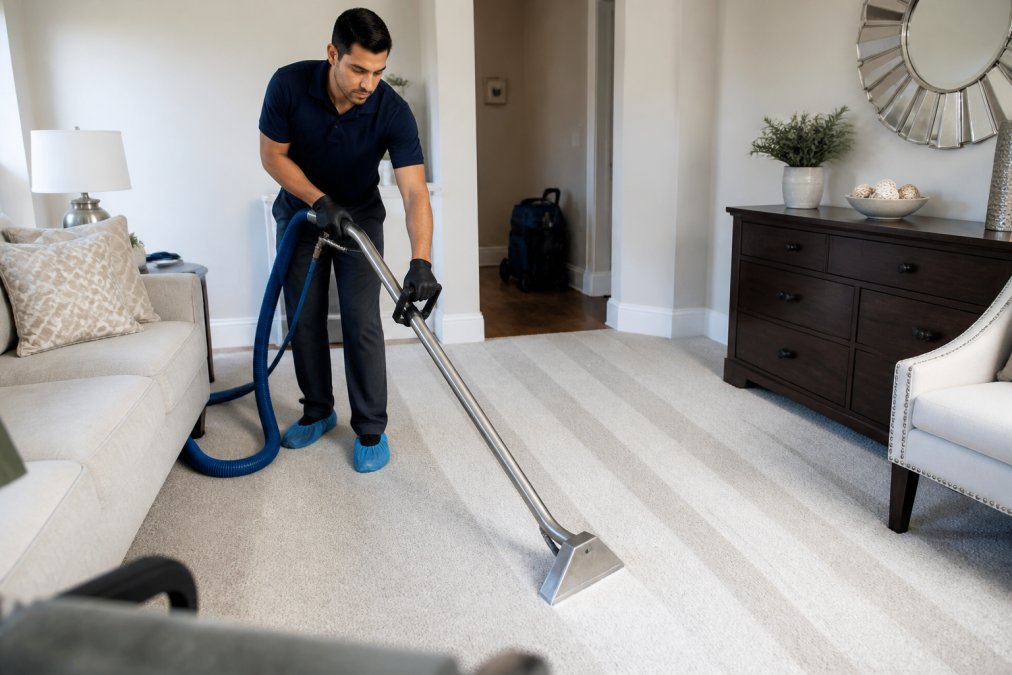
Professional carpet cleaning removes the allergens that routine vacuuming leaves behind, using extraction methods that flush contaminants from deep within the carpet pile rather than just surface cleaning. For allergy sufferers, this distinction matters more than any other factor.
For people with asthma or allergic rhinitis, allergen buildup in carpet is not a minor inconvenience. Airborne particles trigger respiratory symptoms, disrupt sleep, and can escalate into serious breathing difficulties. The Asthma and Allergy Foundation of America’s resources on indoor triggers emphasizes that environmental control, including proper floor cleaning, is a core part of managing allergic disease.
Rental machines remove surface dirt; professional extraction removes the allergens that cause reactions. The gap comes down to water temperature, suction power, dwell time, and operator technique, and to a mechanism most guides skip: the re-suspension cycle.
Allergens do not sit still. Every time someone walks across a carpet, sits down, or runs a vacuum with weak suction, settled particles lift back into the air. Dust mite allergen particles are roughly 10 to 40 microns and settle quickly, but the finer fraction, cat dander proteins and pollen fragments, can stay airborne for hours and travel deep into the respiratory tract.
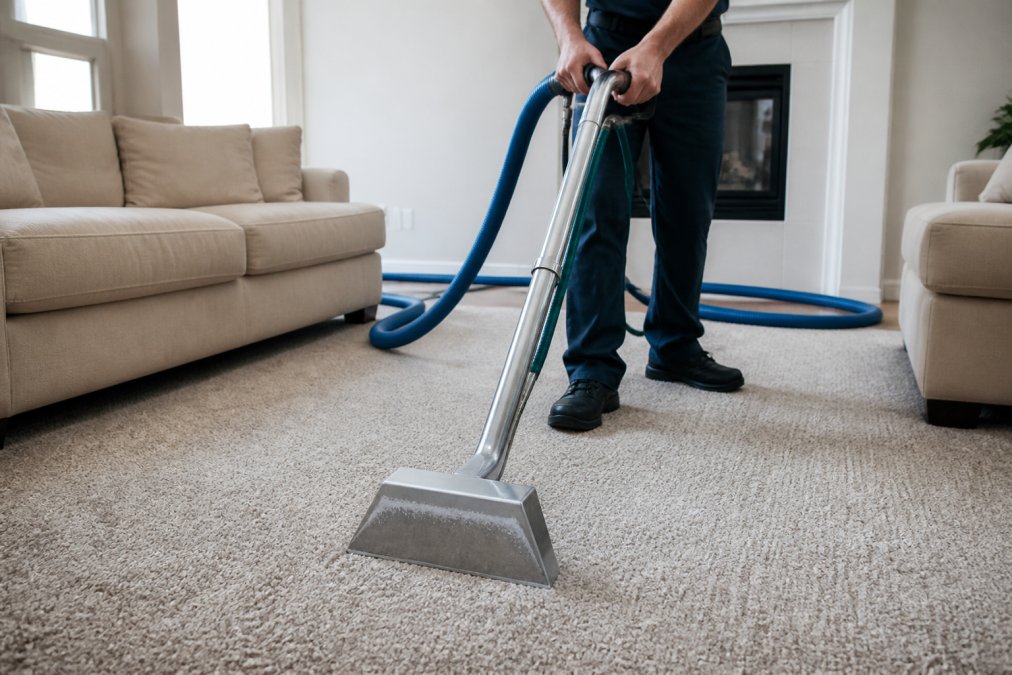
Professional steam cleaning uses heated water and high-powered extraction to loosen and remove deeply embedded particles. The heat helps break the bond between allergens and fiber, and the suction pulls the suspended material into a recovery tank rather than leaving it in the pad.
| Factor | Rental Machines | Professional Service |
|---|---|---|
| Water temperature | Lukewarm | Heated steam |
| Suction power | Moderate | High-powered extraction |
| Dwell and agitation control | Operator-dependent | Trained, consistent |
| Allergen removal | Surface level | Deep extraction |
| Drying time | 12-24 hours | 6-12 hours |
| Residue left behind | Often soapy | Residue-free options |
Most guides treat every carpet as identical, but fiber type affects how tightly allergens bind and how easily they release. Synthetic fibers such as nylon, polyester, and olefin (polypropylene) are generally less absorbent and release moisture faster, which shortens drying time and reduces mold risk. Natural fibers such as wool hold moisture longer and can be more sensitive to high heat and alkaline cleaning solutions, so a technician may need to adjust temperature and chemistry to avoid damage while still extracting allergens.
There is a real conflict between a clean carpet and a chemically clean one. Some cleaning solutions leave sticky surfactant residue that traps new allergens, and volatile organic compounds in certain detergents and deodorizers can irritate airways in sensitive individuals. Residue-free and hypoallergenic options exist, but they are not universal. If you are sensitive to fragrances or harsh chemicals, ask what will be applied, whether a rinse pass is included, and whether the product is fragrance-free.
These questions separate a surface cleaning from an allergy-focused deep clean, and they cost nothing to ask.
Most allergy sufferers need professional deep cleaning every 6 to 12 months, with more frequent service in homes with pets, children, or high humidity. Cleaning frequency is one of the most overlooked parts of allergy management.
Homes with pets or young children should schedule professional cleaning every 4 to 6 months. Allergy sufferers benefit from the same cadence, since allergen buildup accelerates faster than most people realize. Between professional visits, vacuum frequently with a HEPA-filter machine to slow accumulation.
HEPA filtration captures the microscopic allergens that standard filters release back into the room, and proper drying prevents the moisture problems that undo a good cleaning. These two factors work together, and most guides treat them as an afterthought. For allergy sufferers, they are the difference between a cleaning that helps and one that makes things worse.
A HEPA filter is rated to capture 99.97 percent of particles at 0.3 microns, which is the size range where dust mite allergen, cat dander proteins, and many pollen fragments sit. Standard vacuum filters and bagless cyclonic systems can release a portion of that fine fraction back into the room through the exhaust, the re-suspension problem in action.
Carpets that stay damp beyond 12 hours become a breeding ground for mold spores and bacterial growth. Professional services use high-powered extraction and air movers to cut drying time. This is the part most DIY attempts get wrong: a soaked carpet that takes a full day to dry can leave you with more allergens than you started with.
A practical drying protocol looks like this:
Drying is not just a post-cleaning concern. Indoor humidity above 50 percent gives dust mites the conditions they need to thrive, and it slows the drying of any accidental spills or tracked-in water. Run a dehumidifier in damp basements and during humid months, fix leaks promptly, and avoid over-wetting carpets during spot cleaning.
Residue left behind by harsh detergents can trigger reactions in chemically sensitive individuals, which is why residue-free and hypoallergenic cleaning options matter. Volatile organic compounds in some cleaning solutions add another layer of airborne irritants.
Managing allergies at home requires more than medication; it requires controlling the environment where allergens accumulate. Stay Fresh Steam Cleaning offers certified, background-checked technicians, advanced steam extraction, and residue-free cleaning options designed for homes with pets, children, and allergy sufferers. Our satisfaction guarantee and re-cleaning policy mean the job is not done until you are satisfied.
Yes. Professional carpet cleaning removes the allergens that trigger reactions: dust mites, pet dander, pollen, and mold spores. Hot water extraction and HEPA filtration pull these particles from deep in the carpet pile instead of just surface cleaning. For allergy sufferers, this reduces airborne particles and respiratory symptoms. The key is using a method that extracts allergens rather than spreading them.
Most homes benefit from professional cleaning every 12 months. If you have pets, allergies, or children, every 6 months is better. Households with severe asthma or multiple pets may need cleaning every 3-4 months. Between professional visits, vacuum weekly with a HEPA-filter vacuum to limit allergen buildup. Your specific schedule depends on foot traffic, pets, and how sensitive your household is.
Feeling sick after cleaning usually comes from one of three things: chemical residue left behind, moisture that wasn’t fully extracted, or allergens stirred up during the process. Rental machines and some low-cost services leave carpets damp for days, which encourages mold spores and bacterial growth. Choosing a service that uses residue-free products and proper drying protocols prevents this reaction.
Rental machines often leave too much moisture in the carpet, which leads to mold growth and musty odors. They also lack the suction power to pull embedded allergens from the base of the carpet pile. Many rental detergents leave sticky residue that attracts new dirt and allergens. Without HEPA filtration, the process can re-suspend dust mites and pet dander into the air, making allergy symptoms worse.


