
- September 25, 2026
- in Blog
- by
- 43
- 0
Last Updated: September 24, 2026
Hardwood flooring expands and contracts with seasonal humidity and temperature changes, causing gaps between planks. The severity depends on whether you have solid hardwood or engineered wood.
Wood absorbs and releases moisture from the air. Rising humidity causes swelling; dropping humidity causes shrinking. This seasonal movement creates gaps ranging from hairline to quarter-inch.
Wood shrinks more across the grain than along it, which is why gaps form between plank widths. A 5-inch plank may shrink up to one-eighth inch during a dry winter.
Solid hardwood is milled from a single piece of wood, typically three-quarters inch thick, and moves significantly with humidity changes. Homes swinging from 60% humidity in summer to 25% in winter experience visible seasonal gaps.
Engineered hardwood has a thin hardwood veneer bonded to a plywood core, which resists wood movement. Gaps are smaller and less seasonal than solid hardwood, though delamination or extreme humidity swings can still cause problems.
Rigid epoxy works in solid hardwood but may fail in engineered wood if the core shifts. Flexible fillers like jute work in both, though engineered wood rarely needs them.
Most gaps form from indoor humidity levels and HVAC management, not outdoor climate. Coastal homes can have stable floors with humidity control; dry climates can develop severe gaps if HVAC over-dries air.
Forced-air furnaces are the primary culprit. A home heated to 72°F with outdoor air at 30°F and 40% humidity drops to approximately 15% indoors, well below the 30-50% range hardwood needs. This extreme dryness causes rapid shrinking and gaps that may not close.
Air conditioning and dehumidifiers set too low can over-dry air. Humid climates without humidity control cause wood to swell, cup, or crown.
The critical insight: You cannot fix gaps permanently without addressing indoor humidity. A gap that closes in spring will reappear the following winter if humidity control is not maintained. This is why prevention through HVAC management is far more cost-effective than repeated repairs.
Areas with extreme seasonal humidity swings see dramatic gaps. The upper Midwest and Northeast experience the most severe gaps; the Pacific Northwest and coastal regions see smaller gaps due to stable humidity.
At-grade installations are prone to gaps from soil moisture; above-grade installations experience more stable humidity and fewer gaps.
Seasonal gaps often close naturally. If gaps persist or widen, repair options depend on gap width and flooring type.
For gaps narrower than one-eighth inch, monitor through the seasons, many disappear. If permanent, wood filler works well.
Gaps between one-eighth and one-quarter inch need wood putty, jute, or epoxy mixtures that move with wood rather than staying rigid.
Gaps wider than one-quarter inch suggest deeper issues. Check your subfloor for structural problems or moisture damage. If sound, seek professional help with how to fix gaps in hardwood flooring at this scale.
Temperature and humidity control prevents future gaps. Maintain indoor humidity between 30 and 50 percent year-round. Use a dehumidifier in summer and a humidifier in winter. Proper HVAC management keeps wood stable and minimizes seasonal movement.
Choosing the right filler depends on gap width, wood type, and whether the gap is seasonal or permanent. Each method has different durability and appearance outcomes.
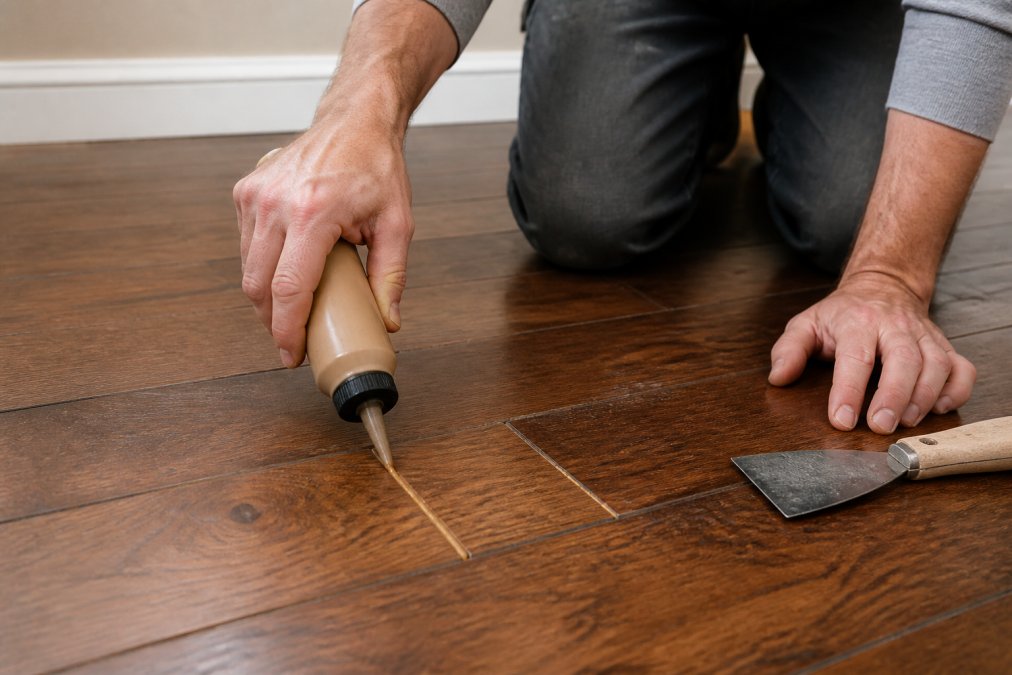
Wood filler and putty are the most common solutions for how to fix gaps in hardwood flooring. These products come in various wood tones to match your floor’s finish.
Water-based fillers dry quickly and sand smoothly but shrink and may crack in wide or moving gaps.
Oil-based putty resists shrinking better and suits gaps that shift seasonally, but has longer drying time and harder cleanup.
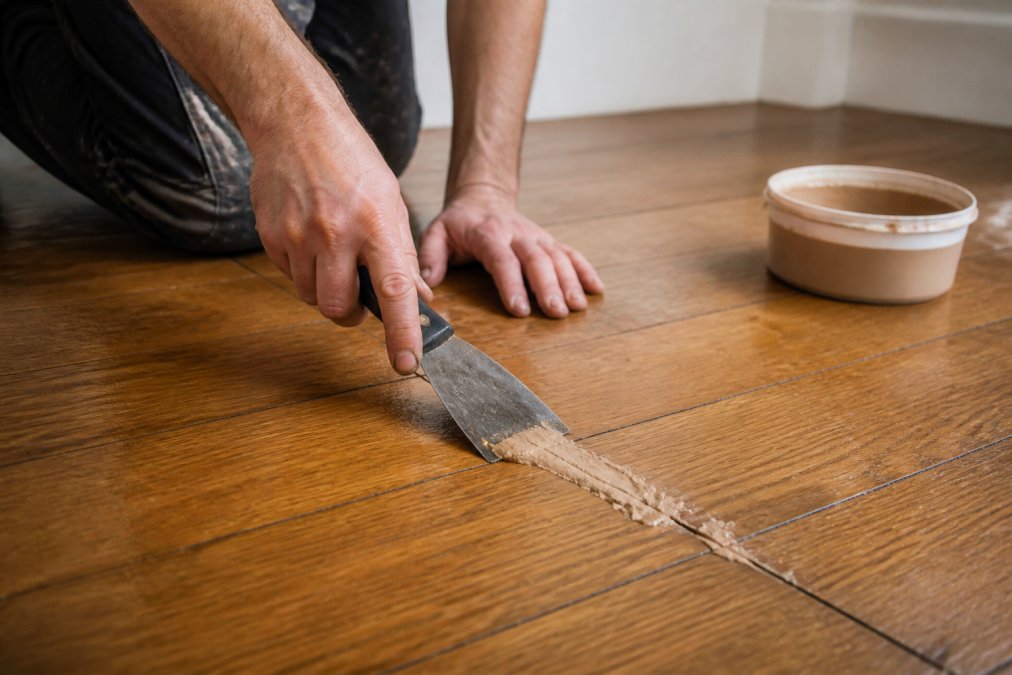
Use a putty knife to press filler deep into the gap, overfilling slightly. Sand flush once dry and apply stain to match.
Jute rope and natural fiber cord work well for medium to large gaps in hardwood flooring. This method has been used for decades in wood restoration.
Jute is compressed plant fiber that compresses into gaps, provides cushioning, and allows wood movement without cracking.
Measure gap width and select appropriately sized jute. Tap gently into the gap with a hammer and block, working in sections. Apply filler on top if desired.
Jute works best in rustic floors; modern floors may need jute covered by filler or stain.
The advantage over solid fillers is flexibility. Jute compresses and expands slightly with wood movement, preventing the cracking that rigid fillers experience.
Mix epoxy resin with fine sawdust from your flooring to create a custom filler that matches perfectly and bonds permanently.
Collect sawdust from sanding or your installer. Mix with two-part epoxy in equal parts, adjusting for consistency.
Press mixture deep into gaps with a putty knife, overfilling slightly. Sand flush after 24 hours. The result is nearly invisible.
Epoxy is permanent and won’t crack with seasonal movement, ideal for visible gaps where appearance matters.
Preventing gaps is easier and cheaper than fixing them. The foundation is maintaining stable indoor humidity through HVAC management.
Maintain indoor humidity between 30 and 50 percent year-round. Below 30%, wood shrinks and gaps widen; above 50%, wood swells and planks cup or crown.
Measure humidity with an inexpensive hygrometer (under $20) in a central location. Check weekly to establish patterns.
Winter humidity management: Install a whole-house humidifier on your HVAC system.
Simple HVAC adjustments prevent gaps:
Sunlight exposure: Use curtains, blinds, or UV-blocking film on south and west-facing windows to limit direct sunlight and prevent uneven wood movement.
Understanding filler durability helps you choose the right repair method and avoid costly re-repairs.
Small gaps under one-quarter inch respond well to DIY repair with basic tools.
Not all gaps should be filled. Understanding when to leave gaps alone prevents costly mistakes.
| Situation | Recommendation |
|---|---|
| Hairline gaps that appear seasonally | Monitor through full year before filling |
| Gaps with cupping or soft subfloor | Fix moisture issue first, then repair gaps |
| Gaps wider than one-half inch | Use jute or professional help, not filler |
| Gaps in antique or valuable floors | Hire professional floor restoration expert |
| Small consistent gaps under one-quarter inch | DIY wood filler works well |
Gaps in hardwood flooring are a natural part of seasonal wood movement, but they don’t have to be permanent eyesores. Understanding why gaps form helps you choose the right repair method and prevent future problems.
The best filler depends on gap size and wood type. For small gaps under 1/8 inch, wood putty or filler works well and can be stained to match. For larger gaps, jute rope or epoxy-sawdust mixtures provide better durability. Solid hardwood responds better to flexible fillers, while engineered wood may require different approaches. Test any filler on a hidden area first to ensure it accepts stain and blends with your floor’s finish.
Yes, humidity is the primary cause of gaps in hardwood flooring. Wood naturally expands in humid conditions and contracts when moisture levels drop. Seasonal changes and HVAC operation create wood movement that widens gaps. Maintaining consistent indoor relative humidity between 30-50% minimizes this expansion and contraction. Using a dehumidifier in summer and a humidifier in winter helps stabilize moisture content and prevents gaps from worsening over time.
Small gaps can be filled with wood putty or filler applied with a putty knife, then sanded smooth. For wider gaps, clean out debris first, then apply jute rope or epoxy-sawdust mixture. Let fillers cure fully before sanding and staining. The key is matching the stain color to your existing floor and applying finish over the repair. However, if gaps are widespread, involve the subfloor, or appear suddenly, professional assessment is recommended to rule out moisture or structural issues.
Contact a professional if gaps are wider than 1/4 inch, appear suddenly, or are accompanied by cupping, crowning, or buckling. These signs indicate moisture problems or structural issues beyond simple filling. Professionals can assess moisture content, check for subfloor damage, and recommend refinishing if needed. They also have tools to properly sand, stain, and seal repairs for a seamless finish that blends with the rest of your floor.
For stubborn stains or deep cleaning needs on your hardwood floors, Stay Fresh Steam Cleaning offers specialized techniques that preserve your wood’s finish while removing dirt and grime. Our certified technicians understand hardwood care and use methods that won’t damage your floors. Schedule your professional hardwood floor cleaning today and keep your investment looking pristine.


