
- September 18, 2026
- in Blog
- by
- 10
- 0
Last Updated: September 18, 2026
The ability to deep clean carpets requires specific tools and supplies. Without proper equipment, you’ll struggle to remove embedded dirt and stains effectively.
Here’s what you need to gather:
Check your carpet manufacturer’s cleaning guidelines before starting. Synthetic fibers require specific pH-balanced solutions; natural fibers like wool need gentler treatment than polyester blends.
Preparation is essential for successful carpet cleaning.
Move furniture out of the room completely. If impossible, group it to one side to access the entire carpet surface. Remove toys, papers, and clutter from the floor.
Close windows and doors to control temperature and humidity. Turn off ceiling fans to prevent uneven drying and wicking, where moisture travels back up into carpet fibers.
Vacuum the entire room thoroughly before any cleaning solution touches the carpet. This removes loose dirt and debris that would otherwise mix with cleaning liquid and create mud. Pay special attention to corners and edges where dust accumulates.
Check the carpet for any debris stuck in the fibers. Pick out pet hair, threads, or visible particles by hand. These can clog your extraction machine or reduce cleaning effectiveness.
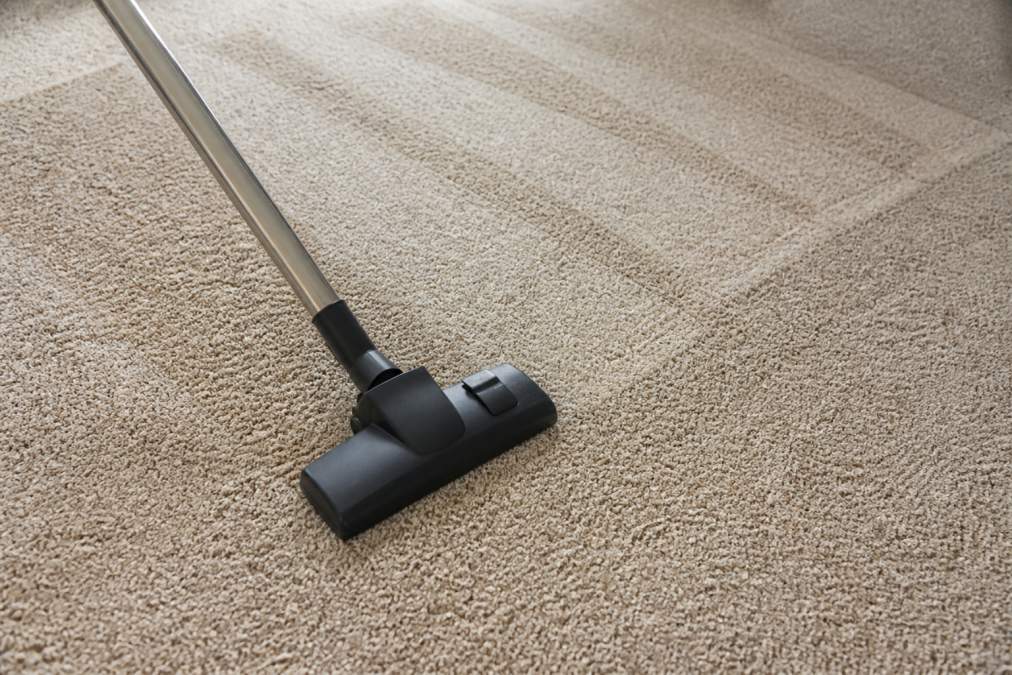
Vacuuming removes surface soil that prevents cleaning solution from reaching embedded dirt in the carpet pile.
Use slow, overlapping passes with your vacuum, going over each area at least twice to pull dirt from different angles within the carpet fibers.
Pay special attention to high-traffic areas like hallways and entryways, which accumulate more dirt and require extra vacuuming passes.
Thorough vacuuming prevents your cleaning solution from getting dirty faster and your machine from working harder than necessary.
Empty your vacuum bag or canister before starting. A full vacuum loses suction power and won’t pull dirt effectively from carpet pile.
Pre-treatment allows cleaning solution to break down stubborn stains and ground-in soil before extraction.
Spray pre-treatment solution on visible stains and high-traffic areas, saturating fibers without pooling liquid on the surface.
Let pre-treatment sit for 10-15 minutes to allow the solution to penetrate fibers and loosen dirt.
For pet stains, apply pre-treatment generously and let it sit up to 20 minutes, as pet accidents soak deep into carpet backing and padding.
Gently agitate the pre-treated area with a soft-bristled brush. Use light pressure in circular motions. Aggressive scrubbing can damage carpet fibers and push stains deeper into the pile rather than lifting them out.
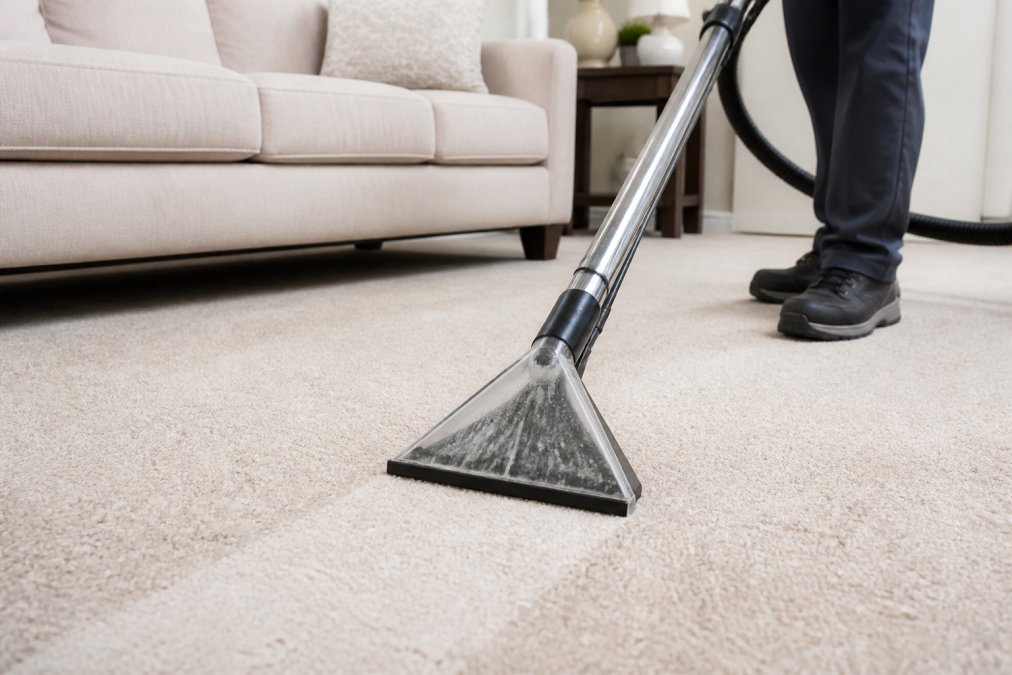
Now use your hot water extraction machine to deep clean carpets.
Fill your machine’s tank with hot water and cleaning solution per manufacturer instructions. Most machines work best with water between 120-150 degrees Fahrenheit.
Start in the corner farthest from the door to avoid trapping yourself in a wet area. Move the machine slowly across the carpet in straight lines, overlapping each pass slightly.
Push the machine forward to spray solution, then pull it back to extract dirty water. This forward-and-back motion removes moisture and dissolved soil from deep within the carpet pile.
Make 2-3 passes over each section. The first sprays solution; subsequent passes extract more water and soil.
Pay extra attention to high-traffic areas and pre-treated stains. Make additional passes over these spots to ensure thorough extraction. The machine’s suction power pulls out the loosened dirt and excess moisture.
Rental machines are affordable and convenient for small areas or light cleaning. They cost significantly less than professional services but have less powerful suction.
Rental machines extract less water, causing longer drying times and wicking, where stains return as moisture travels back up through the carpet.
Professional cleaning services use industrial-grade machines with superior suction power and heated water systems. Professionals understand carpet fiber types and have experience with stubborn stains and pet damage.
Professional cleaning costs more but delivers better results: faster drying, longer-lasting stain removal, and protection of your carpet and furniture.
Choose rental machines for small stained areas or light maintenance. Choose professional services for deep cleaning, pet stains, large areas, or if your carpet hasn’t been professionally cleaned in over a year.
Drying time depends on machine type, humidity, temperature, ventilation, and carpet pile depth. Professional machines dry carpet in 4-8 hours; rental machines take 12-24 hours or longer.
Why Incomplete Extraction Causes Slow Drying
Incomplete extraction leaves moisture that takes longer to evaporate and creates ideal conditions for mold and mildew growth within 24-48 hours. Professional-grade equipment with stronger suction (200+ inches of water lift) outperforms rental machines (100-150 inches of lift).
Preventing Wicking: The Hidden Drying Problem
Wicking occurs when moisture in carpet backing travels back up through fibers as the surface dries, causing stains to reappear. To prevent wicking:
Steps to Speed Up Drying
Maximize air circulation. Open windows and doors to create cross-ventilation. Position fans to blow air across the wet carpet surface and run continuously until dry.
Lower humidity with a dehumidifier. Place it in the center of the cleaned area and run for 12-24 hours, especially in basements or humid climates.
Use your HVAC system strategically. Set air conditioning to run continuously for the first 12 hours after cleaning. If it’s cool outside, open windows instead.
Open windows if outdoor humidity is lower than indoor humidity. Close windows if outside humidity is higher than 60%.
Avoid heat lamps or space heaters, which can set stains by driving them deeper into the carpet. Use fans and dehumidifiers instead.
Timeline Expectations
Common mistakes during carpet cleaning create hard-to-fix problems.
Using too much water is the biggest mistake. Oversaturation leaves excess moisture that takes days to dry and causes mold, mildew, and wicking. Use enough solution to clean effectively but not so much that water pools on the surface.
Skipping the vacuum step means cleaning solution mixes with surface dirt and becomes ineffective. Always vacuum thoroughly before applying any cleaning solution.
Mixing cleaning products creates dangerous chemical reactions. Never combine bleach, ammonia, or other harsh chemicals. Stick with one solution throughout.
Using water that’s too hot can damage carpet fibers.
Equipment Maintenance After Cleaning
After every use:
Drying time typically ranges from 4 to 24 hours, depending on humidity, air circulation, and carpet pile type. Synthetic fibers dry faster than natural fibers. Increase ventilation by opening windows, running fans, and using air conditioning to speed up drying. Avoid walking on wet carpet during this period, as foot traffic can cause wicking, where soil and residue are pulled back to the surface as moisture evaporates.
Rental machines require significant time, physical effort, and learning to operate correctly. Professional carpet cleaning services use commercial-grade hot water extraction equipment, specialized solutions, and trained technicians who understand carpet fibers and stain chemistry. Professionals complete the job faster, achieve deeper cleaning, and reduce the risk of over-wetting or damaging carpet backing. For large areas or stubborn stains, professional cleaning typically delivers better results and longer-lasting cleanliness.
Common mistakes include using too much water, which slows drying and causes mildew; applying excessive cleaning solution, which leaves residue that attracts dirt; skipping pre-treatment of stains; and using incorrect agitation techniques that damage carpet fibers. Many people also fail to properly extract water, leaving moisture that leads to wicking and stains reappearing. Not vacuuming thoroughly beforehand reduces cleaning effectiveness. Finally, renting equipment without proper training often results in uneven cleaning and potential carpet damage.
Yes, even 20-year-old carpet can benefit from professional deep cleaning using hot water extraction and specialized stain-removal treatments. However, very old carpet with damaged backing, severe matting, or deep-set odors may have limited improvement potential. Professional technicians assess carpet condition and fiber type to determine the best approach. For pet stains and odors embedded over years, enzymatic treatments and deodorizing solutions can help, though severely compromised carpet may eventually require replacement.


