
- July 28, 2026
- in Blog
- by
- 79
- 0
Last Updated: July 26, 2026
Water damage to hardwood floors ranks among the costliest problems homeowners face, often requiring expensive restoration or complete replacement. At Stay Fresh Steam Cleaning, we help property owners prevent water damage through practical strategies that protect this significant investment.
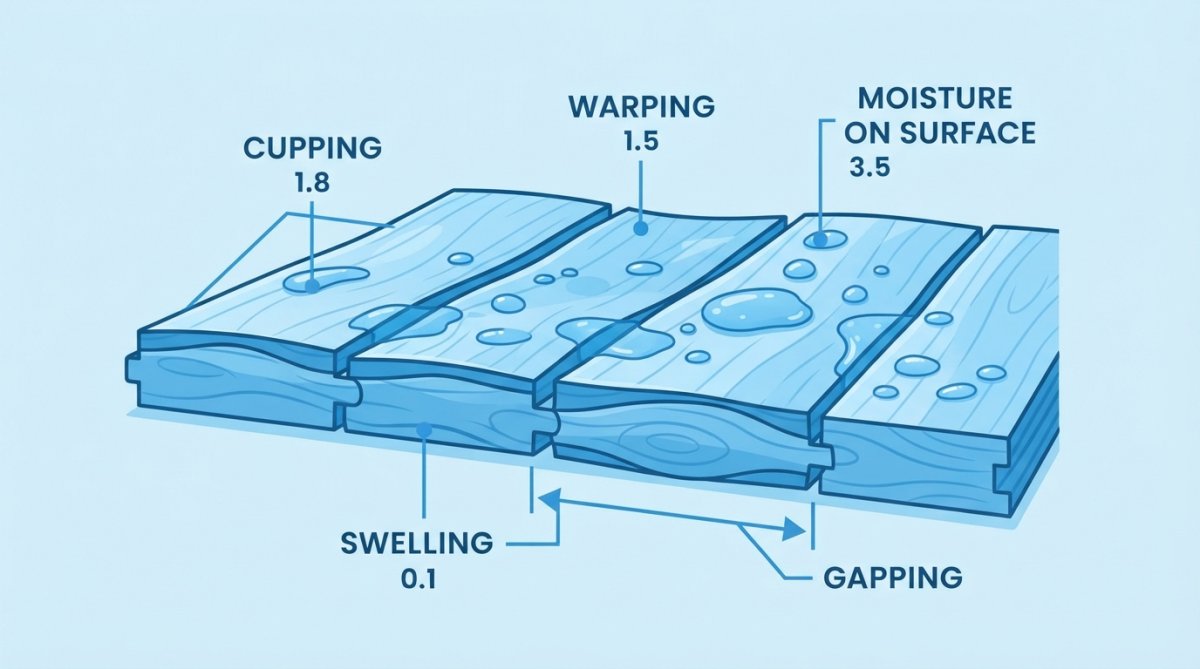
Hardwood floors are vulnerable because wood naturally absorbs moisture, causing it to expand and contract. When water penetrates the protective finish, structural changes occur rapidly, creating visible problems from minor cosmetic issues to complete structural failure.
Common causes include plumbing leaks, roof leaks, window leaks, and bathroom or kitchen spills. Humidity levels above 55% contribute to gradual moisture absorption even without visible water. Basement hardwood faces particular risk from groundwater seepage and HVAC condensation.
Water damage appears in distinct patterns: Cupping occurs when wood edges absorb more moisture than the center, bowing upward. Warping happens when moisture causes uneven swelling, making boards buckle. Gaps form as wood shrinks after drying. Cracks develop when wood dries too quickly, creating stress lines.
The first 24 hours after water exposure are critical. Immediate action prevents water from penetrating deeper into the wood structure and subfloor.
Start by removing standing water using a wet vacuum designed for water extraction. Work systematically across the affected area with multiple passes. If standing water covers more than a few square feet or the water is contaminated, contact professionals immediately.
Next, increase air circulation using fans and open windows if outdoor humidity is lower. Position fans to move air across the wet floor and run your HVAC system continuously to dehumidify the space. If you have a portable dehumidifier, place it in the affected room and empty the collection tank frequently.
Remove area rugs, furniture, and other items from wet floors to allow complete drying. Wipe down furniture legs and baseboards that contacted water. For significant water exposure, consider removing baseboards temporarily to allow moisture to escape from wall cavities and the subfloor.
When to Call Professionals: If water has soaked into the subfloor, if you’re uncertain about the water source, if mold is visible, or if water damage covers more than 100 square feet, professional water restoration specialists should handle drying. They use commercial-grade dehumidifiers, moisture meters, and thermal imaging to ensure complete drying. DIY drying on large areas often results in incomplete moisture removal, leading to mold growth and structural damage months later.
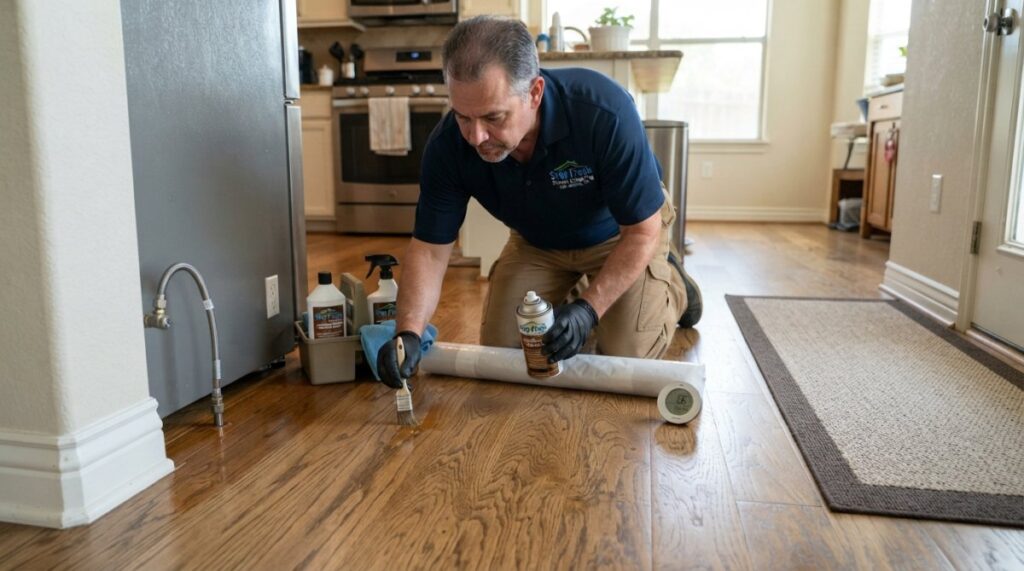
Sealing hardwood floors creates a protective barrier that prevents water from penetrating the wood grain. This is the single most effective prevention measure for hardwood floors.
Polyurethane finishes (water-based or oil-based) create a hard, durable plastic coating lasting 3-10 years depending on foot traffic. Water-based polyurethane dries clear and doesn’t yellow, while oil-based polyurethane amber-tints the wood and offers superior water resistance. For moisture-prone areas, polyurethane outperforms wax finishes. Choose water-based polyurethane for faster drying and lower VOC emissions, or oil-based for superior water-shedding properties.
Application requires careful surface preparation. Sand the hardwood to 120-150 grit to remove old finishes and open the wood grain. Vacuum thoroughly, then wipe with a tack cloth. Apply the first coat with a foam roller or brush, working in sections. Allow proper drying time between coats (4-8 hours for water-based, 24 hours for oil-based). Sand lightly between coats with 150-220 grit paper to improve adhesion.
Maintenance involves regular cleaning with a microfiber mop and pH-neutral hardwood cleaner. Never use excess water, mist the mop rather than saturating it. Wipe up spills immediately, even on sealed floors.
Humidity levels directly affect hardwood floor stability. The ideal humidity range for hardwood floors is 30-50%, with 40-45% being optimal. Below 30%, wood shrinks, opening gaps between planks. Above 55%, wood swells.
Monitor humidity using an inexpensive digital hygrometer placed in the central living area. During winter heating season, use a humidifier to add moisture back into dry indoor air. Whole-house humidifiers connected to your HVAC system provide even distribution, while portable units work for single rooms. Set humidifiers to maintain 40-45% relative humidity using a humidistat.
During summer, dehumidifiers remove excess moisture. Portable dehumidifiers work well for specific rooms, while whole-house systems integrate with your HVAC. Set dehumidifiers to maintain 45-50% humidity. Empty collection tanks daily or connect a drain hose for continuous water removal.
Your HVAC system supports humidity control. Ensure your air conditioning runs with the thermostat set to maintain temperature consistency. In winter, don’t set heating excessively high, each degree above 72°F further dries indoor air.
Specific products designed for hardwood protection significantly improve your prevention efforts.
For sealants, Bona Hard-Surface Floor Finish offers excellent water resistance and durability, requiring reapplication every 3-5 years. Minwax Polyurethane provides budget-friendly protection for low-traffic areas. Duraseal sealants, commonly used by professionals, deliver superior water-shedding and last 5-7 years.
For cleaning agents, use pH-neutral products specifically formulated for hardwood. Bona Hard-Surface Floor Cleaner and Murphy Oil Soap (diluted properly) clean without damaging the protective finish. Never use vinegar, lemon juice, or acidic cleaners, these break down polyurethane finishes.
Area rugs and mats provide practical water defense. Place mats at exterior doors and in front of sinks. High-quality mats have rubber backing that prevents slipping and allows air circulation. Furniture pads protect hardwood from condensation beneath furniture legs. Felt pads allow air circulation and prevent moisture accumulation.
| Product Type | Best Option | Durability | Cost Range | Best For |
|---|---|---|---|---|
| Polyurethane Sealant | Duraseal | 5-7 years | $$ | High-traffic areas |
| Water-Based Finish | Bona Hard-Surface | 3-5 years | $ | Fast drying, low odor |
| Entrance Mats | Absorbent rubber-backed | Variable | $-$$ | Moisture control |
| Furniture Pads | Felt pads | 1 year | $ | Condensation prevention |
Understanding repair costs justifies prevention investments. Professional water damage restoration for hardwood ranges significantly based on severity and affected area. Minor spill damage caught immediately may cost just cleaning and touch-up finishing. Extensive cupping or warping affecting 50+ square feet typically requires professional sanding and refinishing. Complete subfloor replacement due to rot or mold adds substantial expense.
Prevention costs far less than repair. A professional polyurethane refinishing job for 1,000 square feet costs less than repairing water damage in a quarter of that space.
DIY vs. Professional Methods:
For prevention, many tasks are DIY-friendly: installing mats and furniture pads, monitoring humidity, and cleaning hardwood with appropriate products. Sealing and refinishing hardwood presents more complexity. Most homeowners attempting DIY refinishing produce visible imperfections. Professional refinishing guarantees smooth, even application and proper curing.
Water extraction and drying after damage should be professional-grade work. Improper drying leaves moisture in the subfloor and walls, leading to mold growth.
Long-Term Maintenance Schedule:
Consistent daily practices prevent water damage more effectively than occasional interventions.
Spill cleanup must happen immediately. Water sitting on hardwood for even 15 minutes begins penetrating the finish. Blot spills rather than wiping, blotting lifts water off the surface while wiping can push it into grain. Dry the area completely, then allow air circulation for 30 minutes.
Leak detection prevents catastrophic damage. Monthly inspections of plumbing under sinks, around toilets, and in basements catch slow leaks before they saturate hardwood. Look for water stains on ceilings, discoloration on walls, and soft spots on floors.
Seasonal checks address environmental risks. Before winter, inspect roof flashing and gutters. Before spring rains, check window caulking and weatherstripping. After heavy rain, walk your home’s perimeter looking for water pooling or entering crawl spaces.
Water damage threatens one of your home’s most valuable assets. Protecting hardwood floors requires understanding the risks, implementing preventive measures, and maintaining consistent habits. At Stay Fresh Steam Cleaning, we specialize in hardwood floor care and restoration, helping San Antonio homeowners maintain pristine flooring through professional cleaning and expert guidance. Our certified technicians can assess your hardwood’s current condition, recommend appropriate sealants, and establish maintenance routines tailored to your home’s specific humidity and water exposure challenges. With our satisfaction guarantee, you can trust that your hardwood investment receives the professional attention it deserves. Contact us today for a consultation on protecting and maintaining your hardwood floors.
Water damage occurs from multiple sources: plumbing leaks beneath or above floors, roof leaks dripping onto wood, window leaks during rain, spills left standing, and high humidity levels that cause moisture to penetrate the wood. Even small amounts of water can lead to cupping, warping, and gaps if not addressed quickly. Hardwood's porous nature means moisture can seep into the wood and subfloor, compromising structural integrity and creating conditions for mold and mildew growth.
Multiple strategies work together: apply protective coatings like polyurethane or wax finishes to create water-resistant barriers; maintain indoor humidity between 30-50% using dehumidifiers and HVAC systems; use area rugs and mats in high-moisture areas; place furniture pads under legs to prevent moisture trapping; clean spills immediately with a microfiber mop; inspect plumbing and roof regularly for leaks; and ensure proper ventilation in bathrooms and kitchens. A combination of prevention methods provides the strongest defense.
Repair costs vary significantly based on damage extent and wood species. Minor surface damage may require spot refinishing, while extensive cupping or warping may demand full sanding and refinishing or even board replacement. Professional restoration pricing depends on square footage, damage severity, and whether the subfloor is affected. Prevention through sealing, humidity control, and prompt spill cleanup is far more cost-effective than repair. Contact Stay Fresh Steam Cleaning for professional assessment and guidance on your specific situation.
Polyurethane finishes offer excellent water resistance and durability for high-traffic areas, available in water-based or oil-based formulations. Wax finishes provide aesthetic appeal and some water resistance but require more frequent reapplication. The best choice depends on your wood species, traffic level, and maintenance commitment. Water-based polyurethane dries faster and has lower VOCs, while oil-based options provide deeper color enhancement. Professional application ensures proper coverage and maximum protection. Consult with flooring specialists about which option suits your specific hardwood type and household needs.
This article was written using GrandRanker


