
- July 28, 2026
- in Blog
- by
- 81
- 0
Last Updated: July 23, 2026
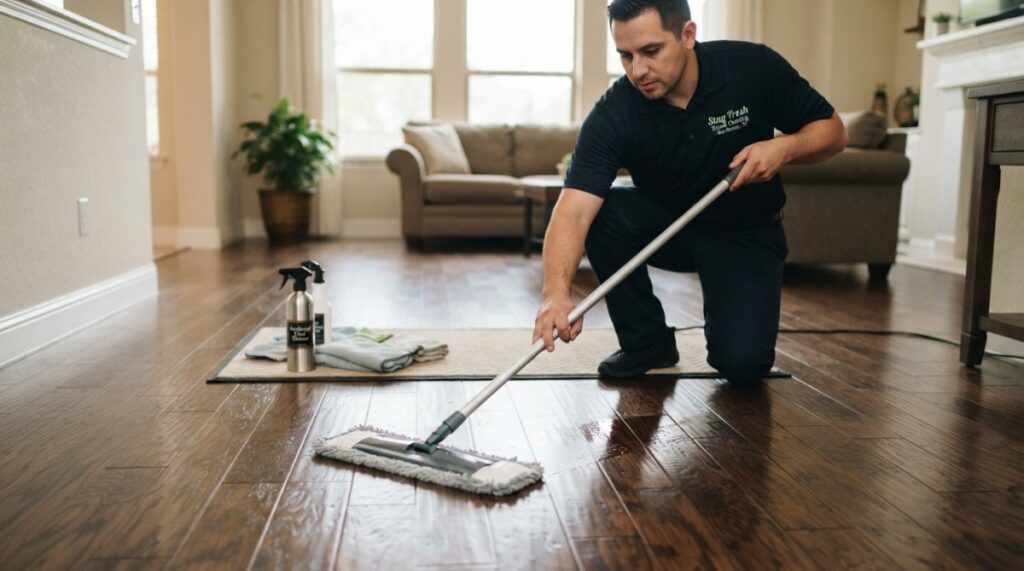
The best way to clean hardwood floors requires more than grabbing a mop and bucket. At Stay Fresh Steam Cleaning, we’ve helped hundreds of San Antonio homeowners protect their hardwood investments while keeping them looking pristine. The difference between floors that stay beautiful for decades and those that deteriorate quickly comes down to using the right technique with the right tools.
Dry cleaning should happen before any wet cleaning, as it removes loose dirt that can scratch your finish when combined with moisture.
A soft-bristle broom lifts dust without damaging the wood grain. Microfiber dust mops work even better, attracting dust electrostatically and requiring no chemicals. Vacuum attachments designed for hard floors are essential, look for vacuums with a hard floor setting that disables the brush roll, as the beater bar can scratch hardwood.
A microfiber mop with a spray bottle mechanism gives precise control over moisture. These mops hold water without dripping excessively, preventing excess moisture from seeping into wood grain and causing warping. For deeper cleaning, some homeowners invest in specialized equipment like the BISSELL CrossWave Hard Floor Expert, which vacuums and washes simultaneously using two-tank technology.
pH-neutral cleaners are non-negotiable for polyurethane-finished hardwood. Bona Hardwood Floor Cleaner is widely recommended by flooring professionals because it’s specifically formulated to clean without leaving residue. For plant-based options, Method Squirt + Mop Hardwood Floor Cleaner offers a no-rinse formula. Libman Freedom Concentrated Hardwood Floor Cleaner is economical, one bottle makes 18 diluted bottles. Murphy Oil Soap, at 99% naturally derived ingredients, cleans and restores shine but can leave residue on polyurethane finishes if not diluted properly.
| Cleaner | Type | Best For | Key Feature |
|---|---|---|---|
| Bona Hardwood Floor Cleaner | Water-based | Polyurethane finishes | Residue-free, professional-grade |
| Method Squirt + Mop | Plant-based | Quick daily cleaning | No-rinse, ergonomic spray |
| Libman Freedom | Concentrated | Budget-conscious | Makes 18 bottles from one |
| Murphy Oil Soap | Oil-based | Traditional finishes | Natural ingredients, restores shine |
Daily dry mopping takes five minutes and eliminates 80% of floor maintenance problems. Use a microfiber dust mop or soft-bristle broom each morning before foot traffic begins, moving in the direction of the wood grain. Pay special attention to entryways, kitchen areas, and high-traffic zones.
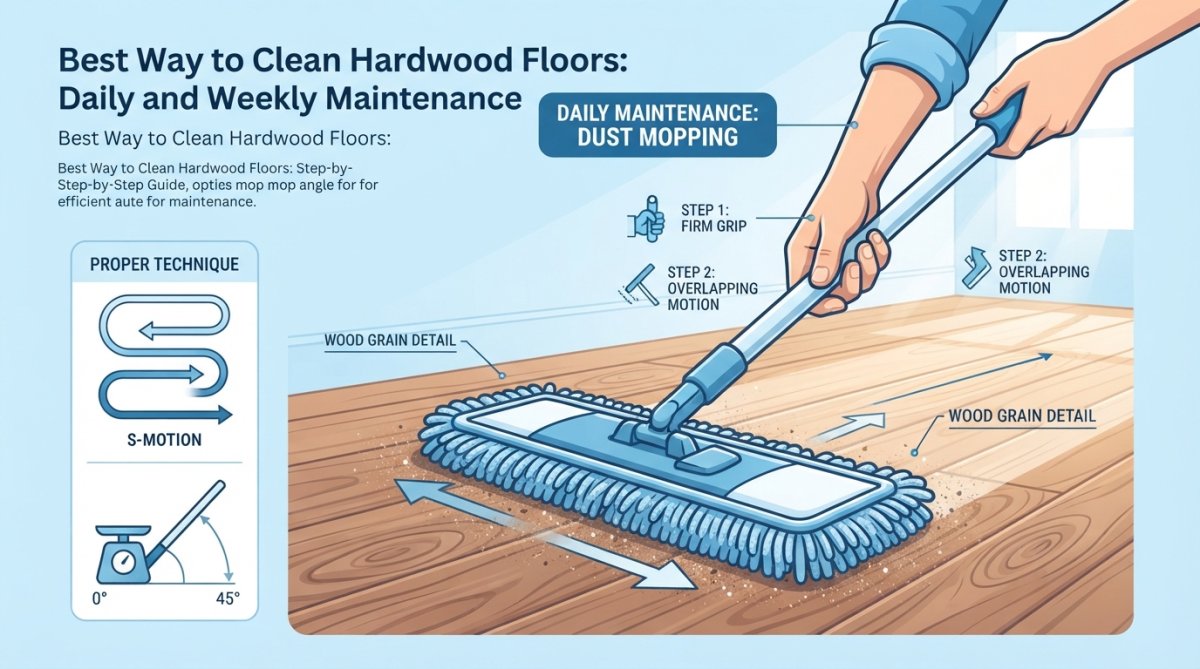
Most people complete a 1,000 square foot space in 5-10 minutes. Daily dust removal means weekly mopping requires less aggressive scrubbing, extending the life of your finish. For homes with pets, daily dry mopping prevents pet hair and dust from being ground into the finish.
Fill your spray bottle with pH-neutral cleaner diluted according to product instructions. Spray a 3-foot section lightly, creating a damp (not wet) surface. Mop immediately with overlapping strokes in the direction of the wood grain, working in sections rather than the entire floor at once.
Allow the floor to air dry completely before walking on it. Most hardwood floors dry within 30 minutes with adequate ventilation. Open windows or run ceiling fans to speed the process. Frequency depends on your household, families with children and pets benefit from weekly cleaning, while quieter homes may need cleaning every two weeks.
For fresh spills, blot immediately with a soft cloth. For water-based spills like juice or coffee, a damp cloth usually suffices. For greasy spills, use a cloth slightly dampened with pH-neutral cleaner.
For dried stains, make a paste of baking soda and water, apply it to the stain, and let it sit for 15 minutes. Wipe gently with a soft cloth, then dry completely. For stubborn stains, try a cloth barely dampened with diluted pH-neutral cleaner, let it sit for 2-3 minutes, then wipe gently and dry immediately.
Never use abrasive scrubbing pads, steel wool, or harsh chemicals. Patience and gentle techniques always outperform aggressive scrubbing.
If your floor develops a cloudy appearance, wax or residue buildup is likely the culprit. For light buildup, increase the frequency of damp mopping with properly diluted cleaner. For heavy buildup, mix equal parts white vinegar and water, dampen a cloth with this solution and wipe the affected area, then follow immediately with a dry cloth.
Most modern hardwood floors have a polyurethane finish that creates a protective barrier. Polyurethane is water-resistant but not waterproof, excess moisture can cause the wood beneath to swell, warp, or develop dark stains. Use the damp mop technique: light spray of pH-neutral cleaner, immediate mopping, and thorough air drying.
Polyurethane finishes are also susceptible to cloudiness from residue. Using the correct amount of diluted cleaner prevents this problem.
Unsealed hardwood or wood finished with penetrating oil requires a completely different approach. These floors have no protective barrier, so moisture penetrates directly into the wood.
For unsealed floors, dry cleaning is the primary maintenance method. Dust mop daily and vacuum weekly. Wet cleaning should be minimal and only with products specifically formulated for oil-finished wood. Murphy Oil Soap is appropriate for oil-finished hardwood, but use it sparingly, once monthly or less, and dilute thoroughly.
Never use standard pH-neutral hardwood cleaners on unsealed wood. If you’re unsure whether your floors are sealed, assume they’re sealed and use conservative moisture practices.
The single biggest mistake is using too much water. Water seeps into gaps between boards and beneath the finish, causing wood to swell unevenly, creating cupped or buckled floors. Dark stains develop where moisture has sat.
The fix is simple: wring out your mop thoroughly. A damp mop should feel barely moist to the touch. Spills require immediate blotting, don’t leave water sitting on the floor.
Harsh chemicals strip protective finishes and create permanent dull spots. Vinegar is acidic and etches the wood itself. Ammonia strips polyurethane protection. Dish soap leaves residue that builds up over time.
Stick with pH-neutral cleaners specifically formulated for hardwood. If you prefer natural products, Method and Murphy Oil Soap are legitimate options, but verify they’re appropriate for your specific finish type.
Steam mops use heat and moisture to clean. While effective for tile and laminate, they’re dangerous for hardwood floors. Heat causes wood to expand while moisture seeps through the finish, potentially warping boards and opening gaps between planks.
For fresh accidents, blot immediately with paper towels. Use a cloth dampened with diluted pH-neutral cleaner to remove residue. For urine accidents, sprinkle baking soda over the affected area and let it sit overnight to absorb odors, then vacuum thoroughly.
If the smell persists, professional help may be needed. Stay Fresh Steam Cleaning uses specialized techniques to remove deep odors from hardwood floors without damaging the finish.
Prevent accidents by establishing consistent bathroom routines with pets. Daily dry mopping removes hair before it gets ground into the finish.
Place felt or rubber pads under furniture legs. When moving furniture, lift it rather than dragging. Area rugs protect high-traffic zones. Keep pet nails trimmed, as long nails create scratches as pets run across the floor.
If your floor looks dull but feels smooth, residue buildup is likely. Increase the frequency of damp mopping with properly diluted cleaner. Within 2-3 weeks of consistent cleaning, the shine should return.
If dullness accompanies a rough texture, the polyurethane finish may be damaged. Light sanding and recoating by professionals can restore the finish. Haze usually indicates either too much cleaner residue or water spots, increase ventilation while mopping and use less cleaner on subsequent passes.
Professional cleaning is appropriate when home maintenance isn’t solving problems. If your floors have deep stains that don’t respond to spot cleaning, professionals have access to stronger treatments. If dullness or haze won’t disappear despite consistent proper cleaning, professional removal may be necessary. If you suspect water damage or mold, professional inspection is essential.
Hardwood floors are a long-term investment that require the right approach to stay beautiful. The techniques covered here, from daily dry mopping to weekly damp cleaning with pH-neutral solutions, protect your finish while keeping floors pristine. When maintenance alone isn’t enough, professional help prevents further damage and extends the life of your investment. Stay Fresh Steam Cleaning offers specialized hardwood floor cleaning services using advanced techniques that remove deep dirt and odors without excess moisture. Our certified, background-checked technicians understand the unique needs of sealed and unsealed hardwood finishes. Contact us for a consultation and discover how professional care can extend your floor’s beauty for decades.
A pH-neutral, water-based hardwood floor cleaner is ideal for most polyurethane-finished hardwood floors. Products like Bona Hardwood Floor Cleaner are specifically formulated to clean without leaving residue or dulling the finish. For sealed hardwood, spray cleaners or concentrated solutions diluted with water work well. Always check your floor's finish type, oil-finished or waxed floors require different products to avoid stripping or buildup.
Vinegar is not recommended for hardwood floors. While it is acidic and can cut through grime, vinegar can damage wood finishes and leave streaks. The acidity may strip protective coatings and dull the appearance of your floor. Instead, use a dedicated hardwood floor cleaner or a pH-neutral solution specifically designed for wood. If you prefer eco-friendly options, look for plant-based, residue-free cleaners certified for hardwood use.
Daily dry mopping with a dust mop or soft-bristle broom removes dust and debris that can scratch the wood grain. Weekly damp mopping with a microfiber mop and appropriate cleaning solution maintains shine and removes grime. Deep cleaning should be done monthly or quarterly, depending on foot traffic. Homes with pets or high traffic may need more frequent cleaning to prevent buildup and maintain the floor's appearance.
Avoid steam mops, excess water, and oil-based products on polyurethane-finished floors. Never use vinegar, bleach, or ammonia-based cleaners. Abrasive scrubbers and beater bar vacuums can damage the wood grain and finish. Do not use wax on polyurethane finishes, it causes buildup and dullness. For sealed floors, avoid products with silicone, which can create slippery surfaces. Always test any new cleaner on a hidden area first.
This article was written using GrandRanker


